
Originally published in March 2016 and comprehensively updated and edited in June 2026.
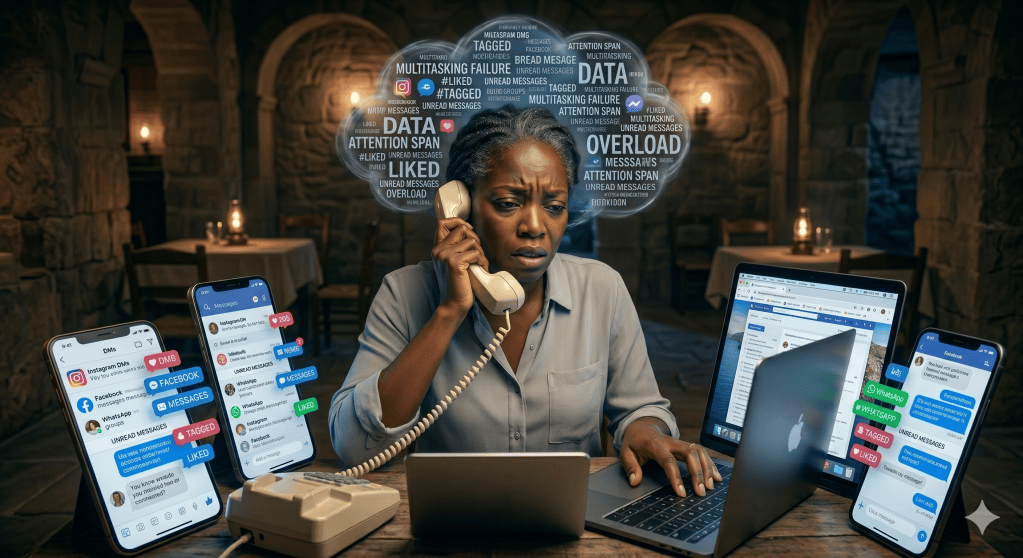
How constant smartphone notifications affect the brain’s attention systems, stress response, and sleep — and what a decade of research has revealed about living in the notification economy.
You sit down at your desk in the morning with real intentions. You have a list. You know what needs doing. Sometime around mid-afternoon you look up and realize you have attended to almost none of it — not because you were idle, but because you were perpetually, exhaustingly interrupted.
There is a particular kind of exhaustion that did not really have a name a generation ago. It is not the tiredness that comes from physical labor, or even from a long day of focused mental work. It is something more diffuse — a low-grade depletion that accumulates across hours of fragmented attention, a sense of having been mentally present everywhere and nowhere at the same time. Most people reading this will recognize it immediately, even if they have never tried to describe it.
Smartphones arrived in most people’s pockets around 2007 and 2008, and for the first few years the experience of being constantly reachable felt novel, even exciting. But by 2015 and 2016, something had shifted. The novelty had worn off and a kind of collective unease had taken its place. People were checking their phones dozens of times per day — sometimes every few minutes — not because they expected anything in particular, but because the pull had become almost automatic. Researchers at the time were beginning to document what many people were already sensing: that the relentless stream of pings, badges, banners, and buzzes was doing something to the brain that went well beyond mild distraction.
Understanding what that something is — and why the brain responds to notification stress the way it does — requires a look at how attention actually works, what happens when it is repeatedly interrupted, and why the very systems that make us productive and creative are also what make us so vulnerable to the particular design of modern digital communication.
How the Brain Handles Attention
Before getting into what notifications do to the brain, it helps to understand how attention operates under normal circumstances.
Neuroscientists distinguish between two broad modes of attentional control. The first is sometimes called top-down or goal-directed attention — this is the focused, deliberate kind, where you consciously direct your mental resources toward a task. Writing a report, reading a difficult book, or working through a math problem all rely heavily on top-down attention. The second mode is bottom-up or stimulus-driven attention, which operates more automatically. It responds to things in the environment that are sudden, novel, or potentially significant: a loud noise, movement in your peripheral vision, or, as it turns out, the buzz of a phone.
These two systems do not work well simultaneously. When a stimulus triggers your bottom-up attention system — when something grabs you — it disrupts whatever your top-down system was focused on. The degree of disruption depends on how demanding the original task was and how intrusive the interruption is. But even interruptions that seem minor can have surprisingly large effects.
A study by Gloria Mark and colleagues at the University of California, Irvine — work that has been repeatedly cited in this space — found that after being interrupted, it took workers an average of around 23 minutes to fully return to a task. The interruption itself might last only seconds. The cognitive cost, however, extended far beyond it. More recent work has complicated this picture somewhat, suggesting that the figure varies by task type and individual, but the basic phenomenon — that interruptions cost more attention than they consume — has held up consistently.
Consider what this looks like from the inside. A manager sits down to write a performance review — the kind of careful, considered writing that requires holding a person’s entire year in mind at once. Before she finishes the opening paragraph, two emails arrive, a Slack notification flashes in the corner of her screen, and her phone buzzes on the desk. She does not stop to deal with any of them. She is disciplined about that. But she has noticed them. Some thread of attention has moved toward them and has not fully returned. She writes another sentence. The Slack badge climbs to four unread. By the time she reads the review back at the end of the morning, it feels thinner than she intended — less specific, less personal — and she cannot entirely explain why.
The Role of Working Memory
Part of what makes interruptions so costly is the role of working memory. Think of working memory as the brain’s mental scratch pad — a temporary holding space for the information you are actively using to think. It has a limited capacity, and it is fragile. When you are deep in a complex task, your working memory is holding a lot of context: the structure of the argument you are constructing, the thread of reasoning you are following, where you are in a multi-step process. An interruption does not just pause that process. It displaces some of what was being held.
When the interruption passes and you try to return to the task, you have to reconstruct what was in that scratch pad. Sometimes it comes back quickly. Other times — especially with complex or creative work — you have to spend real mental energy rebuilding the context you lost. That is part of what makes the 23-minute figure plausible even when the interruption was brief. The interruption was ten seconds. The reconstruction is what takes the time. On a bad day, the next interruption arrives before the reconstruction is complete.
What Notifications Actually Do
A smartphone notification is a very particular kind of stimulus. It is sudden and unpredictable, which makes it effective at triggering bottom-up attention. It often carries social information — a message, a like, a comment — which matters because human brains are exquisitely tuned to social signals. And it is deliberately designed to prompt a response, which means the mere presence of a notification tends to generate a kind of open loop in the mind: Who sent that? What does it say?
Research published in 2015 by researchers at Florida State University found that receiving a notification — even one you do not act on, even one you do not look at — produces a cognitive disruption comparable to actually answering a call or responding to a text. The study, led by Cary Stothart, found that participants who received notifications performed significantly worse on tasks requiring sustained attention, compared to those who received no notifications. The phone didn’t need to be in their hands. The ping alone was enough to pull their minds away.
This finding pointed to something important: it is not just about the time spent on the phone. The anticipation of interruption, and the knowledge that interruptions might be coming, can degrade attentional performance even during the gaps between them.
The Stress Response Nobody Talks About
The cognitive disruption caused by notifications is well documented. Less discussed, but equally important, is the physiological stress response that accompanies it.
Think about the particular feeling of seeing a notification from your boss at 9 p.m. on a Sunday. You were not working. You were not worried about work. And then, in an instant, you were. Your chest tightened slightly. Your mind moved immediately toward the contents of the message, whatever they might be, and toward what response might be required. That reaction — brief, involuntary, physically real — is not anxiety in any clinical sense. It is just the body doing what bodies do when something signals urgency. The problem is that in a notification-saturated environment, the body does this dozens of times a day.
When you perceive something as urgent — a notification that might require a response, a message that might carry bad news, a social alert that might demand your immediate attention — your body activates a mild version of its stress response. Cortisol, the primary stress hormone, rises slightly. Your heart rate may tick upward. Your body is preparing you to act. This response is entirely appropriate when the perceived urgency is real. The problem arises when it happens dozens of times per day, in response to stimuli that are rarely as urgent as they feel.
Linda Stone, a former Apple and Microsoft executive who coined the term “continuous partial attention” in 1998, described this state with considerable precision. Continuous partial attention, she observed, is different from multitasking: it involves keeping a background process running at all times, scanning the environment for anything that might be more important than what you are currently doing. It is a state of perpetual alertness. And perpetual alertness, over time, is physiologically expensive.
Chronic elevation of cortisol — even mild, sub-clinical elevation — has well-documented effects on health. It disrupts sleep, impairs immune function, affects memory consolidation, and over time can contribute to anxiety. By the mid-2010s, surveys were beginning to document elevated anxiety rates particularly among younger users of social media, though the causal relationships were complex and researchers were careful not to draw simple conclusions.
Sleep: The Overlooked Casualty
One of the clearest and most consistently documented effects of notification-driven phone use was on sleep — specifically, the use of devices in the hour or two before bed, and the habit of keeping phones nearby while sleeping.
The issue operates on multiple levels. The blue-spectrum light emitted by screens suppresses melatonin production, the hormone that signals to the brain that it is time to sleep. This was established reasonably well by Charles Czeisler and colleagues at Harvard, among others. But even setting aside the light issue, the behavioral patterns encouraged by smartphones were themselves sleep-disruptive. Checking your phone late at night, responding to messages, encountering emotionally activating content on social media — these behaviors elevated arousal at precisely the time the brain needed to be winding down.
The consequences compounded over time. Poor sleep impairs the prefrontal cortex — the part of the brain most responsible for focused attention, impulse control, and rational decision-making. And an impaired prefrontal cortex is, among other things, less capable of resisting the pull of the next notification.
The Reward System That Keeps Pulling You Back
Even if you understood all of this — the attention costs, the cortisol, the disrupted sleep — you would still find the phone hard to put down. That is not a character flaw. It is the product of a reward system in the brain that notifications are, whether by accident or design, unusually well positioned to exploit.
No discussion of notification stress is complete without addressing dopamine, though this is also where popular science writing tends to overstate the case, so some care is warranted.
Dopamine is a neurotransmitter — a chemical messenger in the brain — that plays a central role in motivation, reward learning, and the anticipation of pleasurable outcomes. The popular notion that social media notifications trigger dopamine “hits” similar to drugs is an oversimplification, but there is real neuroscience underneath it.
What researchers have established is that dopamine neurons are particularly responsive to unpredictable rewards. When a reward is predictable — if you know that pressing a button will always deliver a small prize — the dopamine response is modest. But when the reward is intermittent and variable — sometimes you get it, sometimes you don’t — the dopamine system becomes significantly more activated. This is the same mechanism that makes slot machines so compelling. It is also, not coincidentally, what makes checking your phone feel so hard to resist: you never know if this particular check will bring something pleasurable, interesting, or socially meaningful.
This is why the phone tends to win in moments of low resistance. Pick it up to check the time and thirty seconds later you are reading a reply to a comment you had almost forgotten making. The original intent — check the time — evaporated the moment the brain encountered an unpredictable social reward. The mechanism is not exotic. It is the same one that kept our ancestors alert to unpredictable signals in their environment. The difference is that those signals arrived rarely and mattered enormously. These arrive constantly and usually matter very little.
Nir Eyal, whose 2014 book Hooked laid out the design logic of habit-forming technology with unusual transparency, described this reward pattern as a core ingredient of what he called the “Hook Cycle.” The unpredictability of variable rewards, he argued, was what converted a product from something people used occasionally into something they felt compelled to return to again and again. Many of the engineers and product designers building social platforms at that time were familiar with this psychology. Some of them, reflecting publicly in later years, expressed discomfort with how deliberately it had been applied.
Attention as a Resource — and What Happens When It Is Depleted
The psychologist Roy Baumeister popularized the concept of ego depletion in the late 1990s — the idea that self-control draws on a limited resource that can be exhausted through use. While subsequent research has complicated and in some areas challenged his original findings, the broader concept of cognitive resource depletion has remained influential and reasonably well-supported.
The relevance to notification stress is direct. Managing the impulse to check your phone, suppressing the urge to respond to a notification while trying to finish a task, repeatedly redirecting your attention back to what you were doing — all of these require active self-regulation. And self-regulation is effortful. By the afternoon, after hours of fragmented attention and repeated self-interruption, many people find their capacity to resist distraction has meaningfully diminished. The evening phone spiral — where you pick up the phone intending to check one thing and emerge an hour later — is, in part, a story about depleted attentional resources. The person who picked it up is not lazier than the person who sat down to work that morning. They are just more tired, in a very specific way.
Deep Work and What We Stand to Lose
Cal Newport, whose 2016 book Deep Work arrived at a prescient cultural moment, argued that the ability to focus without distraction on cognitively demanding tasks had become both rarer and more economically valuable. His argument was not primarily neuroscientific — it was cultural and economic — but it aligned closely with what researchers were documenting about attention.
The capacity for sustained, deep focus is associated with the brain’s default mode network being suppressed and task-positive networks being engaged. This state — sometimes described as a flow state in the popular literature, drawing on Mihaly Csikszentmihalyi’s earlier work — is characterized by high engagement, reduced self-consciousness, and often by significant creative or intellectual output. It also requires time to enter. The prefrontal cortex needs a runway; it does not snap into deep focus instantly.
Repeated interruptions prevent that runway from being used. The brain begins the process of settling into focus, a notification fires, and it resets. Over days and weeks and years of this pattern, researchers began to worry — with some evidence — that people were losing not just the habit of sustained focus but some degree of the capacity for it.
The Social Dimension: Why Opting Out Is Hard
One element of notification stress that pure cognitive science cannot fully explain is the social pressure that makes it so difficult to disengage. Understanding why people continued checking their phones despite knowing it was making them more anxious and less productive requires looking at the social dynamics those phones were embedded in.
By 2015 and 2016, smartphones had become the primary communications infrastructure for most social and professional relationships in the United States and much of the developed world. To be slow in responding was to risk being perceived as cold, uninterested, or unprofessional. The expectation of near-instant availability had been established, and opting out of that expectation carried real social costs.
Danah Boyd, a technology researcher whose work focused on young people’s relationship with digital media, documented how teenagers in particular experienced this pressure. For many adolescents, social media was not a leisure activity that could simply be set aside — it was the primary space where friendships were maintained, social status was negotiated, and belonging was confirmed or denied. The fear of missing something important, of being left out of a conversation, of failing to respond at the right moment, was genuine and socially consequential. Researchers formalized this as fear of missing out, or FOMO — a term that had existed informally for years but entered academic literature in this period.
The same dynamic operated, with different stakes, in professional contexts. The implicit expectation that emails would be answered in hours rather than days, that Slack messages would receive near-instant responses, that colleagues and clients should be reachable throughout the day, created a professional culture of perpetual availability that few individual workers had the power to resist unilaterally.
A junior employee who decided to stop checking her phone during dinner was not just making a personal wellness choice. She was risking being seen as unresponsive, uncommitted, or hard to reach at the exact moment when her career depended on being seen as none of those things. The structural pressure was real, and it fell unevenly on people who could least afford to push back against it.
Early Responses: Recognition and Pushback
By 2016, enough people were sufficiently uncomfortable that a pushback was beginning to form — though it was still modest and largely individual rather than systemic.
Digital wellness as a concept had begun to circulate. Apps that monitored screen time, tools that blocked distracting sites, and books advocating for “digital detox” were finding audiences. Mindfulness practices, which had been migrating from clinical settings into mainstream culture through the preceding decade, were increasingly framed in terms of their capacity to restore attentional control. A few companies began experimenting with policies designed to reduce after-hours email expectations.
What was notable about this moment, in retrospect, is how individualized the response remained. The framing was almost entirely around personal discipline and personal choice — the individual choosing to put their phone in another room at night, the individual deciding to turn off non-essential notifications. The structural and design dimensions of the problem — the choices made by engineers and product teams that made the notifications so frequent, so compelling, and so difficult to ignore — received considerably less attention in public discourse.
That would eventually change. In the years following 2016, a broader conversation emerged about the design ethics of attention-capturing technology, about the business model incentives that drove engagement-maximizing features, and about whether individuals alone could reasonably be expected to resist systems that had been painstakingly optimized to capture their attention. But in 2016, those conversations were still forming.
Ten Years Later: What We Have Learned
From the vantage point of 2026, the picture that has emerged is more nuanced than either the most alarmed commentary of the mid-2010s or the dismissive counterarguments predicted.
The evidence that heavy, unmanaged smartphone and social media use is associated with reduced attentional capacity, elevated anxiety — particularly in adolescents — and disrupted sleep has become substantially more robust. Longitudinal studies have made the causal case stronger, though researchers continue to debate effect sizes and the extent to which individual vulnerability mediates outcomes. The American Psychological Association, the American Academy of Pediatrics, and comparable bodies in other countries have issued updated guidance that takes these concerns seriously.
At the same time, the prediction that smartphones would simply degrade human cognition across the board has not been borne out. The relationship between technology use and cognitive outcomes is heavily moderated by how that technology is used, when it is used, and what the alternatives are. Passive, late-night social media scrolling looks very different from an active, purpose-driven use of the same platforms earlier in the day.
Perhaps most significantly, the design practices of major technology platforms have shifted — partly in response to regulatory pressure, partly in response to public concern, and partly because a generation of engineers and designers came to view the maximally notification-dense phone of 2016 as a design failure rather than a success. The changes showed up at the operating system level, which is where they carried the most weight. Apple introduced Screen Time in 2018, giving users a weekly accounting of how many hours they had spent in each app — a number that routinely surprised people who thought they used their phones moderately. Focus modes arrived later, allowing different notification filters for work, sleep, and personal time. Android followed a parallel path with Digital Wellbeing, adding app timers, dashboard summaries, and a Bedtime mode that faded the screen to grayscale at a set hour. Do Not Disturb, once a blunt instrument that silenced everything, became granular enough to allow calls from specific contacts while blocking everything else. None of these tools solved the underlying problem, but they represented something meaningful: the platforms themselves acknowledging, in the language of product design, that the default state had been too much. Whether these changes have been sufficient is a matter of ongoing debate. The fundamental business model incentive — platforms that grow by capturing more attention — has not changed.
Conclusion: The Attention Economy and What Comes Next
The brain under constant notification stress is not a broken brain. It is a brain doing exactly what evolution shaped it to do: responding to signals of potential social and environmental significance, staying alert for the unexpected, never quite turning off. The problem is not with the brain. The problem is the mismatch between what the brain evolved for and the environment that modern technology has created — one in which those ancient alerting systems are triggered dozens of times per day by stimuli that rarely warrant the response they provoke.
Understanding this mismatch matters beyond individual well-being. The capacity for sustained, deep attention is implicated in almost everything that requires complex thinking: scientific reasoning, creative work, sound judgment, careful reading of complicated situations. A culture that systematically fragments attention is not just producing more anxious individuals. It is potentially affecting the quality of collective thinking.
The response to this challenge, insofar as one is developing, is happening on multiple levels simultaneously. Individual users are making more intentional choices about their relationship with devices. Designers and engineers are thinking more carefully about the attentional costs of their choices. Researchers are developing a more detailed understanding of how different patterns of technology use affect different populations in different contexts. Regulators, particularly in Europe, have begun to engage with these questions more directly.
None of this has resolved the tension. The notification economy — the system in which attention is the primary commodity being harvested and sold — remains largely intact. But the understanding of what is at stake has deepened considerably since that first wave of smartphone adoption. The brain under notification stress is better understood now than it was. Whether that understanding translates into lasting change in how these systems are designed and how they are used is a question that the coming years will continue to answer.









