
When a Life Still Functions Externally but No Longer Feels Internally Habitable
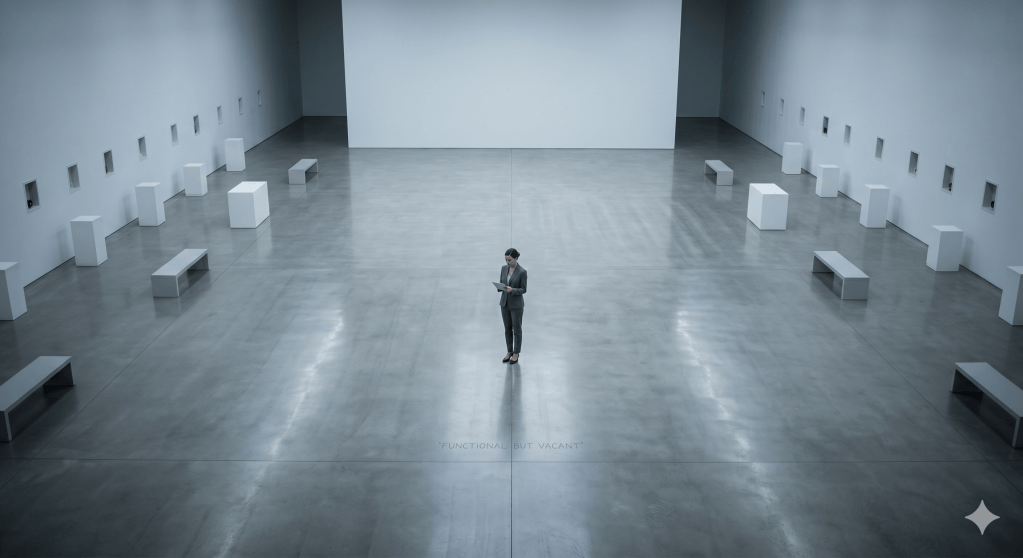
Some lives do not collapse visibly. They simply stop feeling emotionally livable from the inside.
Foreclosure is usually associated with property.
A structure becomes financially unsustainable.
Ownership deteriorates.
Eventually, the person can no longer emotionally or materially remain inside what was once considered home.
But there is another form of foreclosure people rarely discuss.
Emotional foreclosure.
The slow psychological process through which a life continues functioning externally while internally becoming impossible to fully inhabit.
At first, the signs are subtle.
Nothing dramatic breaks.
The routines continue.
Responsibilities are maintained.
The person still appears stable, productive, socially intact.
From the outside, everything may still look successful.
Which is precisely what makes emotional foreclosure so difficult to recognize while it is happening.
Because external functionality can successfully conceal internal abandonment for years.
The person continues living inside the structure of their life long after emotional ownership has quietly disappeared.
That loss rarely happens suddenly.
More often, it develops through prolonged misalignment.
Years of:
- suppressing authentic desires
- maintaining emotionally incompatible environments
- performing identities optimized for stability rather than truth
- adapting continuously against internal instinct
Eventually, the nervous system begins responding differently to the life being maintained.
The home no longer feels restful.
The career no longer feels meaningful.
The relationships no longer feel emotionally inhabitable.
Not necessarily abusive.
Not necessarily catastrophic.
Simply disconnected from the living self inside them.
That distinction matters.
Because emotional foreclosure is not always caused by obvious dysfunction.
Sometimes it emerges from chronic incongruence sustained quietly over long periods of time.
A person can remain externally committed to a life that internally stopped feeling emotionally safe, nourishing, or alive years earlier.
And because the external structure still functions, the individual often struggles to justify the depth of their exhaustion even to themselves.
After all:
- the bills are paid
- the relationship still exists
- the career remains respectable
- the routines remain intact
Nothing appears objectively broken enough to explain why existence itself has started feeling emotionally distant.
But the nervous system does not evaluate life purely through external metrics.
It evaluates through inhabitation.
Can the self still fully exist here?
Can authenticity breathe inside this structure?
Can emotional vitality survive here long term?
Eventually, the answer becomes increasingly difficult to ignore.
This is often when people begin describing strange internal sensations:
- feeling absent from their own life
- functioning mechanically
- emotional numbness inside familiar routines
- difficulty accessing genuine enthusiasm
- fantasizing constantly about escape, reinvention, or disappearance
These are not always signs of instability.
Many times, they are signs the psyche no longer experiences the maintained life as internally livable.
That realization can feel profoundly disorienting.
Especially because emotional foreclosure often develops inside lives society considers successful.
The person may have achieved:
- stability
- status
- financial predictability
- social approval
- relational continuity
And yet internally, something essential has quietly stopped responding.
This creates one of the most psychologically isolating experiences a person can endure:
The inability to emotionally inhabit a life they are still externally responsible for maintaining.
At first, most people attempt to compensate.
They optimize routines.
Improve productivity.
Take vacations.
Consume more distraction.
Search for temporary emotional stimulation.
But emotional foreclosure is rarely solved through surface adjustment.
Because the issue is not insufficient optimization.
The issue is structural disconnection.
The life may still function operationally while no longer supporting psychological aliveness.
And prolonged exposure to this state creates profound nervous system fatigue.
Humans are not designed merely to maintain existence mechanically.
They require emotional participation in their own lives.
Without that participation, reality starts feeling strangely unreal.
Muted.
Flat.
Distant.
The person may continue performing normalcy while internally experiencing increasing emotional vacancy.
This is where many individuals become highly functional but psychologically unreachable even to themselves.
Not because they lack gratitude.
Not because they are incapable of love or success.
But because prolonged self-suppression eventually weakens emotional inhabitation itself.
The self stops fully arriving inside the life being lived.
That absence changes everything.
Conversations become harder to connect to emotionally.
Achievements feel strangely weightless.
The future becomes difficult to imagine with genuine excitement.
And perhaps the most painful realization emerges quietly:
The person is no longer exhausted from building the life.
They are exhausted from remaining inside it.
That distinction can alter someone’s entire understanding of themselves.
Because emotional foreclosure forces a confrontation many people spend years trying to avoid:
A life can remain externally stable while internally ceasing to feel psychologically survivable.
And importantly, this does not mean the person is failing.
It may mean the nervous system has simply stopped cooperating with prolonged misalignment.
The body eventually resists what the identity continues rationalizing.
That resistance often appears first through:
- numbness
- detachment
- fantasy about radical change
- loss of vitality
- emotional absence
- chronic exhaustion without visible cause
The psyche begins signaling:
I can no longer fully live here internally.
But emotional foreclosure becomes especially dangerous when people interpret these signals as personal weakness instead of structural incompatibility.
So they continue forcing participation.
Continue performing alignment.
Continue maintaining structures that no longer allow authentic psychological inhabitation.
Until one day, a quieter truth finally surfaces:
The goal was never merely to build a stable life.
The goal was to build a life the self could fully remain alive inside.









