
Originally published in January 2010 and comprehensively updated/edited in June 2026.
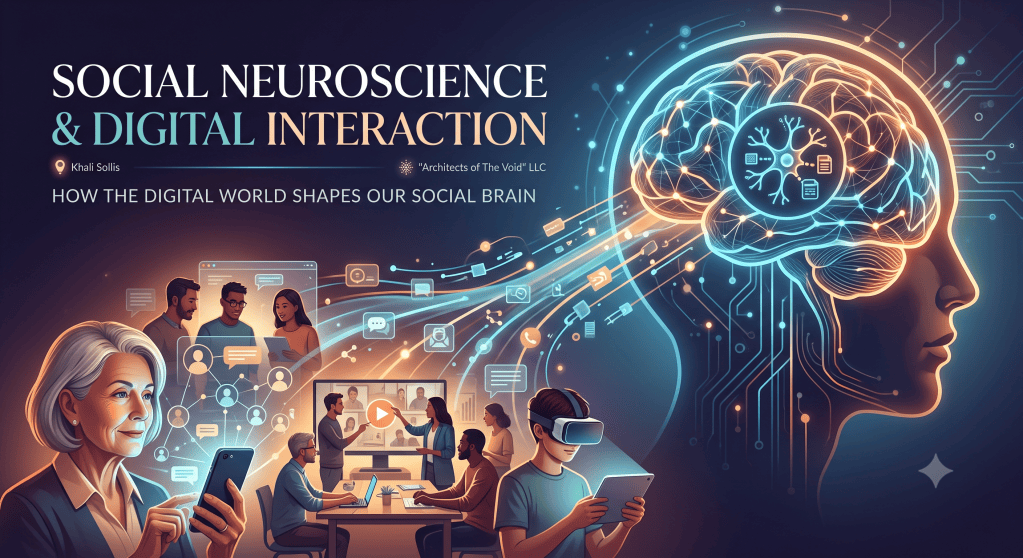
How the brain, built for face-to-face contact, adapts to digital social life, from emotional contagion research to reward, comparison, and adolescence.
Every notification is a social signal. Your brain doesn’t care whether it comes from someone standing beside you or from a stranger thousands of miles away. It processes both as information about belonging, status, approval, or rejection, running the same ancient circuitry either way. That fact, more than any single statistic about screen time, is the starting point for understanding what happened to human social life over the past decade and a half.
Looking back from 2026, January 2010 marks the beginning of a decade in which social neuroscience would rapidly expand into the study of digital life. At the time, roughly 350 million people had a Facebook account, the iPhone had been on the market for less than three years, and the word “influencer” had not yet entered common use. Social media was still widely treated as a novelty, something for keeping up with old classmates or sharing vacation photos. Few people, including the researchers studying human behavior at the time, fully appreciated that a new kind of social environment was taking shape, one that would reroute how billions of people experience friendship, status, loneliness, and even grief. Sixteen years later, that environment is no longer new. It is simply where much of social life happens.
This shift raises a question that sits at the intersection of biology and culture: what happens to a brain that evolved for face-to-face contact when a large share of its social interaction moves onto a screen? The field of social neuroscience, which studies how the brain supports social behavior, offers a partial answer. It does not suggest that digital interaction has rewired human nature into something unrecognizable. It suggests something more subtle and, in some ways, more interesting: the same neural systems that guided our ancestors through tribes and villages are now processing a social world of notifications, feeds, and strangers’ opinions, often without the cues those systems were built to expect. What follows traces that story, from the psychological climate of the early social media era through the brain systems involved in connection, emotion, and reward.
A Field Comes Into Focus
By coincidence or good timing, January 2010 was also the month in which social neuroscience took a decisive step toward becoming a formally organized field. On January 20 of that year, in Auckland, New Zealand, the psychologist John Cacioppo and the neuroscientist Jean Decety, along with colleagues from across psychology, anthropology, sociology, and psychiatry, launched what would become the Society for Social Neuroscience. Its founding brought together researchers from dozens of countries who had, until then, been studying the biology of social behavior somewhat separately within their own disciplines.
This is worth pausing on, because it means the scientific infrastructure needed to study digital social behavior rigorously was assembling itself at almost the exact moment that digital social behavior was becoming a dominant feature of everyday life. The society’s founders were not thinking primarily about smartphones or news feeds. Their early focus was on more foundational questions: how loneliness affects the body, how oxytocin shapes bonding, how the brain represents other people’s mental states. But the interdisciplinary framework they built, one that treated social experience as a legitimate and measurable biological phenomenon, turned out to be exactly the toolkit the coming decade would need.
The Social Landscape of the Early 2010s
At the start of the last decade, digital platforms were beginning to compete for something that had always been scarce: attention. Sites like Facebook, and soon Twitter and Instagram, discovered that showing people content that provoked a reaction, whether delight, outrage, or curiosity, kept them scrolling longer than neutral content did. This was not a conspiracy so much as a natural outcome of trial and error, refined constantly through data most users never saw.
At the same time, psychologists and sociologists were noticing a cultural mood that seemed to accompany this shift. Surveys throughout the 2010s pointed to rising rates of reported loneliness, particularly among teenagers and young adults, the very group that had grown up alongside smartphones. Researchers disagreed, and still disagree, about how much of this trend can be attributed to social media itself versus other forces such as changing family structures, economic pressure, or shifts in how young people spend their free time. What became clear, though, was that something about spending hours a day in a mediated social space was worth investigating scientifically rather than dismissing as a passing worry.
This is where social neuroscience entered the conversation. Rather than treating “screen time” as a single blunt variable, researchers began asking more precise questions. Does the brain respond to a text message the same way it responds to a voice? Does a stranger’s approval on a public post activate the same reward pathways as a compliment from a close friend? Can an emotion spread from one person to another through nothing but written words on a screen? The answers, gathered slowly through experiments over the following decade, painted a picture of a brain that is remarkably good at adapting to new social formats, and occasionally fooled by them.
The Brain’s Social Toolkit
To understand what changes when interaction goes digital, it helps to know what the brain is normally doing during face-to-face contact. Humans are unusually social animals, and evolution appears to have built a dedicated set of neural tools for reading and responding to other people.
Reading Faces and Predicting Intentions
A significant portion of the brain, especially in regions like the superior temporal sulcus and areas of the prefrontal cortex, is devoted to a skill psychologists call theory of mind: the ability to infer what someone else is thinking, feeling, or intending. In person, this system has a lot to work with. A raised eyebrow, a pause before answering, a shift in posture, all of these are folded automatically into our read of a situation, usually without conscious effort.
Text-based communication strips almost all of that away. A message that reads “fine.” can mean genuine agreement, mild irritation, or quiet anger, and the reader is left to guess based on context and prior history with that person. Some researchers have proposed that the brain compensates for this missing information by filling in gaps with its own assumptions, which may explain why misunderstandings over text and email are so common and so hard to resolve through more text.
Mirror Systems and Shared Feeling
Another well-studied piece of the social brain involves what are often called mirror neuron systems, networks of cells that appear to activate both when we perform an action or feel an emotion ourselves and when we observe someone else doing the same. This mirroring is thought to be part of how humans develop empathy, allowing us to feel something of another person’s experience simply by watching them.
Video calls partially engage this system, since they preserve facial expression and tone of voice. Text does not, at least not in the same direct way. And yet, as later research would show, something resembling emotional mirroring can still occur through purely written communication, which turned out to be one of the more surprising findings to come out of this field.
Emotional Contagion in a Text-Based World
For most of human history, the idea that emotions could spread from person to person, sometimes called emotional contagion, was studied almost entirely in face-to-face settings. A tense room, a laughing crowd, a grieving family: these are situations where mood visibly moves between people through tone, expression, and body language. It was less obvious whether the same phenomenon could occur when all of those nonverbal signals were removed and replaced with nothing but written words appearing in a feed.
A widely discussed study addressed this question directly. Researchers Adam Kramer, Jamie Guillory, and Jeffrey Hancock, examining data from a major social network, altered what appeared in the news feeds of a very large group of users for one week, reducing the amount of either positive or negative emotional content that each group saw. They then measured whether this shift changed the emotional tone of what those users subsequently posted themselves. The result was a modest but statistically detectable effect in the expected direction: users who saw less positive content in their feed tended to produce slightly fewer positive words and slightly more negative ones in their own posts, and the reverse pattern held for users who saw less negative content.
The significance of this finding was not that scrolling through a feed causes dramatic mood swings. The effect sizes were small, and the researchers themselves were careful to describe them as modest. The significance was that emotional contagion appeared to be possible at all in the complete absence of face-to-face contact, tone of voice, or shared physical space. It suggested that whatever neural and psychological machinery allows one person’s mood to influence another’s does not strictly require the cues that social neuroscience had long assumed were necessary. Written language alone, filtered through an algorithm, was enough to nudge emotional expression at a population scale.
The study also became a landmark for a different reason. Because it involved manipulating what nearly seven hundred thousand people saw without their explicit knowledge, it prompted a significant public debate about the ethics of large-scale behavioral experiments conducted by private companies on their users. That debate reshaped how platforms, universities, and regulators think about consent and research oversight in digital environments, and its influence is still visible in how online experiments are reviewed today.
Taken together, this line of research suggests that digital platforms are not simply passive channels for social contact. They are environments capable of shaping collective mood in ways that are subtle, statistically real, and only partially understood, even now.
The Reward System and the Design of Attention
Alongside emotional contagion, a second major thread of social neuroscience research in this period focused on reward. The brain’s dopamine system, best known for its role in motivation and pleasure, does not respond most strongly to guaranteed rewards. It responds most strongly to uncertain ones. A slot machine is more compelling than a vending machine precisely because the payout is unpredictable.
Social media notifications share this structure. A person posting a photo does not know how many likes it will receive, or when, or from whom. That uncertainty appears to be part of what makes checking a phone so habitual for so many people, since each check carries the small possibility of a rewarding surprise. This is not evidence that platforms were engineered maliciously, though some early employees at major tech companies later described exactly that kind of intentional design in public interviews. It is evidence that a very old piece of brain architecture, one that evolved to help our ancestors find unpredictable sources of food or notice unexpected social opportunities, is now being engaged dozens or hundreds of times a day by a device most people carry in their pocket.
This dynamic plays out differently across different corners of a person’s life. A parent might feel a small dopamine-linked pull to check a family group chat during dinner. A hobbyist might feel the same pull refreshing a forum for feedback on a project. A person recovering from a breakup might feel it most acutely while checking an ex-partner’s public profile, a behavior that researchers studying rumination have linked to prolonged emotional distress after a relationship ends. The underlying mechanism is the same in each case, even though the emotional stakes differ enormously.
Social Comparison and the Feeling of Falling Behind
Long before social media existed, psychologists described a basic human tendency called social comparison, the habit of evaluating our own lives by measuring them against the people around us. In a small town or a single workplace, the pool of people available for comparison was limited. Social media expanded that pool to an almost unlimited scale, offering a constant stream of curated highlights from friends, acquaintances, and strangers alike.
Several studies conducted through the 2010s and into the 2020s found associations between heavy social media use and lower self-reported well-being, particularly when that use involved passive scrolling rather than active conversation with friends. It is worth being precise about what this research does and does not show. Most of it is correlational, meaning it identifies a relationship between two things without proving that one directly causes the other. People who are already feeling isolated may simply be more likely to scroll passively, rather than scrolling being the thing that makes them feel isolated in the first place. Some experimental studies have found modest improvements in mood when participants were asked to limit their use, which lends some support to a causal interpretation, but the picture remains genuinely mixed rather than settled.
What does seem consistent across the research is that the type of engagement matters more than the raw amount of time spent. A person who spends twenty minutes messaging a close friend appears to fare differently, psychologically, than a person who spends the same twenty minutes silently scrolling through the posts of people they have never met. This distinction between active and passive use has become one of the more durable findings in the field, even as specific platforms and formats have changed dramatically since the research began.
Adolescence and the Developing Social Brain
Few groups have received more scientific attention in this area than adolescents, and for good reason. The teenage years involve significant development in brain regions related to social reasoning and emotional regulation, particularly the prefrontal cortex, which continues maturing into the mid-twenties. This is also the period of life when peer approval carries unusually high psychological weight, a pattern observed across many cultures and even, in modified form, in other social primates.
Introducing a platform that quantifies peer approval through visible metrics, follower counts, likes, view counts, arrived at a moment when adolescent brains were already primed to care intensely about social standing. Some researchers have argued this combination may amplify existing vulnerabilities, particularly around body image and social exclusion, especially for teenagers who were already prone to anxiety or low self-esteem. Others caution against treating adolescents as uniformly at risk, noting that many teenagers use these platforms to find community and support they could not access locally, particularly those who are geographically isolated or part of a small minority group within their school or town.
Neither view fully displaces the other. The honest scientific position, as of the most recent research, is that digital platforms appear to be neither purely harmful nor purely benign for young people, and that individual differences, including existing mental health, family support, and how a platform is used, matter enormously in determining the outcome for any particular teenager.
From 2010 to 2026: Sixteen Years of a Moving Target
Looking back from today, one of the more striking aspects of this field is how much the technology itself has changed while the underlying psychological questions have stayed remarkably stable. In 2010, researchers were asking whether a “like” could function as a meaningful social reward. Today, similar questions are being asked about AI-generated companionship, algorithmically curated video feeds, and virtual environments that did not exist when this essay was first drafted.
What has held steady across this span is the basic finding that the human brain does not neatly distinguish between digital and physical social contact the way early observers assumed it might. Oxytocin, the hormone associated with bonding, has been shown in some studies to rise modestly during warm video calls, though generally less than during in-person contact. The stress response can be triggered by a hostile comment online in much the same way it can by a hostile comment in person, even though the commenter may be a stranger the recipient will never meet. The brain, it turns out, is not especially good at fully discounting a social signal simply because it arrived through a screen.
At the same time, the sheer scale of digital interaction has introduced genuinely new phenomena that have no clean historical parallel: the coordinated pile-on, the anonymous crowd, the algorithm that decides which version of a person’s social world they will see today. Social neuroscience has had to expand its toolkit accordingly, borrowing methods from network science and computational social science to study behavior that unfolds not between two people in a room, but across networks of millions.
Conclusion
The story of social neuroscience and digital interaction is, in many ways, the story of an old system meeting a new environment. The brain’s capacity for empathy, its sensitivity to reward, its instinct to compare itself with others, none of these are inventions of the smartphone era. They are ancient adaptations, shaped over a very long evolutionary history to help small groups of humans cooperate, compete, and survive together. What changed, starting in the years around 2010 and accelerating ever since, was the scale and speed at which those systems began operating. A single post can now reach and emotionally influence hundreds of thousands of people within a day, something that would have been unimaginable to the small social circles our brains originally evolved to navigate.
Research from this period, including landmark studies on emotional contagion through digital networks, demonstrated that this influence is real, measurable, and does not require the traditional ingredients of face-to-face contact. It also demonstrated that the effects tend to be smaller and more conditional than early headlines often suggested, dependent on how a platform is used, who is using it, and what else is happening in that person’s life.
As artificial intelligence, immersive virtual environments, and new forms of digital companionship continue to develop, the questions first raised by this generation of social neuroscience research are unlikely to disappear. If anything, they are likely to become more pressing, as the line between human and algorithmically generated social contact grows harder to see. Understanding how the social brain responds to these new forms of interaction remains one of psychology’s most important challenges, and many of the questions first raised in 2010, from attention and mind wandering to social comparison and digital well-being, would become defining themes of the decade that followed.
References
Baumeister, R. F., & Leary, M. R. (1995). The need to belong: Desire for interpersonal attachments as a fundamental human motivation. Psychological Bulletin, 117(3), 497–529.
Cacioppo, J. T., & Patrick, W. (2008). Loneliness: Human Nature and the Need for Social Connection. W. W. Norton & Company.
Cacioppo, J. T., Berntson, G. G., & Decety, J. (2010). Social neuroscience and its relation to social psychology. Social Cognition, 28(6), 675–685.
Eisenberger, N. I., Lieberman, M. D., & Williams, K. D. (2003). Does rejection hurt? An fMRI study of social exclusion. Science, 302(5643), 290–292.
Fiske, S. T. (2010). Social Beings: Core Motives in Social Psychology. Wiley.
Kramer, A. D. I., Guillory, J. E., & Hancock, J. T. (2014). Experimental evidence of massive-scale emotional contagion through social networks. Proceedings of the National Academy of Sciences, 111(24), 8788–8790.
Lieberman, M. D. (2013). Social: Why Our Brains Are Wired to Connect. Crown Publishers.
Sherman, L. E., Payton, A. A., Hernandez, L. M., Greenfield, P. M., & Dapretto, M. (2016). The power of the like in adolescence: Effects of peer influence on neural and behavioral responses to social media. Psychological Science, 27(7), 1027–1035.
Society for Social Neuroscience. (2010). Mission and history. S4SN.org.
Twenge, J. M. (2017). iGen: Why Today’s Super-Connected Kids Are Growing Up Less Rebellious, More Tolerant, Less Happy—and Completely Unprepared for Adulthood. Atria Books.
Vogel, E. A., Rose, J. P., Roberts, L. R., & Eckles, K. (2014). Social comparison, social media, and self-esteem. Psychology of Popular Media Culture, 3(4), 206–222.









