
Originally published in July 2012 and comprehensively updated/edited in June 2026.
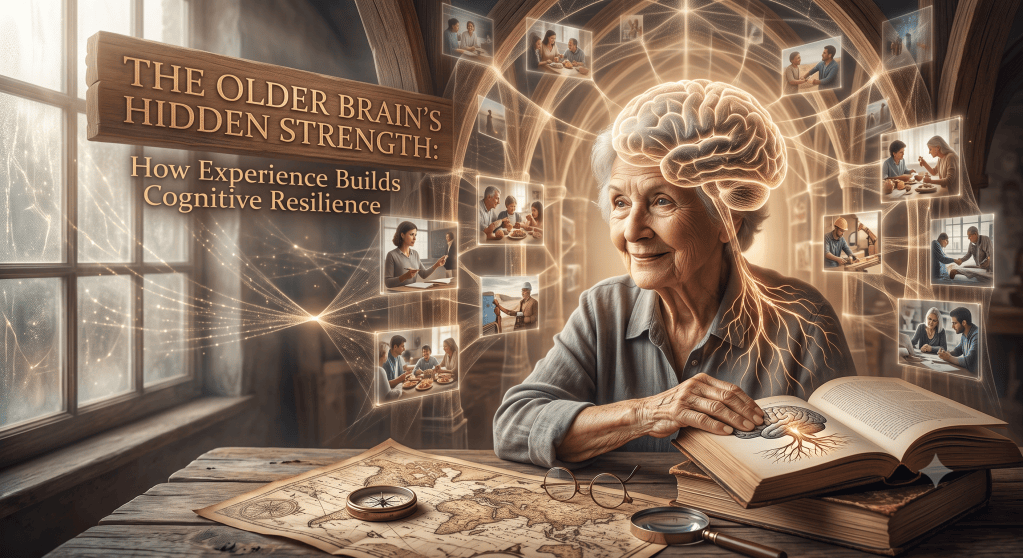
Neuroscience research on cognitive reserve, SuperAgers, and brain plasticity reveals why some older adults maintain remarkable memory and resilience across decades.
For much of the twentieth century, aging was often portrayed as a one-way journey: the brain reached its peak in youth, then gradually lost abilities over time. Retirement was often framed as a kind of intellectual sunset. Crossword puzzles and bingo nights were offered less as genuine enrichment than as gentle occupation for minds assumed to be winding down.
But neuroscience was beginning to reveal a more complicated — and more hopeful — picture. The aging brain does not simply fade. It adapts. Across decades of research, from early studies of stroke patients who recovered lost abilities to today’s brain scans of exceptional older adults in their eighties and nineties who maintain memory abilities comparable to people decades younger, a different story has emerged. Aging changes the brain, but it does not necessarily diminish the mind. In many cases, it reorganizes it, and that reorganization can produce a kind of resilience that younger brains simply haven’t had time to build.
This shift in understanding matters for reasons that extend well beyond the laboratory. Life expectancy has climbed steadily over the past century, and the proportion of older adults in most societies is larger than at any point in recorded history. How a culture thinks about the aging mind shapes everything from retirement policy to family caregiving to the self-image of millions of people entering their sixties, seventies, and beyond. A model of aging built entirely around loss tends to produce fear, disengagement, and lowered expectations — all of which can become self-fulfilling. A model built around adaptation opens different possibilities: continued learning, purposeful work, and the recognition that some forms of knowledge, judgment, and expertise may actually improve with age.
It’s worth being clear from the outset about what this research does and doesn’t show. These findings do not describe the average aging process, but rather illuminate why some individuals maintain unusually high levels of cognitive function despite the challenges of aging. Normal aging, successful aging, and resistance to disease are related ideas, but they are not the same thing, and this essay tries to keep that distinction visible throughout.
The Old Story: Aging as a One-Way Street
The earliest scientific models of brain aging were shaped by a fairly narrow set of observations. Researchers studying dementia and injury noticed that neurons, unlike skin or liver cells, generally do not divide and replace themselves once the brain matures. From this fact came a widely accepted conclusion: adults were long believed to be born with a fixed number of brain cells, and that number was thought to decline steadily after adolescence. Add to this the visible, sometimes devastating effects of conditions like Alzheimer’s disease, and it isn’t hard to see why “decline” became the default framework for aging.
This framework had real consequences. Cognitive testing throughout much of the twentieth century measured older adults against young adult norms, and predictably, older adults often performed worse — particularly on tasks involving speed, like reaction time or rapid problem-solving under pressure. Slower processing was often interpreted as weaker thinking, without sufficient consideration of whether speed alone captured the full range of human cognitive ability. Few researchers stopped to ask whether the tests themselves were measuring the right things, or whether slower didn’t necessarily mean worse when it came to judgment, pattern recognition, or real-world decision-making.
There’s an important distinction that emerged from this cognitive testing era, one that still shapes how psychologists talk about intelligence and aging: the difference between fluid intelligence and crystallized intelligence. Fluid intelligence refers to the raw ability to solve novel problems, hold information in mind, and think on the fly — skills that often peak relatively early in adulthood and, depending on the ability measured, may begin declining gradually later in adult life. Crystallized intelligence, by contrast, refers to accumulated knowledge, vocabulary, and expertise — the sum of what a person has learned and practiced over a lifetime. This form of intelligence tends to hold steady, and in many domains, actually continues to grow well into old age. The two systems age very differently, and much of the old, gloomy narrative about the aging brain came from focusing almost exclusively on the first while ignoring the second.
The Plasticity Revolution
The turning point came from an unlikely source: brain injury research. Beginning in the mid-twentieth century and accelerating through the 1990s and 2000s, neuroscientists began documenting cases in which patients who had lost specific abilities after a stroke or brain trauma slowly regained function — not because the damaged tissue repaired itself, but because other regions of the brain took over the lost job. This capacity for reorganization came to be known as neuroplasticity, and it fundamentally challenged the assumption that the adult brain was a fixed, unchanging structure.
One of the most famous demonstrations of adult brain plasticity came from a landmark 2000 study led by Eleanor Maguire and colleagues, who examined London taxi drivers — a group that must memorize an extraordinarily complex map of the city’s streets to pass their licensing exam. Brain scans showed that experienced drivers had differences in hippocampal structure compared with control participants, particularly in regions associated with spatial navigation, and the longer someone had been driving a cab, the more pronounced those differences were. The hippocampus plays a central role in forming new memories and navigating spatial environments. Because it is one of the first regions affected in Alzheimer’s disease, preserving its structure has become an important marker of healthy cognitive aging — which is part of why researchers keep returning to it throughout this field of study. The study couldn’t prove that the job alone caused the change — people with certain brain profiles might simply be drawn to the work, or thrive at it — but taken alongside later research, it became strong evidence that intense, sustained mental effort can shape the structure of the adult brain, not just in childhood but well into adult life.
If the brain could change in response to years of intensive navigation training, researchers began to ask, what might decades of accumulated experience do? The plasticity revolution reframed aging not as an inevitable erosion but as an ongoing negotiation between wear and adaptation — and that reframing opened the door to a very different kind of research question: why do some older brains hold up so much better than others?
The Concept of Cognitive Reserve
One of the most influential answers to that question came from Columbia University neuropsychologist Yaakov Stern, who in the early 2000s formalized a concept known as cognitive reserve. Stern’s theory grew out of a puzzling observation: there is often no direct relationship between the amount of physical damage or pathology in a brain and the degree of cognitive impairment a person actually experiences. Some people with substantial brain changes associated with Alzheimer’s disease show few outward symptoms, while others with comparatively mild pathology experience serious decline.
Stern’s research, along with work from many other scientists in the field, found that aspects of a person’s life experience — such as their education and the complexity of their occupation — can build a kind of reserve against brain pathology, allowing some people to maintain normal function for longer than others facing similar biological changes. The idea is not that education or a demanding career prevents brain aging or disease outright. Rather, cognitive reserve describes the brain’s capacity to compensate for damage, either by using its existing networks more efficiently or by recruiting alternate pathways when the usual ones are compromised. Some models of reserve treat it as a passive buffer, extra capacity built in ahead of time, while others treat the brain as an active problem-solver, working around damage as it occurs.
This has proven to be one of the more durable and clinically important ideas in aging research over the past two decades. It suggests that the mental habits people build across a working lifetime — solving problems, navigating social complexity, absorbing new information in a demanding job — don’t just produce knowledge. They may build a kind of flexibility in the brain that pays dividends decades later, when disease or normal wear begins to take a toll.
It’s worth being careful here about what the evidence actually shows, and this is a good place to underline the earlier distinction: cognitive reserve is not the same thing as preventing Alzheimer’s disease. It is a well-supported concept, but it describes a statistical relationship observed across large groups of people, not a guarantee for any individual. Education and occupational complexity are correlated with better outcomes in aging, but people’s lives are shaped by many other factors — genetics, general health, income, access to medical care — that make it difficult to isolate reserve as a single, clean cause. The theory offers a compelling explanation, not an ironclad law.
SuperAgers: Studying the Exception, Not the Rule
Perhaps the most vivid illustration of the brain’s capacity for resilience comes from a long-running research effort at Northwestern University, which for more than two decades has studied a rare group of older adults researchers call SuperAgers. SuperAgers are people over the age of 80 whose memory performance matches that of people thirty years younger, and researchers have found that their brains either resist the buildup of harmful proteins associated with Alzheimer’s disease or remain functionally unaffected even when those proteins are present. The program has examined the brains of dozens of SuperAgers after death, alongside ongoing testing of hundreds of living participants, in an effort to understand what sets this group apart. It’s worth remembering that SuperAgers are, by definition, not typical of aging generally — they are a deliberately studied exception, useful precisely because they help researchers isolate what resilience looks like at the extreme.
A 2026 study published in Nature and led by researchers at the University of Illinois Chicago, working with brain tissue donated through the Northwestern program, examined hippocampal tissue from five groups: healthy young adults, cognitively healthy older adults, SuperAgers, people with early or preclinical brain changes, and people with Alzheimer’s disease. Using a technique called multiomic single-cell sequencing, the researchers looked for markers of neurons at different stages of development — from early stem-like cells through immature, still-developing neurons — as a way of tracing cellular activity connected to the birth of new brain cells. Rather than treating this as proof that SuperAgers are actively manufacturing large numbers of new neurons late in life — a claim that touches one of the most actively debated questions in neuroscience, since researchers still disagree about how much neurogenesis actually persists in the aging human hippocampus — it’s more accurate to say that SuperAgers show cellular patterns in the hippocampus that researchers have associated with preserved neuroplasticity and memory resilience. The study’s authors describe this as a distinct “resilience signature”: a cellular environment in the hippocampus that appears markedly more supportive of the survival of developing neurons in SuperAgers than in typical older adults, with the least such activity seen in brains affected by Alzheimer’s disease.
The research also pointed to specific cell types involved. Two particular kinds of brain cells, astrocytes and a class of neurons called CA1 neurons, were identified as key contributors to memory retention in SuperAgers, with CA1 neurons playing a central role in consolidating and retrieving past experiences. The immature neuronal populations identified in SuperAger brains also showed characteristics associated with adaptability and cellular activity, suggesting a hippocampal environment more supportive of neuronal plasticity and memory preservation.
Biology alone doesn’t tell the whole story, though. SuperAgers also tend to share certain behavioral traits — they are notably social, maintaining strong relationships and staying actively engaged with the people and world around them. Whether an active social life helps produce resilient brain biology, or whether people with certain kinds of resilient brains are simply more inclined to stay social, remains an open and genuinely difficult question to answer. Most likely, the relationship runs in both directions, reinforcing itself over years. And as striking as these findings are, it bears repeating that SuperAgers represent a small, unusual slice of the older population — evidence of what’s biologically possible, not a description of what typically happens with age.
What Fast Walking Reveals About a Slow-Aging Brain
Cognitive resilience research isn’t limited to memory testing and hippocampal cell biology. One of the more surprising findings to emerge recently comes from studying something as ordinary as how fast older adults walk. Researchers led by scientists at Albert Einstein College of Medicine and Stony Brook Medicine recently described a group of exceptionally mobile older adults, referred to as “super movers” in their work — adults aged 80 and older whose walking speed is dramatically faster than that of their peers, closer to what researchers would expect from someone twenty or thirty years younger.
Drawing on data from thousands of older adults across several long-running studies, the researchers found that these exceptionally fast walkers had roughly half the risk of developing cognitive impairment compared to slower-moving peers, along with slower rates of decline in memory, processing speed, and executive function. What makes the finding particularly interesting, and slightly counterintuitive, is what the researchers found when they examined the brains of deceased participants after death: super movers showed no less Alzheimer’s-related brain pathology than everyone else. In other words, some of these fast-walking older adults had the same plaques and tangles associated with Alzheimer’s disease building up in their brains — they simply weren’t experiencing the cognitive symptoms typically linked to that pathology.
The study’s lead investigator described this as evidence of an “exceptional aging phenotype,” in which strong physical performance late in life may serve as a visible marker for broader resilience happening inside the brain, rather than evidence that these individuals were simply free of underlying disease. The research also found that super movers tended to preserve the volume of the hippocampus as they aged.
This doesn’t mean walking speed causes resilience, and it’s worth being explicit that walking speed and cognitive resilience are correlated, not necessarily causally linked. The study’s authors themselves note that understanding the behavioral and biological traits that characterize super movers may eventually reveal protective mechanisms against cognitive decline, but establishing cause and effect will require further research. Still, the connection fits with a broader pattern seen throughout aging research: physical health, cardiovascular fitness, and brain health are tightly interwoven, likely through shared pathways involving blood flow, inflammation, and the biological signals that support the growth of new brain tissue.
Experience as a Structural Advantage
Taken together, this research points toward a reframing of what expertise and experience actually mean at the level of the brain. A younger brain may have faster raw processing speed, but an older brain that has spent decades navigating complex work, relationships, and problem-solving has often built something a younger brain hasn’t had time to develop: densely interconnected neural pathways, refined pattern recognition, and — for some people — the adaptive capacity described by cognitive reserve.
This shows up in real-world behavior in ways that are easy to underestimate. Experienced professionals in fields like medicine, law, aviation, and skilled trades often demonstrate judgment and error-avoidance that outpaces younger colleagues with sharper reflexes but thinner experience. A veteran pilot recognizes the early signature of a developing problem before a checklist would even flag it. A seasoned physician notices something is off about a patient before any single test result explains why. This is not mysticism or simple confidence; it reflects years of pattern exposure that has been encoded into the brain’s associative networks, allowing rapid, accurate judgment that doesn’t rely on the slower, more effortful problem-solving that dominates fluid intelligence.
None of this erases the real challenges that come with brain aging. Processing speed genuinely does slow for most people, working memory can become less flexible, and diseases like Alzheimer’s remain a serious and unresolved public health concern. The point isn’t that aging carries no cost. It’s that the story is far more layered than pure decline, and that certain kinds of accumulated experience appear to build real, measurable protection against that decline — protection with an identifiable basis in brain structure and cell biology, not just an encouraging attitude.
Rethinking the Cultural Story We Tell About Aging
The cultural implications of this research are significant, because the beliefs a society holds about aging shape the behavior of the people living through it. If older adults are told, implicitly or explicitly, that decline is inevitable and unstoppable, they may disengage from the very activities — social connection, physical activity, mentally demanding work, continued learning — that the evidence suggests actually build resilience. The old narrative risked becoming a kind of self-fulfilling prophecy, discouraging exactly the behaviors that protect the aging brain.
The emerging picture instead treats brain aging as something closer to a dynamic, ongoing process shaped by decades of accumulated behavior, rather than a fixed countdown clock. That reframing carries weight for how workplaces think about older employees, how families think about supporting aging relatives, and how individuals think about their own trajectory as they move into their sixties, seventies, and beyond. Staying socially connected, remaining physically active, and continuing to engage in complex, effortful thinking are not just pleasant lifestyle recommendations — they appear to correspond to measurable differences in brain structure and function decades later.
Conclusion: A Brain That Adapts, Not Just Ages
The story of the aging brain has shifted substantially since the mid-twentieth century, when decline was treated as an unquestioned inevitability. Research on neuroplasticity, cognitive reserve, SuperAgers, and even something as simple as walking speed all point toward a more nuanced conclusion: the brain doesn’t simply erode with time. It reorganizes, compensates, and in some people, actively resists the biological changes that would otherwise produce cognitive decline.
This doesn’t mean aging is without real difficulty, or that every older adult can expect to become a SuperAger through sheer effort. Genetics, disease, and circumstance still play a substantial role, and researchers are still working to understand exactly how much of this resilience can be built versus how much is a matter of biological luck. But the accumulating evidence makes clear that decades of experience, social engagement, and physical and mental activity leave a real, physical mark on the brain — one that in many cases works in a person’s favor.
As life expectancy continues to climb and the number of people living into their eighties, nineties, and beyond grows worldwide, understanding how some brains manage to stay sharp will only become more important — not just for treating disease, but for reshaping what people expect from the later decades of their own lives. The evidence increasingly suggests that experience itself, hard-won and cumulative, may be one of the brain’s most underappreciated forms of strength.
Scientific References
Stern, Y. (2002). What is cognitive reserve? Theory and research application of the reserve concept. Journal of the International Neuropsychological Society, 8(3), 448–460.
Maguire, E. A., Gadian, D. G., Johnsrude, I. S., Good, C. D., Ashburner, J., Frackowiak, R. S., & Frith, C. D. (2000). Navigation-related structural change in the hippocampi of taxi drivers. Proceedings of the National Academy of Sciences, 97(8), 4398–4403.
Disouky, A., Sanborn, M. A., Sabitha, K. R., Mostafa, M. M., Ayala, I. A., Bennett, D. A., Lu, Y., Zhou, Y., Keene, C. D., Weintraub, S., Gefen, T., Mesulam, M.-M., Geula, C., Maienschein-Cline, M., Rehman, J., & Lazarov, O. (2026). Human hippocampal neurogenesis in adulthood, ageing and Alzheimer’s disease. Nature, 652(8112), 1264–1273. https://doi.org/10.1038/s41586-026-10169-4
Jayakody, O., et al. (2026). Exceptional aging: cognitive and brain health in super movers. Neurology. Published online June 16, 2026.
Further Reading
- Columbia Neurology: Yaakov Stern, PhD — background on the cognitive reserve research program
- Northwestern Medicine: SuperAging Research Program — overview of the SuperAger study and ongoing enrollment
- Northwestern Now: As SuperAgers age, they make more new neurons than their peers — university summary of the 2026 Nature findings
- NPR: Fast walkers in their 80s cut their risk of cognitive decline by half — accessible summary of the super movers study









