
Originally published in March 2014 and comprehensively updated/edited in July 2026.
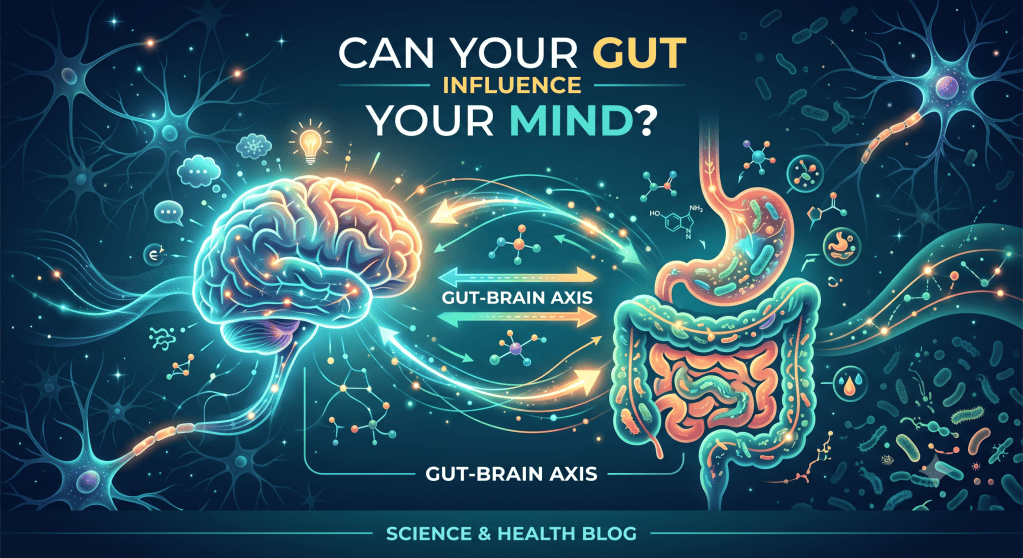
How a decade of research transformed the gut-brain axis from an intriguing hypothesis into one of neuroscience’s fastest-growing areas of study.
In the early 2010s, the idea that bacteria living in your intestines might shape your mood, your memory, or your risk of depression sounded like something out of a health food magazine rather than a peer-reviewed journal. Neuroscience at the time was still largely a brain-centered discipline. Psychiatry leaned heavily on the chemical-imbalance model of mental illness, built around neurotransmitters like serotonin and dopamine acting within the skull. The idea that a few pounds of microorganisms in the gut could reach up and influence the very organ we use to think about them felt, to many researchers, closer to folk wisdom than hard science.
And yet a handful of laboratories, mostly working with mice, kept publishing results that were hard to dismiss. Animals raised without any gut bacteria at all behaved strangely — more anxious in some paradigms, less anxious in others, and consistently different from their normally colonized littermates in ways that pointed toward the gut as a genuine partner in brain development. By the time this article was first drafted in 2014, the phrase “gut-brain axis” had begun slipping out of specialist conferences and into general science writing. It captured something people found intuitively plausible: the queasy stomach before a big presentation, the loss of appetite during grief, the vague sense that “gut feelings” might be more than a metaphor.
What has changed since then is not the core idea but the weight of evidence behind it. Over the past decade, the gut-brain axis has moved from a promising hypothesis tested mostly in rodents to an active, well-funded area of human clinical research, with its own scientific societies, dedicated journal sections, and a new vocabulary — psychobiotics, the microbiota-gut-brain axis, nutritional psychiatry — that didn’t widely exist before. This article traces that transition: what researchers believed in the early 2010s, what has actually been confirmed in people since, and where the science still runs ahead of what we can responsibly claim.
A Second Nervous System Hiding in Plain Sight
Long before “gut-brain axis” became a common phrase, gastroenterologists and neuroscientists had already documented something unusual about the digestive tract: it has its own nervous system, dense enough that some scientists nicknamed it the “second brain.” Officially called the enteric nervous system, this web of somewhere between 200 and 600 million neurons lines the walls of the esophagus, stomach, and intestines. It can coordinate the rhythmic muscle contractions of digestion largely on its own, without instructions from the brain, which is part of why food keeps moving through your system even during sleep or general anesthesia.
The enteric nervous system doesn’t operate in isolation, however. It communicates constantly with the brain through several channels. The most direct is the vagus nerve, a long cranial nerve that runs from the brainstem down through the neck and chest into the abdomen, carrying signals in both directions. Contrary to older assumptions that most of this traffic flowed from brain to gut — telling the stomach to churn, telling the intestines to relax — researchers have found that a substantial majority of vagal fibers actually carry information the other way, from gut to brain. This suggested that the brain was not simply directing digestive activity but was also continuously receiving physiological information from the gut. That asymmetry turned out to matter a great deal for how scientists began thinking about mood and behavior.
Beyond the Vagus Nerve
The vagus nerve is only one lane on a much busier highway. Gut bacteria and the cells lining the intestine also communicate with the nervous system through the immune system, by triggering the release of inflammatory signaling molecules called cytokines; through the endocrine system, by influencing hormones tied to the body’s stress response; and through direct chemical signaling, since certain gut microbes can produce or influence molecules that also function as neurotransmitters in the brain, including serotonin, GABA, and dopamine. It’s worth being precise here, because this point gets oversimplified in popular coverage: the fact that gut bacteria can produce a molecule chemically identical to a brain neurotransmitter does not mean that molecule is crossing into the brain and directly altering your mood. Most serotonin made in the gut, for instance, appears to act locally, regulating digestion, and doesn’t cross the blood-brain barrier in meaningful quantities. What matters more, according to current research, is that these gut-derived signals can influence the vagus nerve, the immune system, and the body’s broader stress physiology, which in turn have well-documented effects on brain function.
The Research That Set the Stage
The scientific groundwork for the gut-brain axis was laid earlier than most people realize, but it stayed largely confined to animal studies until the 2010s brought a wave of research designed specifically to test whether any of it held up in humans.
One of the more striking early findings involved so-called germ-free mice — animals raised in completely sterile conditions so that they never develop a normal gut microbiome. Compared to conventionally raised mice, germ-free animals showed measurable differences in anxiety-like behavior and in the development of brain regions involved in stress regulation. Even more suggestive, researchers found that transplanting the fecal microbiota from one strain of mouse into a germ-free mouse of a different strain could transfer some of the behavioral tendencies associated with the donor strain, not just the digestive characteristics. Later work extended this logic toward psychiatric relevance: when researchers transplanted fecal microbiota from humans diagnosed with depression into germ-free rodents, the recipient animals began showing depression-like behaviors and metabolic changes that the control animals did not, suggesting the microbiome itself was carrying something behaviorally meaningful, not merely reflecting a downstream consequence of illness.
These were dramatic results, but they came with an important caveat that responsible science journalism has to keep repeating: mice are not small humans, and behaviors like “immobility” in a forced-swim test are, at best, imperfect proxies for something as complex as human depression. The real test of the gut-brain axis was always going to be whether any of this translated to people. That test began in earnest around 2013, and it has been running, in various forms, ever since.
A Landmark Human Study
Among the first studies to offer direct evidence in humans came from a team at UCLA led by gastroenterologist Kirsten Tillisch and colleagues, published in the journal Gastroenterology in 2013. The researchers recruited healthy women with no gastrointestinal or psychiatric symptoms and divided them into three groups: one that consumed a fermented milk product containing several probiotic bacterial strains twice daily for four weeks, one that consumed a non-fermented milk product as a control, and one that received no intervention at all. Before and after the intervention period, the women underwent functional MRI scans while resting and while completing a task that involved viewing images of emotional facial expressions.
The results showed that the group who consumed the probiotic product had measurably different patterns of brain activity compared to the other two groups, particularly in regions involved in processing emotional and internal bodily sensations, including the insula and areas connected to the brainstem. This was a modest, proof-of-concept study — the sample size was small, all participants were healthy women rather than people with diagnosed conditions, and the researchers themselves were careful to note that the findings didn’t establish whether the changes were beneficial, only that they were measurable. But its significance lay less in what it proved and more in what it demonstrated was possible: that an ingested intervention aimed at the gut microbiome could produce detectable, reproducible changes in human brain activity using standard neuroimaging tools. That had simply never been shown in people before.
From Curiosity to a New Field: Psychobiotics and Beyond
In the same period, researchers Ted Dinan and John Cryan at University College Cork, who had already spent years studying stress physiology and the gut, coined a term that would come to define much of this emerging field: psychobiotics, referring to live microorganisms that, when consumed in adequate amounts, could confer a mental health benefit. Their 2013 paper in Biological Psychiatry proposing the concept marked a turning point, giving researchers and the public a shared vocabulary for a phenomenon that had previously been described only in scattered, disconnected findings.
The following decade saw that vocabulary put to the test. Small clinical trials examined whether specific probiotic strains, taken over several weeks, could measurably reduce self-reported anxiety or improve mood in both healthy volunteers and people with diagnosed conditions. Some of these studies reported encouraging results; others found no significant effect, or effects that varied so much by bacterial strain and dose that they resisted easy generalization. This unevenness is not a failure of the field so much as a hallmark of a young area of clinical research still working out which questions to ask. Which specific bacterial strains matter? What dose and duration produce reliable effects? Do the benefits, where they exist, apply broadly or only to certain people, such as those with elevated inflammation or high baseline stress?
By the early 2020s, researchers had also begun applying large-scale, population-level techniques to the question, comparing the composition of gut bacteria across thousands of people with and without psychiatric diagnoses. A widely cited 2021 meta-analysis published in JAMA Psychiatry, led by Viktoriya Nikolova and colleagues, pooled data across dozens of studies and found consistent, if modest, differences in gut microbial composition between people with psychiatric disorders — including major depression, bipolar disorder, and anxiety disorders — and people without them. It’s worth underscoring what this kind of study can and cannot tell us. A consistent association between microbial composition and a diagnosis is not the same as proof that microbial changes cause the disorder. It’s entirely possible, and quite likely in at least some cases, that the relationship runs partly in the other direction: chronic stress, altered eating patterns, reduced physical activity, and psychiatric medications themselves are all known to reshape gut bacteria. Most researchers in the field today describe the relationship as bidirectional, with the gut and brain shaping each other over time rather than one simply controlling the other.
What Depression Research Has Revealed About Mechanism
More recent human and translational research has tried to move past simple correlation and toward plausible biological mechanisms connecting gut bacteria to mood disorders. Three pathways have received the most sustained attention. The first is immune signaling: certain patterns of gut dysbiosis, meaning an imbalance in the normal community of gut microbes, appear linked to low-grade, chronic inflammation, and elevated inflammatory markers have long been observed in a subset of people with depression. The second is the hypothalamic-pituitary-adrenal axis, the body’s central stress-response system, which gut bacteria appear able to influence, potentially affecting how strongly and how long someone’s body reacts to stress. The third is the vagus nerve pathway already described above, through which gut signals can reach brain regions involved in mood regulation without needing to cross the blood-brain barrier at all.
None of these three pathways works in isolation, and the current scientific consensus, reflected in recent scoping reviews spanning research published between 2015 and 2025, treats depression, anxiety, and related conditions as arising from a network of interacting mechanisms rather than any single microbial cause. That’s a more complicated picture than the “gut bacteria control your mood” framing that sometimes circulates online, but it’s also a more scientifically honest one.
Why This Research Found a Receptive Audience
Part of understanding why the gut-brain axis captured public attention so quickly requires looking beyond the laboratory. The early 2010s were a period of rising interest in the human microbiome generally, fueled by the Human Microbiome Project and improvements in genetic sequencing technology that finally made it affordable to catalog the trillions of bacteria living in and on the human body. At the same time, public frustration with purely pharmaceutical approaches to mental health was growing. Antidepressant use had climbed steadily for two decades, yet rates of depression and anxiety showed no corresponding decline, and many patients described a gap between symptom relief and any deeper sense of feeling well. A framework suggesting that diet, lifestyle, and the trillions of organisms living in one’s own intestines might meaningfully affect mental health offered something pharmaceutical treatment alone did not: a sense of everyday agency.
This cultural readiness helps explain both the genuine excitement the research generated and the speed with which it was sometimes oversimplified. Wellness marketing moved faster than the science, and probiotic supplements, fermented foods, and “gut health” products were often sold with mood-boosting claims that outpaced what any single study had actually demonstrated. Responsible communicators in the field, including Cryan and Dinan themselves, spent much of the following decade trying to hold two ideas in tension at once: that the underlying science was genuinely exciting and worth taking seriously, and that individual products marketed on the strength of a handful of small trials were not the same thing as an established medical treatment.
What the Evidence Actually Supports Today
More than a decade on from those first tentative human studies, where does the science actually stand? The honest answer is: further along than skeptics expected in 2014, but with meaningfully more nuance than the most enthusiastic early coverage suggested.
There is now good evidence, replicated across multiple lines of research, that the gut and the brain are in constant, bidirectional communication through the vagus nerve, the immune system, and hormonal pathways, and that this communication has measurable effects on animal behavior. In humans, there is solid evidence that gut microbial composition differs, on average, between people with certain psychiatric diagnoses and those without, and reasonable evidence that specific interventions targeting the gut microbiome, including certain probiotic strains and dietary changes, can produce small but measurable effects on markers of stress, mood, and brain activity in some individuals under some conditions.
What remains considerably less settled is causation, generalizability, and clinical application. Part of the difficulty is that no two healthy people have identical microbiomes; the mix of bacterial species and strains varies substantially from one individual to the next, shaped by genetics, diet, geography, and life history. That variability helps explain why a probiotic strain that shifts brain activity or mood in one study population doesn’t always replicate cleanly in another, and why researchers remain cautious about issuing universal probiotic recommendations. No probiotic or dietary intervention has been established as a reliable stand-alone treatment for major depressive disorder or anxiety disorders in the way that established psychotherapies and medications have been. Effect sizes in human trials tend to be modest, sample sizes are often small, and results don’t always replicate cleanly from one lab or one bacterial strain to the next. Fecal microbiota transplantation, though it has produced striking results in animal models of depression, remains experimental for psychiatric purposes in humans and is not an approved treatment for mood disorders. Leading researchers in the field have generally cautioned against premature clinical claims, even as they continue pursuing the underlying biology with genuine confidence that something real is happening.
This is, in other words, a case study in how science actually works: fast-moving in the lab, slower and messier when it comes to translating findings into things people can safely and reliably use. That’s not a disappointing outcome. It’s the ordinary texture of a genuinely new field maturing in real time.
A Field Still Being Written
Looking back at where this topic stood in 2014, what stands out most is how much groundwork has since been filled in. The gut-brain axis is no longer a niche curiosity confined to a handful of specialized labs; it now has a presence in mainstream neuroscience and psychiatry conferences, dedicated funding streams, and an expanding body of human clinical trials that simply didn’t exist a decade ago. Diet’s relationship to mental health has become its own recognized subfield, sometimes called nutritional psychiatry, built in part on gut-brain research. Major depressive disorder, anxiety, and even neurological conditions such as Parkinson’s disease are now routinely studied with an eye toward gut microbial contributions, something that would have seemed like a stretch to most psychiatrists twenty years ago.
At the same time, the field has matured past its early, more sweeping claims and toward a more careful, mechanistic understanding of exactly which pathways connect gut and brain, under what conditions, and for whom. That shift, from broad enthusiasm to targeted, testable hypotheses, is usually a sign that a scientific idea is being taken seriously rather than dismissed. The gut-brain axis has not overturned psychiatry’s existing models of mental illness, nor should anyone expect probiotics to replace established treatments. But it has added a genuinely new dimension to how researchers think about the biology of mood, one that treats the body as an integrated system rather than a brain that happens to be attached to a digestive tract. Where this research goes over the next decade, particularly as larger and longer human trials mature, will likely determine whether gut-focused interventions become a standard complement to mental health care or remain a promising but supporting piece of a much larger puzzle.
Scientific References
Bravo, J.A., Forsythe, P., Chew, M.V., et al. (2011). Ingestion of Lactobacillus rhamnosus strain JB-1 induces anxiolytic effects and modulates central GABA receptor expression in a mouse via the vagus nerve. Proceedings of the National Academy of Sciences, 108(38), 16050–16055.
Dinan, T.G., Stanton, C., & Cryan, J.F. (2013). Psychobiotics: A novel class of psychotropic. Biological Psychiatry, 74(10), 720–726.
Cryan, J.F., & Dinan, T.G. (2012). Mind-altering microorganisms: The impact of the gut microbiota on brain and behaviour. Nature Reviews Neuroscience, 13(10), 701–712.
Tillisch, K., Labus, J., Kilpatrick, L., et al. (2013). Consumption of fermented milk product with probiotic modulates brain activity. Gastroenterology, 144(7), 1394–1401.
Kelly, J.R., Borre, Y., O’Brien, C., et al. (2016). Transferring the blues: Depression-associated gut microbiota induces neurobehavioural changes in the rat. Journal of Psychiatric Research, 82, 109–118.
Nikolova, V.L., Hall, M.R.B., Hall, L.J., et al. (2021). Perturbations in gut microbiota composition in psychiatric disorders: A review and meta-analysis. JAMA Psychiatry, 78(12), 1343–1354.
Carabotti, M., Scirocco, A., Maselli, M.A., & Severi, C. (2015). The gut-brain axis: Interactions between enteric microbiota, central and enteric nervous systems. Annals of Gastroenterology, 28(2), 203–209.
Marx, W., Lane, M., Hockey, M., et al. (2021). Diet and depression: Exploring the biological mechanisms of action. Molecular Psychiatry, 26(1), 134–150.
Foster, J.A., Rinaman, L., & Cryan, J.F. (2017). Stress & the gut-brain axis: Regulation by the microbiome. Neurobiology of Stress, 7, 124–136.
Middle East Current Psychiatry (2025). The gut–brain axis in depression, anxiety, and schizophrenia: A scoping review of mechanisms, biomarkers, and therapeutic implications. Middle East Current Psychiatry, 32.









