
Originally published in October 2014 and comprehensively updated/edited in July 2026.
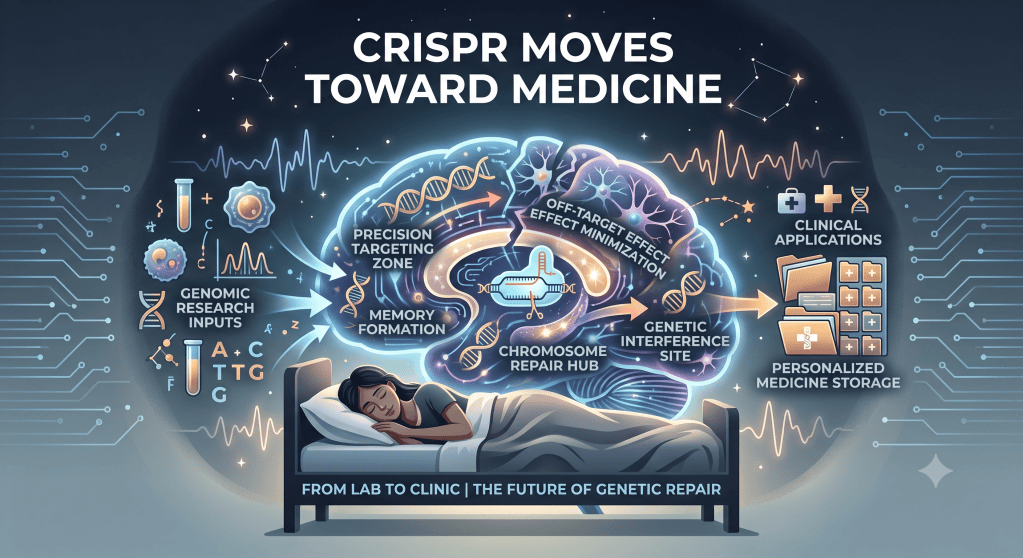
In 2014, CRISPR-Cas9 leapt from lab bench to living animals, primates, and disease models — setting the stage for today’s approved CRISPR gene therapies.
In 2014, most people had never heard the word CRISPR. The public conversation about biotechnology that year was dominated by other things: an Ebola outbreak spreading fear through West Africa and, briefly, American airports; a viral ice bucket challenge that turned a rare neurodegenerative disease into a household topic for a summer; the steady hum of debate over genetically modified crops. Gene editing, as a phrase, barely registered outside of academic labs and a handful of science journalists who had started paying close attention.
Inside those labs, though, something had shifted. Two years earlier, biochemists Jennifer Doudna and Emmanuelle Charpentier had shown that a bacterial defense system could be repurposed into a programmable tool for cutting DNA at almost any chosen location. By 2014, the technique had a name that was starting to travel beyond specialist journals, and laboratories around the world were racing to see what it could do. The mood among researchers was a mixture of exhilaration and something closer to vertigo. A tool that had taken years to build with older methods could now be assembled in an afternoon, for a few hundred dollars in reagents. That kind of acceleration tends to produce both breakthroughs and unease in equal measure, and 2014 delivered plenty of both.
This piece looks at that pivotal year: how CRISPR-Cas9 moved from a laboratory curiosity into a technology being tested in living animals, how scientists began imagining its use in human disease, and how the psychological experience of watching a field accelerate that fast shaped the decisions that followed. It also carries the story forward to where the technology stands today, more than a decade later, now that CRISPR-based treatments have reached actual patients.
From a Bacterial Immune System to a Laboratory Tool
To understand why 2014 mattered, it helps to remember where CRISPR came from. The sequences that give the technique its name were first noticed in bacterial DNA in the late 1980s, an odd pattern of repeated genetic code that nobody could initially explain. Over the following two decades, microbiologists slowly worked out that these repeats were part of a primitive immune system: bacteria use them to store snippets of viral DNA from past infections, then deploy a cutting protein called Cas9 to recognize and destroy that same virus if it ever returns.
The insight that turned this into a biotechnology revolution came in 2012, when Doudna and Charpentier’s teams showed that the bacterial cutting mechanism could be simplified and redirected. By supplying Cas9 with a custom-designed guide molecule, researchers could aim it at virtually any DNA sequence they chose, not just viral invaders. A year later, separate teams led by Feng Zhang and George Church confirmed that the system worked inside living human and mouse cells, not just in test tubes. That was the moment CRISPR stopped being a curiosity of bacterial biology and became something biomedical researchers everywhere wanted to get their hands on.
What made the tool so disruptive wasn’t that it did something entirely new. Scientists had been editing genes in living organisms for years using older methods, such as zinc finger nucleases and TALENs. But those tools required painstaking, expensive protein engineering for every new DNA target, work that could take months and was often out of reach for smaller labs. CRISPR replaced that bottleneck with a short piece of RNA that could be ordered or synthesized quickly and cheaply. The barrier to entry for genome editing dropped so fast that by 2014, thousands of laboratories worldwide had adopted the technique in some form.
2014: The Year the Applications Multiplied
If 2012 and 2013 were about proving the concept, 2014 was about testing its limits. Researchers began pushing CRISPR into living animals, into organs, and into disease models that more closely resembled the conditions doctors actually wanted to treat. Three lines of work from that year illustrate how quickly the technology moved from proof of principle toward something with real medical relevance.
Editing Genes Inside a Living Body
Until 2014, most CRISPR experiments had modified cells outside the body, in a dish, before those cells were used to create a research animal. During 2014, researchers demonstrated something more ambitious: delivering the CRISPR system directly into the organs of an adult, fully formed animal and editing genes in place. One study injected the CRISPR components into the liver of adult mice through a simple tail vein injection, disabling two genes known to suppress tumors and generating a mouse model of liver cancer within weeks rather than the months or years such models had previously required. Around the same time, a separate group used CRISPR to interrogate gene function directly inside the brains of living mice, a demonstration that the tool could reach and edit tissue as delicate and difficult to access as the central nervous system.
These experiments mattered less for the specific genes involved than for what they proved was technically possible. If genome editing could be delivered into an adult liver or an adult brain and still work, then the idea of using the same approach to correct a disease-causing mutation in a living patient, rather than only in embryos or isolated cells, left the realm of pure speculation and became an engineering problem with a visible, if distant, solution.
A Milestone in Primates
Perhaps the most attention-grabbing CRISPR result of 2014 involved two cynomolgus monkeys, twins born in a laboratory in China and given the names Mingming and Ningning. Researchers led by Jiahao Sha, Xingxu Huang, and Weizhi Ji had injected CRISPR components into single-cell monkey embryos, successfully editing two genes at once. When the twins were born, genetic testing confirmed the intended mutations were present, and the researchers reported no detectable “off-target” edits at the sites they examined, though later advances in sequencing would reveal that assessing off-target effects was more challenging than initially appreciated.
The significance of this work was less about the specific genes edited, which controlled metabolism and immune cell development, and more about the species involved. Mice are useful for many kinds of research, but their biology diverges from human biology in important ways, especially in the brain and nervous system. Monkeys are far closer relatives, which makes them valuable for modeling complex human diseases and also raises the ethical stakes of the research considerably. The fact that CRISPR could reliably and precisely edit a primate genome told scientists that the same precision might eventually be achievable in humans, a prospect that generated as much ethical concern as scientific excitement among the researchers themselves.
Correcting, Not Just Disrupting
A third strand of 2014 research pushed CRISPR toward its most medically relevant application: not just deleting or disrupting genes, but actually correcting a disease-causing mutation. In one widely cited study, researchers used CRISPR to fix the mutation responsible for a rare liver disorder called tyrosinemia in mice, restoring a broken metabolic pathway in living animals. Another team used the technique to correct a mutation causing cataracts in mouse embryos. These studies were still years away from anything resembling a human treatment, but they answered an essential question: could CRISPR be used not merely to study disease, but to repair the genetic error that caused it? The early answer, in mice at least, was yes.
Why the Pace Itself Became Part of the Story
There is a psychological dimension to scientific acceleration that is easy to overlook when reading a list of published papers. Fields that move slowly allow time for consensus to build gradually, for safety concerns to be worked through methodically, and for the broader public to absorb new ideas before they arrive in clinics. CRISPR did not offer that luxury. The gap between “this works in a dish” and “this works in a living primate” closed in roughly eighteen months, a pace that stunned even researchers who had spent their careers in molecular biology.
That speed produced a particular kind of tension inside the scientific community. On one hand, there was genuine enthusiasm: a tool this accessible meant that questions about gene function that once required years of specialized engineering could now be answered by nearly any competent lab, democratizing research in a way that promised to accelerate discovery across many fields of medicine at once. On the other hand, senior scientists, including some of the technique’s own inventors, began voicing concern that the technology’s ease of use had outpaced the field’s collective thinking about how it should and should not be applied, particularly to human embryos. Jennifer Doudna has spoken publicly about waking from a dream in which a colleague asked her to explain the technique to Adolf Hitler, a sign of how quickly her own relationship to her discovery had shifted from technical pride to something more sobering.
This is a familiar pattern in the history of science: a technological leap that outruns the ethical and regulatory frameworks meant to govern it. What made 2014 distinct was how compressed the timeline was. Researchers were still publishing basic proof-of-concept studies in the same year that serious, structured conversations about germline editing, altering DNA in a way that could be passed to future generations, were beginning in earnest among leading geneticists. Those conversations would become far more public the following year, when a Chinese team’s attempt to edit human embryos prompted an international moratorium debate, but the groundwork for that reckoning was laid in 2014, as scientists watched their own tool move faster than their capacity to fully reason about it.
From Curiosity to Cause: The Diseases Researchers Began Imagining
By the end of 2014, the scientific literature had started to fill with speculative but increasingly specific proposals for what CRISPR might eventually treat. Sickle cell disease and beta-thalassemia, both caused by well-understood mutations in a single gene responsible for hemoglobin production, were frequently mentioned as strong early candidates, since correcting or compensating for a single, well-characterized mutation was a far simpler engineering problem than tackling diseases involving many genes. HIV researchers began exploring whether CRISPR could be used to disable the genetic machinery that lets the virus hide dormant inside immune cells. Cancer researchers, building on the liver tumor models created that year, started imagining CRISPR as a way to engineer a patient’s own immune cells to better recognize and attack tumors.
None of this was close to a clinical reality in 2014. Delivering CRISPR safely and precisely into the right cells of a living human body, without triggering an immune reaction or editing unintended genes, remained a substantial unsolved problem. But the direction of travel was unmistakable. What had been, just two years earlier, a molecular curiosity from bacterial immunology was now being discussed in the same breath as some of medicine’s most stubborn genetic diseases. The distance between laboratory technique and biomedical tool was shrinking fast, even if nobody could say precisely how many years remained to close it.
From 2014 to Now: What Actually Reached Patients
More than a decade has passed since that first wave of animal studies, and it is worth pausing to note how much of the early optimism has, in fact, been borne out, along with how much work it took to get there. The importance of the original discovery was formally recognized in 2020, when Jennifer Doudna and Emmanuelle Charpentier received the Nobel Prize in Chemistry for developing CRISPR-Cas9 genome editing. In December 2023, a CRISPR-based treatment called Casgevy became the first gene-editing therapy of its kind to receive regulatory approval anywhere in the world, cleared for use in sickle cell disease and transfusion-dependent beta-thalassemia, the exact diseases that researchers had flagged as strong candidates back in 2014. <cite index=”18-1,18-2″>Developed by CRISPR Therapeutics and Vertex Pharmaceuticals, the treatment works by editing a patient’s own blood stem cells outside the body to switch on a form of hemoglobin normally only active in fetuses, which can substitute for the defective adult hemoglobin these disorders are missing.</cite>
<cite index=”18-1″>By early 2026, Casgevy had been approved in the United States, the United Kingdom, the European Union, Switzerland, Canada, and several countries in the Middle East</cite>, and clinical follow-up data has continued to look strong: <cite index=”24-1,24-2″>in one major trial cohort, every patient who received the therapy became free of the need for blood transfusions, with a minimum follow-up period of a year.</cite> Access remains uneven, since the treatment involves an intensive, months-long process of stem cell collection and bone marrow conditioning, and it carries a substantial price tag, but <cite index=”18-1″>the manufacturers reported that the large majority of eligible US patients now have access through reimbursed coverage.</cite>
The field has also broadened well past the ex vivo, blood-stem-cell approach that made Casgevy possible. <cite index=”24-1″>Researchers are now testing CRISPR systems delivered directly into the body, editing genes in place rather than outside it, for conditions such as a hereditary form of amyloidosis, with early trial data showing substantial reductions in the harmful protein responsible for the disease.</cite> <cite index=”21-1″>Other late-stage trials are exploring CRISPR-based approaches for hereditary angioedema, familial high cholesterol, Huntington’s disease, and Duchenne muscular dystrophy</cite>, while newer refinements of the technology, known as base editing and prime editing, are entering early human trials with the promise of making single-letter DNA corrections without the double-stranded cuts that the original CRISPR-Cas9 system relies on, a change that may reduce the risk of unintended genetic changes. <cite index=”24-1″>As of mid-2026, more than fifty CRISPR-related clinical trials were actively recruiting patients around the world.</cite>
Regulators have not treated this speed as a reason for less caution. <cite index=”19-1″>Casgevy remains under additional safety monitoring in Europe, with a fifteen-year registry study tracking patients for delayed risks, including the theoretical possibility that unintended genetic changes could contribute to cancer down the line.</cite> That kind of long-horizon vigilance is a direct descendant of the caution that researchers were already voicing back in 2014, when the technology’s speed first began to outpace anyone’s ability to fully map its risks.
Conclusion
Looking back, 2014 reads less like a single turning point and more like the year CRISPR stopped being hypothetical. The experiments that year, in mouse livers and mouse brains, in a pair of monkey twins in a Chinese laboratory, in mice engineered to have their disease-causing mutations quietly repaired, did not cure anyone. But together they answered a set of questions that had to be answered before medicine could seriously consider the technology at all: Could it work inside a living, adult body? Could it work in a primate? Could it fix a mutation rather than merely break a gene? By the end of that year, the answer to each was a cautious yes, and the conversation among scientists shifted from whether CRISPR might someday matter to medicine, to how soon, and under what safeguards, it should be allowed to try.
That question has since been answered, at least partially, by patients rather than by papers. People with sickle cell disease have received an approved CRISPR treatment and, in many documented cases, no longer experience the disease’s most painful complications. That outcome was not obvious or guaranteed in 2014; it required a decade of careful, often unglamorous work on delivery methods, safety monitoring, and manufacturing that rarely made headlines the way the original discovery did. The broader lesson of CRISPR’s path from bacterial curiosity to approved therapy may be less about the speed of the initial breakthrough and more about the much longer, steadier effort required to turn a powerful idea into something a doctor can responsibly offer a patient. As gene editing continues to expand into new diseases and new delivery methods, that same tension between rapid scientific possibility and careful clinical caution is likely to define the field for years to come.
Scientific Reference
- Jinek, M., Chylinski, K., Fonfara, I., Hauer, M., Doudna, J. A., & Charpentier, E. (2012). A programmable dual-RNA–guided DNA endonuclease in adaptive bacterial immunity. Science, 337(6096), 816–821.
- Cong, L., Ran, F. A., Cox, D., et al. (2013). Multiplex genome engineering using CRISPR/Cas systems. Science, 339(6121), 819–823.
- Mali, P., Yang, L., Esvelt, K. M., et al. (2013). RNA-guided human genome engineering via Cas9. Science, 339(6121), 823–826.
- Niu, Y., Shen, B., Cui, Y., et al. (2014). Generation of gene-modified cynomolgus monkey via Cas9/RNA-mediated gene targeting in one-cell embryos. Cell, 156(4), 836–843.
- Swiech, L., Heidenreich, M., Banerjee, A., et al. (2015). In vivo interrogation of gene function in the mammalian brain using CRISPR-Cas9. Nature Biotechnology, 33(1), 102–106.
- Xue, W., Chen, S., Yin, H., et al. (2014). CRISPR-mediated direct mutation of cancer genes in the mouse liver. Nature, 514(7522), 380–384.
- Innovative Genomics Institute (2026). CRISPR Clinical Trials: A 2026 Update.
- ClinicalMetric (2026). CRISPR Clinical Trials 2026: From Casgevy to Base Editing and Beyond.
- Ubie Doctor’s Note (2026). CRISPR Gene Therapy in 2026: Which Genetic Diseases Have Approved Treatments and What’s Still in Trials.









