
Originally published in October 2020 and comprehensively updated/edited in June 2026.
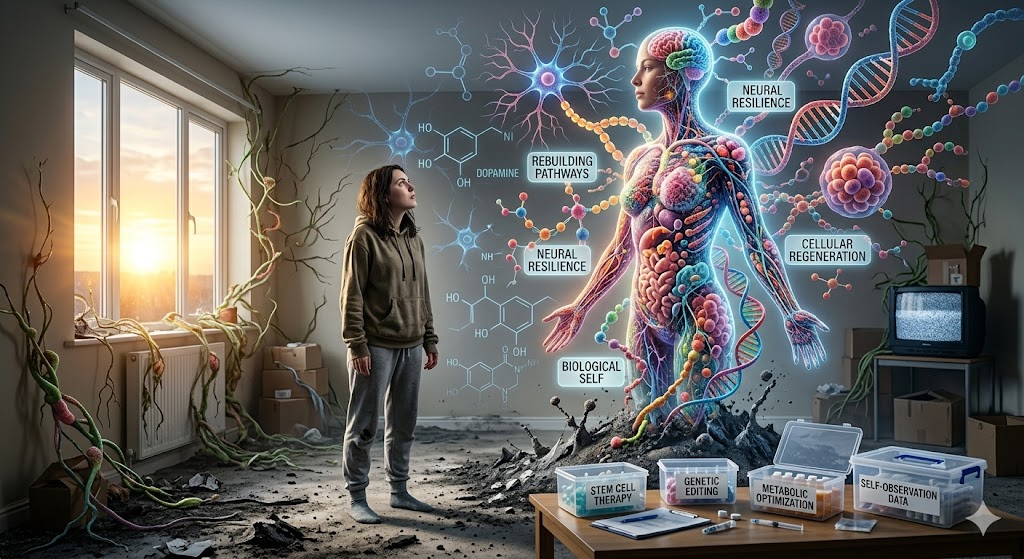
How the disruptions of 2020 sent millions searching for identity at the biological level — and what sleep science, neuroscience, and psychology tell us about rebuilding the self from the ground up.
There are moments in a civilization’s life when people stop asking “what should I do?” and start asking something far more destabilizing: “who am I, really?” The years surrounding 2020 were one of those moments. A pandemic collapsed the structures around which most people had organized their daily existence. Jobs, commutes, social rituals, gyms, churches, bars — the invisible scaffolding of identity — disappeared almost overnight. What was left was something harder to name: a person alone with themselves, stripped of the usual distractions, confronted with a peculiar kind of freedom that felt, to many, more like exposure than liberation.
This essay is about what happened next. Not politically, not economically, but psychologically and biologically. It is about why millions of people, in the years following that rupture, turned inward in a very specific direction — toward the body, toward sleep, toward hormones, toward the physical substrate of the self. And it’s about what science tells us about whether any of it worked.
The Collapse of the Social Self
Psychologists have long understood that identity is not primarily an internal construction. It is, to a surprising degree, built from the outside in. We know who we are partly because other people reflect it back to us — through our roles, our relationships, our routines. The sociologist Erving Goffman described social life as a kind of performance, where we constantly signal and adjust our self-presentation depending on the audience. Strip away the audience and the performance becomes confused.
That is roughly what happened in 2020. The pandemic didn’t just create health anxiety and economic stress. It disrupted what psychologists call “identity-relevant behavior” — the daily actions through which people express and reinforce a sense of self. When those behaviors stopped, a lot of people found that the identity underneath was less solid than they had assumed.
This kind of disruption isn’t without precedent. Research on unemployment, bereavement, and major illness consistently shows that the loss of a defining role — provider, employee, student, athlete — triggers something resembling grief, even when the loss isn’t permanent. The self-concept doesn’t like a vacuum. It will fill it with something, and that something is not always healthy.
What made the pandemic era unusual was its scope and simultaneity. This wasn’t one person losing their job; it was a collective experience of identity suspension affecting billions at once. And because it happened at scale, the cultural responses to it also happened at scale.
What the Body Knows That the Mind Forgets
One of the first things many people reached for during lockdown was physical. Running clubs exploded. Home gym equipment sold out globally. Bread baking, gardening, cold showers, intermittent fasting — all of these surged. The pattern was not random. These are all activities that engage the body directly and produce relatively quick, legible feedback. You either made a good loaf of bread or you didn’t. Your run either went well or it hurt. The ambiguity of modern professional and social life — where feedback is slow, metrics are fuzzy, and effort and reward are often decoupled — vanished.
There is good neuroscience behind why this felt so relieving. The brain’s reward circuitry is built for a world where effort, competence, and outcome are tightly linked. Dopaminergic systems, which underlie motivation and the sense of accomplishment, respond strongly to what researchers call “mastery experiences” — moments when skill is applied and something real results from it. A period of radical social disruption, when mastery in the ordinary sense became nearly impossible, pushed many people toward activities where the feedback loop was shorter and cleaner.
But there was something else going on too. Something more fundamental about the relationship between the body and the sense of self.
Biological Ground Zero: The Science of Starting Over
The phrase “rebuilding the self from biological ground zero” captures something real. For many people, the pandemic period functioned as a forced reset — a moment when the physiological dysregulation caused by years of poor sleep, chronic stress, sedentary work, and disrupted circadian rhythms suddenly became impossible to ignore. Without a commute to anchor the morning, without fluorescent office lights blurring the line between day and night, the body’s own signals became louder.
Sleep science offers a useful lens here. Circadian rhythms — the roughly 24-hour cycles that govern sleep, wakefulness, cortisol release, body temperature, and dozens of other biological processes — are profoundly sensitive to behavioral and environmental inputs. Years of research by scientists like Charles Czeisler at Harvard and Till Roenneberg in Munich have established that a large portion of the population is chronically sleep-deprived and chronically misaligned — waking earlier than their biology wants and accumulating what Roenneberg calls “social jetlag,” a gap between biological and social time.
Lockdown, counterintuitively, fixed this for some people. A 2020 study published in Current Biology found that when social obligations were removed, people’s sleep timing shifted significantly, with many sleeping longer and waking later. Whether this improved well-being depended on individual circumstances, but the physiological changes were measurable. Some people, for the first time in years, woke without an alarm. Their bodies, finally given space to operate on their own schedule, began to recalibrate.
This recalibration mattered more than it might seem. Sleep is not simply rest. It is when the brain consolidates memory, clears metabolic waste through the glymphatic system, and regulates the hormones — cortisol, testosterone, growth hormone, insulin — that shape mood, motivation, appetite, and resilience. When sleep is consistently disrupted, the downstream effects are vast. Chronically short or poorly timed sleep elevates inflammatory markers, impairs glucose metabolism, suppresses anabolic hormones, and alters the function of the prefrontal cortex in ways that reduce impulse control and emotional regulation.
Put simply: a person who is chronically sleep-deprived is not just tired. They are, in measurable biological terms, a different person than they would be if they were well-rested. Sleep, it turned out, was not a luxury at the edge of the reconstruction project. It was biological ground zero — the foundation without which everything else built on top of it was compromised.
The Hormone Conversation Nobody Was Having
Alongside the sleep discussion, something else emerged in the cultural landscape after 2020: a broader and more explicit conversation about hormones — particularly testosterone and cortisol, but also estrogen, thyroid hormones, and the complex cascade of signals that regulate the body’s stress response.
This conversation had been simmering in fitness and men’s health communities for years, but it broke into the mainstream with unusual speed. Testosterone replacement therapy clinics proliferated. Books and podcasts about optimizing hormonal health reached audiences that would never have sought out that content before. The language of “low T,” adrenal fatigue, cortisol dysregulation, and hormonal optimization became increasingly common in everyday conversation.
Some of this enthusiasm outran the science. “Adrenal fatigue,” for instance, remains a controversial concept not recognized as a formal clinical diagnosis, and the evidence for many popular hormonal interventions is mixed at best. It is worth being careful about the gap between the marketing language of wellness culture and what the clinical literature actually supports.
That said, the underlying instinct driving this interest was not irrational. Chronic psychological stress does measurably alter hormonal profiles. Elevated cortisol — the primary glucocorticoid stress hormone — suppresses testosterone synthesis, disrupts thyroid function, impairs insulin sensitivity, and, over time, contributes to the kind of low-grade systemic inflammation associated with depression, metabolic disease, and immune dysfunction. Robert Sapolsky’s research on chronic stress in primates, and the human work that followed from it, established that the physiological effects of living under sustained psychological pressure are real, significant, and cumulative.
The pandemic was, among other things, an extended stress event. For many people, the hormonal disruption that had been building for years became, during this period, undeniable in its effects. Persistent fatigue, difficulty concentrating, reduced libido, emotional flatness, disrupted sleep despite spending more time in bed — these symptoms drove people toward answers. The biological framing offered something that purely psychological explanations sometimes didn’t: a concrete mechanism, a testable hypothesis, and potentially reversible variables. The stress axis, in this sense, was its own kind of biological ground zero — a system so central to daily functioning that when it was dysregulated, almost nothing else worked properly.
The Microbiome and the Gut-Brain Question
One area where the science genuinely moved during this period was the gut-brain axis. The gut microbiome — the dense ecosystem of trillions of microbial organisms living in the gastrointestinal tract — is not simply involved in digestion. It communicates bidirectionally with the brain via the vagus nerve and immune signaling, and gut bacteria synthesize precursors to serotonin, dopamine, and GABA. Research groups associated with Ted Dinan and John Cryan at University College Cork produced evidence suggesting that disruptions to this ecosystem — through poor diet, high stress, or lack of dietary diversity — correlate with increased rates of anxiety and depression, while certain dietary interventions showed modest but real effects on psychological outcomes.
The science is still developing, the effect sizes are often small, and individual variation is enormous. But the broader point holds: what you eat changes who you are at a biological level, in ways that extend well beyond calories and macronutrients. For many people newly attentive to their own physiology, the gut-brain connection became one more piece of the reconstruction project — another place where small, concrete changes produced legible signals.
Exercise, Neuroplasticity, and What “Getting in Shape” Actually Does
No behavioral intervention for psychological health has a stronger evidence base than physical exercise. But the popular understanding of why exercise helps often stops at endorphins — which, while real, represent only a fraction of the story.
More significant, in terms of lasting neural change, is exercise’s effect on brain-derived neurotrophic factor (BDNF), sometimes called “Miracle-Gro for the brain.” BDNF promotes the growth, differentiation, and survival of neurons, and particularly supports neurogenesis in the hippocampus — the brain region most associated with memory, learning, and emotional regulation. John Ratey, a Harvard psychiatrist and author of Spark, has described aerobic exercise as one of the most powerful tools available for improving cognitive function and mood, and the research has continued to bear this out.
Exercise also directly modulates the HPA axis. Regular physical activity, particularly aerobic training, reduces baseline cortisol over time and improves the efficiency of the stress response — the body becomes better at activating the stress system when needed and, crucially, shutting it down when the threat has passed. This matters enormously for chronic stress, where the shutdown mechanism is often impaired.
What changed in the post-2020 cultural moment was not the discovery of these benefits — they were well-established before the pandemic — but the seriousness with which a much wider population began to engage with exercise as a psychological intervention rather than purely a cosmetic or cardiovascular one. The language shifted. People talked less about “getting in shape” and more about “taking care of their mental health.” For many, regular movement became the most reliable route back to biological ground zero: the clearest signal that the body was still capable, still responsive, still worth inhabiting. Whether this was genuine conceptual change or rebranding is somewhat beside the point; behavior is behavior, and the behavioral change was real.
Identity Reconstruction as a Process, Not an Event
What is most interesting about the rebuilding-the-self movement that emerged from this period is how explicitly it was framed as construction — as something that had to be actively done rather than passively recovered.
The psychologist Dan McAdams has spent decades studying how people construct what he calls the “narrative self” — the story we tell about who we are, where we came from, and where we are going. His research suggests that identity is not a fixed thing waiting to be discovered; it is an ongoing project, constantly revised in response to new experiences and new understandings. Disruption, in this framework, is not simply destructive. It creates the conditions for revision that ordinary life rarely provides.
This is not an uncomplicated idea. The pressure to “reinvent” oneself, to “optimize” one’s biology and psychology, can become its own form of anxiety — a permanent dissatisfaction with the current self, a wellness-industrial complex that profits from making people feel perpetually inadequate and fixable. The line between self-improvement and self-rejection is genuinely thin, and cultural critics were right to note that the post-pandemic wellness boom was not entirely free of that pathology.
But something more authentic was also present. For many people, particularly those who had been running on autopilot through professional and social demands that had accumulated over years, the forced pause was genuinely useful. Not pleasant — genuinely useful. It allowed, for the first time, a kind of biological and psychological audit. Questions that had never surfaced in the busyness of ordinary life suddenly had nowhere to hide.
What are my actual energy levels without stimulants? Most people had no idea. They had been medicating their mornings with caffeine for so long that the concept of a natural energy baseline had become theoretical. When the commute disappeared and the alarm became optional, some people discovered they were far more tired than they had realized — not situationally tired from a hard week, but structurally tired, in a way that pointed back years. Others found the opposite: that the exhaustion they had attributed to themselves was largely situational, a tax levied by an environment that had never fit them well.
What is my natural sleep schedule? For many, the answer was genuinely surprising. Without the tyranny of the 7 a.m. alarm, natural wake times shifted — sometimes by an hour, sometimes by two or three. People who had spent years believing they were lazy discovered they were chronotypes, biologically wired to a different clock than the one the working world had imposed on them. This was not a minor revelation. It reframed years of self-criticism as a mismatch problem rather than a character flaw.
What makes me feel capable and grounded, stripped of the external validation of career status and social performance? This was perhaps the hardest question, because so many people had spent so long outsourcing the answer to their job title, their salary, their social calendar, or their productivity metrics. When those scaffolds fell away and the question remained — unanswered, insistent — it pointed directly to biological ground zero. Not the constructed self, but the animal underneath it: the organism that needed light in the morning, movement during the day, food that wasn’t optimized for overconsumption, and sleep that wasn’t rationed.
These are not small questions. And the fact that millions of people were asking them simultaneously, with access to more scientific information than any previous generation, produced something worth paying attention to.
The Limits of Biological Reductionism
A necessary counterpoint deserves space here. The turn toward biology as a framework for understanding the self carries genuine risks alongside its genuine insights.
Human beings are not simply the product of their sleep schedules, microbiomes, and testosterone levels. The social determinants of wellbeing — economic security, meaningful work, quality relationships, community, a sense of purpose — are at least as important as the biological ones, and for many people considerably more so. A society that directs people toward individual biological optimization while leaving structural causes of suffering unaddressed is making a category error with real consequences.
Moreover, the biological framing can, at its worst, pathologize normal human responses to genuinely difficult circumstances. Feeling exhausted, unmotivated, or emotionally flat during a global catastrophe is not primarily a hormonal disorder requiring laboratory optimization. It is a human response to a hard situation. Sometimes the appropriate response to suffering is not to fix your cortisol. Sometimes it is to grieve, to change your circumstances, or to connect with other people who are suffering alongside you.
The most sophisticated version of biological self-understanding recognizes this. It doesn’t oppose biological and social explanations; it holds them together. The body and the social world are in constant conversation. Chronic stress is simultaneously a social phenomenon — produced by inequality, insecurity, and disrupted community — and a biological one. Fixing only one side of that equation leaves the other side still damaged.
A Forward Look: What Lasted
By the mid-2020s, some things from the post-pandemic reconstruction project had clearly lasted and others had not. The broader cultural interest in sleep science remained. Wearable devices that tracked sleep staging, heart rate variability, and recovery metrics had become genuinely mainstream, and the data they generated changed behavior for many users in measurable ways. Chronobiology — the study of biological time — moved from a specialist field to a topic discussed in mainstream health media.
The conversation about hormones had matured considerably. After years of hype and backlash, a more nuanced middle position emerged: that hormonal health was neither the solution to all psychological problems nor irrelevant to them, and that identifying and addressing genuine clinical imbalances was worthwhile, while aggressive optimization programs for healthy individuals deserved skepticism.
Exercise science continued to deepen its understanding of the mental health applications of physical activity, and clinical guidelines increasingly incorporated exercise as a front-line recommendation for mild to moderate depression and anxiety — not as a replacement for therapy or medication where those were indicated, but as a legitimate intervention with a good evidence base and a favorable side-effect profile.
What the rebuilding-the-self project of the early 2020s ultimately represented was a broad, somewhat disorganized, but genuinely earnest attempt by millions of people to take their own biology seriously — to recognize that the physical substrate of the self is not a nuisance to be overridden by caffeine and willpower but a system with its own logic, its own needs, and its own profound influence on who we are and who we can become.
The disruption that made that project necessary was real and costly. But the project itself — the turn toward biological ground zero as a starting point for reconstruction — reflected something true about the relationship between body, mind, and self. We are animals. We evolved in environments with predictable light cycles, social connection, physical movement, and food scarcity rather than abundance. Modern life had drifted far from those conditions, and many of the chronic conditions of modern psychological suffering reflected that drift. The pandemic forced a reckoning. What people did with it varied enormously, but the best responses shared a common insight: that rebuilding the self is not only a psychological or philosophical project. It begins, as it has always begun, in the body.









