
Originally published in November 2022 and comprehensively updated/edited in June 2026.
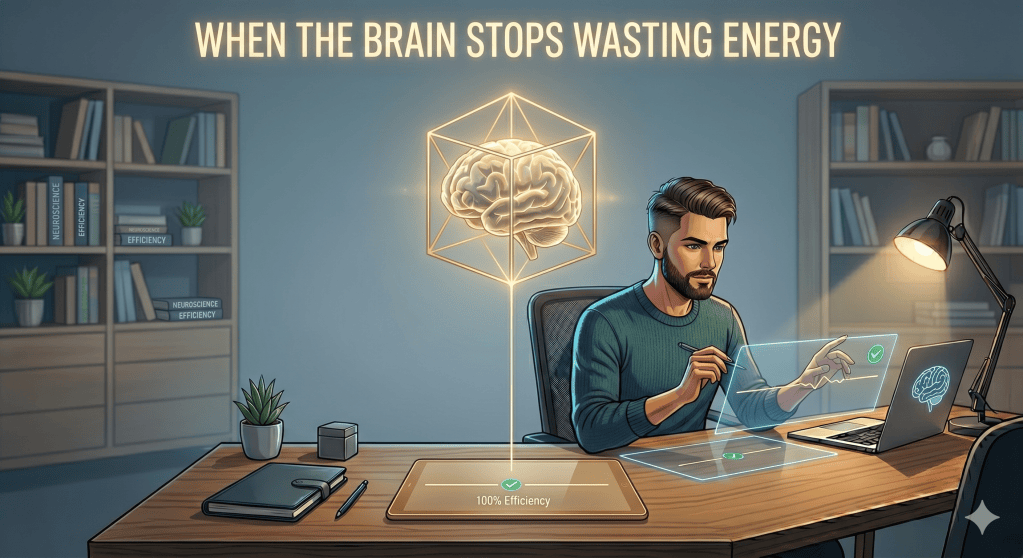
When millions of workers quietly stopped overperforming, the brain had reasons. Explore the neuroscience of motivation, burnout, and why the brain stops wasting energy when effort stops mattering.
There was a moment, sometime around 2021, when a quiet but seismic shift started moving through the American workforce. People were still showing up — to their screens, to their offices as they gradually reopened, to the motions of employment — but something had changed underneath the surface. They were doing their jobs. They just weren’t killing themselves doing it.
The term “quiet quitting” spread across social media with the speed and inevitability of a phrase whose time had come. Critics called it laziness. Defenders called it sanity. Economists called it a labor market anomaly. But neuroscientists and psychologists, had they been listening closely, might have recognized something else entirely: the human brain, under conditions of sustained stress and perceived futility, doing exactly what it was built to do — stopping the waste.
This is not an article about work culture wars, though that backdrop matters. It’s about what happens inside the human brain when it decides, consciously or not, that maximum effort is no longer worth the biological cost. It’s about energy, motivation, prediction, and a period in American social history when millions of people arrived at the same internal conclusion at roughly the same time. And it’s about what that convergence tells us about how the mind actually works — and how social environments can reshape it at scale.
The Exhaustion Before the Silence
To understand the brain’s response, you have to understand the conditions that preceded it.
The COVID-19 pandemic was not simply a public health event. It was a prolonged, open-ended stressor layered on top of an economy that had already pushed knowledge workers toward longer hours, blurred work-life boundaries, and a culture of visible busyness as a proxy for value. The rise of smartphones and remote-work tools had made many employees effectively reachable at all hours. Productivity culture — the self-help genre built on optimizing your mornings and hacking your habits — had turned exhaustion into a kind of status symbol.
Then the pandemic hit, and the conditions got worse before they got better. Remote work collapsed the boundary between home and office completely. Parents managed children while managing spreadsheets. Grief and health anxiety ran as background noise behind every Zoom call. Essential workers experienced a different but equally punishing version of the same dynamic: increased demand, elevated risk, and wages that often hadn’t moved in years.
Burnout, which the World Health Organization officially recognized as an occupational phenomenon in 2019, spiked sharply during this period. Researchers studying burnout described it not as simple tiredness, but as a three-part syndrome: emotional exhaustion, a growing cynicism or detachment from work, and a reduced sense of personal effectiveness. All three, it turned out, had direct correlates in what the brain was doing — and not doing.
What the Brain Is Actually Doing With Energy
The brain is one of the most metabolically expensive organs in the human body. It accounts for roughly 20 percent of the body’s total energy consumption despite representing only about 2 percent of body weight. This is not a trivial fact. It means the brain is under constant pressure to allocate its resources efficiently, and it has spent millions of years evolving mechanisms to do exactly that.
One of the most important of those mechanisms is something researchers call predictive processing. Rather than passively receiving information from the world and reacting to it, the brain is constantly generating predictions about what is likely to happen next. It compares incoming sensory data against those predictions, updates its internal models when something unexpected occurs, and tries to minimize the gap between what it expects and what it encounters. Neuroscientists sometimes describe this gap as a “prediction error,” and reducing it is, in a meaningful sense, one of the brain’s primary jobs.
This framework, developed and popularized by researchers like Karl Friston at University College London, has profound implications for how we understand motivation, effort, and what happens when effort stops feeling worth it.
When the brain predicts that effort will lead to a meaningful reward — a promotion, recognition, financial security, a sense of purpose — it allocates resources accordingly. The dopamine system, which is less about pleasure in the moment and more about anticipating and pursuing rewards, kicks in to sustain goal-directed behavior. The prefrontal cortex, the brain’s executive center, maintains focus and suppresses distraction. Energy flows toward the goal.
But when those predictions consistently fail — when effort goes unrecognized, when hard work doesn’t translate into advancement, when the implicit social contract of “work hard and you’ll be rewarded” keeps coming up short — the brain begins to update its models. Not immediately, and not through a single dramatic decision. Gradually, through the accumulation of disconfirmed expectations, it adjusts its predictions about the value of maximum effort. And in doing so, it adjusts how much of its precious metabolic budget it’s willing to spend chasing outcomes it no longer expects to receive.
The Neuroscience of Giving Less
To understand what was happening in the brains of people who quietly stopped overperforming, the most useful framework isn’t willpower or laziness — it’s what researchers call effort-reward imbalance. First formalized by medical sociologist Johannes Siegrist in the 1990s, the model holds that people can tolerate demanding work as long as the rewards — pay, recognition, job security, a sense of advancement — are proportionate to the effort. When that balance breaks down chronically, the psychological and physiological costs accumulate in predictable ways: exhaustion, cynicism, and eventually, a recalibration of how much effort a person is willing to extend.
The brain’s contribution to this recalibration is visible at the level of circuitry. The anterior cingulate cortex — a region that plays a central role in weighing the cost of effort against the expected reward — becomes more active when people perceive that effort is worth making, and less active when they don’t. Research published in journals like Nature Neuroscience and Neuropsychologia has shown that people’s willingness to exert physical and cognitive effort is highly sensitive to their beliefs about likely outcomes. This is the motivational cost-benefit model in action: the brain is continuously running an internal calculation, and the inputs to that calculation include not just immediate rewards but expectations built up over time. Change the expected outcome reliably enough, and you change the effort.
This isn’t a character flaw. It’s a feature. A brain that kept pouring energy into efforts that consistently produced no return would be an extraordinarily inefficient brain — and inefficiency, in evolutionary terms, is a liability. The brain’s willingness to downregulate effort in low-reward environments is adaptive behavior, not failure.
It’s worth distinguishing this from learned helplessness, a related but more extreme concept developed by psychologist Martin Seligman in the late 1960s. Learned helplessness describes what happens when repeated exposure to uncontrollable outcomes leads to passivity — a generalized sense that effort cannot influence results. That’s not quite what quiet quitting looked like. Many people who stopped overperforming weren’t passive at all. They were making deliberate, active choices: refusing unpaid overtime, declining extra responsibilities that weren’t in their job description, redirecting energy toward their lives outside of work. That’s selective effort allocation, not helplessness. The distinction matters, because conflating the two obscures what was actually happening — not a loss of agency, but a reassertion of it.
What makes the 2021–2022 period so interesting is the scale at which this recalibration occurred simultaneously. The conditions were almost textbook for mass effort-reward disillusionment: prolonged stress, disrupted reward structures, fractured workplace relationships, and — crucially — a mortality salience event. When people are confronted with their own mortality, research in existential psychology consistently shows that they reassess what they’re doing with their time. The pandemic did this to entire populations at once.
Dopamine, Meaning, and the Motivation Gap
It’s worth pausing on dopamine, because it’s frequently mischaracterized in popular culture. Dopamine is often described as the “pleasure chemical,” but that’s a simplification that obscures how it actually functions. Neuroscientist Kent Berridge at the University of Michigan drew an important distinction decades ago between “wanting” and “liking” — between the motivational drive to pursue a reward and the hedonic pleasure of receiving it. Dopamine is primarily involved in wanting. It’s the engine of anticipation and pursuit, not the warmth of satisfaction.
When workers enter environments where effort and reward have become decoupled — where working 60 hours a week produces the same outcome as working 40, or where a company’s stated values consistently diverge from its actual behavior — the dopaminergic motivation system has less reason to fire. The wanting isn’t there because the brain has updated its predictions about what effort will actually produce.
This connects to something psychologists call “intrinsic motivation,” the kind of drive that comes from genuine engagement with the work itself rather than external rewards like pay or praise. Research by Edward Deci and Richard Ryan, whose Self-Determination Theory has been influential in organizational psychology for decades, argues that intrinsic motivation depends on three basic psychological needs being met: competence (feeling capable and effective), autonomy (having meaningful choice over your work), and relatedness (feeling connected to others). When those needs are frustrated — as they frequently are in highly managed, low-trust workplace environments — motivation declines not because workers are lazy, but because the conditions that sustain motivation have been removed.
The pandemic, paradoxically, gave many office workers a taste of greater autonomy. Remote work, for all its frustrations, often allowed people to structure their days in ways that better fit their natural rhythms. When employers subsequently demanded a return to the office and to the surveillance implicit in it, many workers experienced the withdrawal of something they’d come to value. The brain notices losses more sharply than it notices equivalent gains — this asymmetry, called loss aversion, is one of the most replicated findings in behavioral economics. The return to old conditions felt, neurologically, like a loss.
When Millions of Brains Reach the Same Conclusion
Social contagion is a real phenomenon. Human beings are intensely social animals, and a significant portion of the brain’s work is devoted to monitoring the behavior and attitudes of other people — continuously updating its models of what is normal, expected, and acceptable. This norm-tracking is not passive observation. It actively shapes what individuals feel permitted to do, and what they feel they must suppress.
When quiet quitting went viral, something interesting happened. People who had privately and individually arrived at the conclusion that they weren’t going to sacrifice their health for a job discovered that this was a shared position — and discovering that others shared it changed the calculus. What had felt like personal failure or quiet resignation became, almost overnight, a collective stance. The normative environment shifted. The brain, which is always assessing what behaviors are socially sanctioned, received an updated signal.
This is part of why social media had an amplifying effect that older media couldn’t have achieved. The speed and reach of platforms like TikTok allowed individual expressions of a widely felt sentiment to aggregate into something that felt like a movement almost instantaneously. And social movements, even diffuse ones, change behavior partly by changing what people believe other people think — a phenomenon social psychologists call pluralistic ignorance, where many individuals privately hold a view but assume they’re in the minority. Once the signal becomes clear that you’re not in the minority, the hidden norm becomes visible, and behavior shifts.
The Contradictions That Broke the Contract
There’s a psychological concept that helps explain something the predictive processing framework alone doesn’t fully capture: why the disillusionment of this period felt not just disappointing, but actively corrosive.
Cognitive dissonance, first described by psychologist Leon Festinger in the 1950s, refers to the mental discomfort produced when a person holds two contradictory beliefs simultaneously — or when their observed reality conflicts with a belief they had strongly accepted. The brain is motivated to resolve that discomfort, usually by updating one of the conflicting elements. But when the contradicting evidence is too large to explain away and the original belief is too central to abandon easily, the resulting tension can be significant.
The pandemic exposed a set of contradictions at the heart of workplace culture that had been present for years but were now impossible to unsee. Companies that had long described their employees as “family,” or declared that people were their “greatest asset,” moved quickly to lay off workers when revenues declined. Organizations that had posted about employee wellbeing and mental health had spent years quietly normalizing 60-hour workweeks. Managers who had sent messages in early 2020 insisting that health came first were, months later, adding work to already overstretched teams.
These were not just disappointments. They were dissonance events — moments where the stated belief and the observed reality became irreconcilable. And for many workers, the mental resolution wasn’t to update their expectations downward and continue as before. It was something more fundamental: a withdrawal of the psychological investment they had made in the organization’s narrative. Once you’ve seen that “we’re a family” is a management technique rather than a description of a relationship, you can’t unsee it. The belief doesn’t come back.
This matters neurologically because commitment to a workplace isn’t simply a transactional calculation. It’s partly identity-based. People who define themselves as hard workers, as professionals who take pride in their output, have incorporated their relationship with work into their sense of self. When the institution that relationship was directed toward reveals itself to be operating on different terms than advertised, the dissonance isn’t just professional disappointment. It’s a threat to identity. And the brain responds to identity threats with something closer to grief than to rational recalculation.
Quiet quitting, for many, was the resolution to that dissonance: a renegotiation of the psychological contract that brought internal belief and external behavior back into alignment. I will do my job. I will not perform devotion I no longer feel.
Hustle Culture as a Failed Prediction Machine
Part of what makes this moment legible through a neuroscience lens is understanding what hustle culture was, at its core, asking the brain to do.
Hustle culture — the ideology that maximum effort, constant optimization, and self-sacrifice in service of professional goals were the paths to fulfillment and success — was making a prediction: that the inputs of extraordinary work would produce the outputs of extraordinary reward. Not just financial reward, but meaning, identity, belonging, and status. For a significant number of people and for a period of time, that prediction held well enough to sustain the behavior.
But predictions have to be maintained by occasional reinforcement. When the gap between effort and outcome became wide enough and persistent enough — when wages stagnated for most workers while executive compensation and corporate profits surged, when the social promises of meritocracy kept running aground against structural realities, when a pandemic clarified that the company wouldn’t sacrifice much for you even as it expected sacrifice from you — the prediction started failing at scale.
The brain, updating its models as it’s designed to do, stopped generating the motivation to chase an outcome it no longer expected. Viewed from this angle, quiet quitting wasn’t a rejection of work. It was a rational cognitive update to a changed evidence base.
The Body Keeps the Score at Work
The physical dimension of this cannot be overlooked. Chronic work stress doesn’t stay in the head. The stress response — mediated primarily by cortisol, the body’s main stress hormone — is designed for acute, short-term threats. A burst of cortisol sharpens attention, mobilizes energy, and prepares the body for rapid action. That’s useful when the threat is a predator or a short deadline. It’s damaging when it’s sustained indefinitely.
Chronically elevated cortisol interferes with immune function, sleep quality, memory consolidation, and emotional regulation. It promotes inflammation, which is increasingly understood as a pathway to a range of serious health problems. And it disrupts the prefrontal cortex — the brain region most involved in planning, judgment, and self-control — in ways that make it harder to maintain sustained effort even when a person wants to.
The irony is significant: the conditions that hustle culture demanded created the very neurological conditions that made sustained high performance less achievable over time. The brain under chronic stress is a brain gradually losing the executive resources that effortful work requires. The body was enforcing limits that the culture was demanding workers ignore.
Quiet quitting, in many cases, was the brain and body restoring a sustainable metabolic equilibrium. Not shutting down entirely, but recalibrating to a level of expenditure that could be maintained without systemic damage.
What Changed — and What Didn’t
It would be too simple to say that quiet quitting represented a permanent shift in the relationship between American workers and their employers, or that a neuroscience-inflected understanding of motivation had filtered into mainstream awareness and transformed workplace culture. Neither of those things happened cleanly.
What did happen is more interesting. The labor market tightened significantly in the aftermath of the pandemic, giving workers unusual leverage, and employers who wanted to retain talent had to respond. Some did so by improving pay and conditions. Others doubled down on surveillance and performance monitoring, which research consistently shows produces short-term compliance and long-term disengagement — the opposite of what they needed.
The conversation about burnout moved into the mainstream in ways it hadn’t before. Mental health language spread, somewhat unevenly, into workplaces. The idea that sustainable performance required sustainable conditions became harder to ignore, not because it was a new idea, but because the evidence for it had become too visible and too widespread to dismiss.
What didn’t change is the underlying neurological reality. The brain’s cost-benefit calculations about effort don’t shift because a management consultant publishes a paper or a CEO sends an all-hands memo about work-life balance. They shift when the actual conditions of work — the reward structures, the autonomy, the sense of meaning, the relationship between effort and outcome — change in ways the brain can detect and trust.
For all the coverage and discourse the moment generated, the deeper insight it offered was a straightforward one: humans are not machines, and they cannot be optimized like machines without consequence. The brain is a prediction engine that is continuously asking whether the current allocation of energy is worth it. When the answer becomes “no” for enough people at once, the result looks, from the outside, like a generation losing its work ethic. From the inside, it’s something considerably more ordinary: an ancient biological system doing exactly what it evolved to do.
Looking Forward
The years since 2022 have continued to test the relationship between workers, institutions, and the implicit promises that hold them together. Artificial intelligence has introduced new uncertainty into labor markets, raising prediction errors of a different kind: not just whether effort will be rewarded, but whether many categories of effort will remain relevant at all. Economic pressures have pushed and pulled in competing directions. The clarity of the pandemic moment has given way to a more complicated and contested landscape.
But the neuroscience hasn’t changed, and it won’t. Whatever forms work takes in the coming decades — remote or in-person, AI-augmented or human-driven, gig-based or salaried — the brain will continue to perform its perpetual calculation: is this worth it? The environments that answer that question with a credible yes will retain motivated, engaged humans. The ones that don’t will face the same quiet recalibration that gave a name to a moment, even if the moment itself eventually faded.
The brain stops wasting energy when it concludes that the energy is being wasted. The lesson isn’t about laziness, or resilience, or generational attitudes toward work. It’s about something far more fundamental: the relationship between effort and meaning, and what happens to human beings when that relationship breaks down.
Understanding that dynamic — in neurological terms, in human terms — is not just an intellectual exercise. It’s a prerequisite for building the kinds of workplaces, institutions, and social structures that people can sustain and that can sustain them.









