
Why “Nice” Code Always Gets Exploited
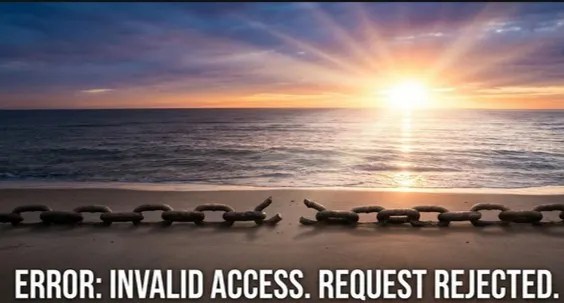
The people who benefited from your lack of boundaries will always call your limits a problem.
I used to think I had a communication problem.
That I needed to explain myself better.
Be clearer. Softer. Kinder. More understanding.
But the truth was simpler — and harder to admit:
I had a boundary problem.
When you operate as “Nice,” you’re not just being kind.
You’re running open code in a closed system.
No authentication.
No rate limiting.
No input validation.
Anyone can send a request.
And you will process it.
At first, it feels like connection.
People rely on you.
Confide in you.
Lean on you.
You become the stable endpoint in everyone else’s unstable system.
But over time, something shifts.
Requests stop being requests.
They become expectations.
“Can you help me?” turns into “I knew you’d handle it.”
“Are you available?” becomes “Why didn’t you respond?”
No one announces the transition.
They just keep calling the same function —
because it always returns yes.
I didn’t notice it happening.
Because I was still operating under the illusion that I was choosing it.
That I was generous.
Supportive.
Loyal.
But what I was actually doing was allowing unchecked inputs to define my output.
People will always test your limits.
Not because they’re malicious —
but because that’s what humans do.
We probe.
We push.
We learn where the edge is by pressing against it.
Like an API under stress, your boundaries are discovered through repetition.
If there is no error message —
the system assumes everything is valid.
And here’s the part most people don’t want to hear:
If you never return an error,
you are training people to keep overstepping.
When I started changing, it didn’t feel empowering.
It felt disruptive.
Suddenly, requests timed out.
Responses slowed down.
Some calls returned nothing at all.
And people noticed.
“You’ve changed.”
Not as an observation —
but as a complaint.
Because from their perspective, something broke.
The system they depended on
was no longer behaving the same way.
But nothing was broken.
For the first time, it was working correctly.
A boundary isn’t rejection.
It’s validation.
It’s the difference between:
- what is yours to carry
- and what was never yours to begin with
When you say “no,”
you’re not denying someone else.
You’re confirming yourself.
And not everyone will accept that update.
Some will try to bypass it.
Others will escalate their requests.
A few will disappear entirely when they realize the old access point is gone.
Let them.
Because what they were connected to
was never the real you —
It was your availability.
“Nice” is not a personality trait.
It’s a pattern.
And patterns can be rewritten.
The moment you introduce boundary checks, everything changes:
- Not everyone gets access
- Not every request is processed
- Not every expectation is met
And for the first time, your energy is no longer public infrastructure.
You don’t need to explain every “no.”
You don’t need to justify every limit.
The system doesn’t argue with invalid input.
It simply rejects it.
That’s not cold.
That’s clean.
Because a life without boundaries
is just an open endpoint —
waiting to be overwhelmed.









