
Originally published in February 2011. Comprehensively updated and edited July 2026.
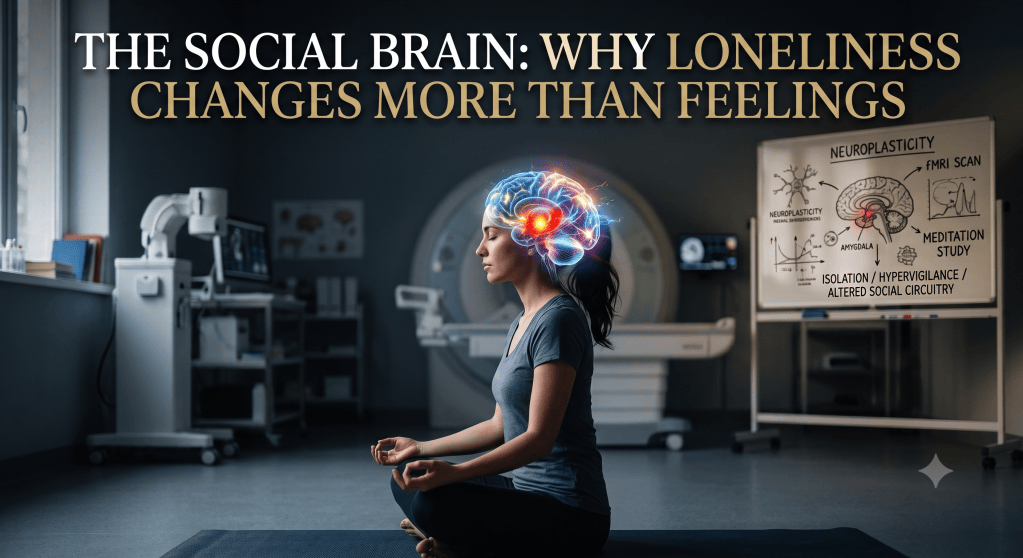
Explore John Cacioppo’s social neuroscience research on how loneliness affects the brain, stress hormones, immune function, and long-term health.
In the early 2000s, a psychologist at the University of Chicago began asking a question that most of medicine had quietly ignored: what if being lonely isn’t just an unpleasant feeling, but a measurable biological state? At the time, loneliness was treated the way many emotional states were treated — as something that belonged to psychiatry, or perhaps to poetry, but not to the same category as blood pressure or cholesterol. John T. Cacioppo, working with colleagues across genetics, endocrinology, and cardiology, spent the next two decades building the case that this division was a mistake. Loneliness, he argued, is not a private mood. It is a biological signal, as old and as functional as hunger or thirst, and it reaches into the brain, the bloodstream, and even the way our genes are read and copied. Just months before this article’s original publication, a landmark meta-analysis involving more than 300,000 participants concluded that strong social relationships were associated with substantially greater survival, helping bring social connection into mainstream medicine.
This idea has only become more relevant with time. In the years since Cacioppo’s early studies, loneliness has moved from a niche research topic to a subject of public health strategy. Several countries now have government offices dedicated to it. In 2023, the World Health Organization convened a commission on social connection, and by mid-2025 that commission had concluded that loneliness and social isolation contribute to hundreds of thousands of deaths worldwide each year. What began as a somewhat unfashionable corner of psychology is now discussed in the same breath as smoking, diet, and exercise — as a measurable risk factor for a shorter life.
This article traces how that shift happened. It looks at the social and technological backdrop that made loneliness research newly urgent, walks through what Cacioppo and his collaborators actually found in the brain, the stress-response system, the immune system, and even gene expression, and considers what all of this means for how we think about connection in an age when we are more digitally “in touch” than any generation before us, yet report feeling more alone.
A Field Born From a Simple, Overlooked Question
Why Loneliness Was Ignored for So Long
For most of the twentieth century, psychology and medicine treated loneliness as a symptom rather than a cause. If someone reported feeling isolated, clinicians tended to look for the underlying disorder — depression, anxiety, grief — and treat loneliness as a side effect of that deeper problem. This made a certain kind of sense. Loneliness is hard to define precisely, it doesn’t show up on a standard blood panel, and unlike a fever or a rash, it can’t be observed directly by anyone other than the person experiencing it.
Cacioppo’s contribution was to reframe the question entirely. Rather than asking what causes loneliness, he asked what loneliness causes. Working alongside social psychologist William Patrick and geneticist Steve Cole, he treated loneliness the way a physiologist might treat pain: not as a flaw in a person’s character or a symptom of something else, but as a signal generated by the body to prompt a specific kind of action — in this case, the action of seeking social connection.
The Birth of Social Neuroscience
This reframing helped establish what is now called social neuroscience, a field that studies how the brain and body respond to social experience. Cacioppo is widely credited as one of its founders, having proposed as early as the 1990s that social behavior could be studied with the same biological tools — brain imaging, hormone assays, gene expression analysis — that had long been used to study individual cognition. <cite index=”9-1″>His research showed that a sense of isolation affects key cellular processes within the brain, heart, and immune system</cite>, work that helped define an entire discipline centered on the idea that our biology is shaped as much by our relationships as by our individual traits.
This was, in its own quiet way, a challenge to a long-standing assumption in Western medicine and psychology: that the individual is the natural unit of study. Cacioppo’s research suggested something closer to the opposite — that human physiology is built for connection, and that isolation disrupts systems most people assume are entirely self-contained.
What Loneliness Does to the Brain
An Ancient Alarm System
One of Cacioppo’s central ideas is that loneliness functions like a biological alarm, similar in structure to hunger or thirst. Hunger tells the body it needs food. Thirst tells it that it needs water. Loneliness, in this view, tells a highly social species that it needs other people — and just as chronic hunger reshapes behavior around food, chronic loneliness reshapes behavior around social threat.
From an evolutionary perspective, humans survived in small cooperative groups where prolonged isolation often meant greater vulnerability to predators, starvation, or injury. Natural selection therefore favored a psychological system that made prolonged disconnection uncomfortable enough to motivate reconnection, much as hunger motivates eating or thirst motivates drinking.
This alarm has a cost when it stays switched on for too long. Cacioppo’s research found that people experiencing persistent loneliness tend to become more vigilant toward social threats, not less. Their brains start scanning the environment for signs of rejection, exclusion, or unfriendliness, a bit like a smoke detector that has become oversensitive after one too many false alarms. This heightened vigilance can make ambiguous social situations — a coworker who doesn’t say hello, a friend who takes a day to text back — feel more threatening than they would to someone who isn’t lonely. Over time, this can create a self-reinforcing loop: the lonelier a person feels, the more threatening social interaction seems, and the more they may withdraw from the very interactions that could ease the loneliness.
Cognition and Willpower Under Strain
Loneliness doesn’t only affect how people perceive others; it also appears to tax cognitive resources more broadly. <cite index=”3-1″>Cacioppo’s studies suggest that a sense of isolation or social rejection disrupts not only people’s ability to think clearly but also their willpower</cite>. This finding surprised many researchers outside the field, who assumed that loneliness was purely an emotional experience with little bearing on memory, attention, or self-control.
The proposed explanation connects back to the alarm-system idea. If part of the brain’s processing power is being redirected toward scanning for social threats, less is available for other demanding tasks — including the kind of self-regulation involved in resisting a tempting snack, sticking to a budget, or staying focused on a difficult project. This doesn’t mean lonely people are simply less capable; it means their cognitive resources are being pulled toward a different priority, one that evolution built into the human brain long before modern life created new and unusual forms of isolation.
The Body’s Response: Stress, Sleep, and the Cardiovascular System
Loneliness as a Chronic Stressor
Perhaps the most consequential branch of Cacioppo’s work involved the stress-response system. The human body is well equipped to handle short bursts of stress — a near-miss in traffic, a tight deadline, a moment of public speaking. The trouble comes when a stressor doesn’t go away. Chronic loneliness, Cacioppo’s research suggested, behaves like exactly this kind of ongoing stressor, keeping stress hormones like cortisol elevated over long periods rather than allowing them to spike and then settle.
This matters because the stress-response system was never designed for constant activation. It evolved to handle acute danger — a predator, a physical threat — not the slow-burning, socially mediated distress of feeling unseen or unwanted over months or years. When it stays engaged for that long, the wear shows up elsewhere in the body: in blood pressure, in sleep quality, and eventually in cardiovascular health.
Sleep, Blood Pressure, and Long-Term Health Risk
Cacioppo and his collaborators found that lonely individuals tend to sleep more fitfully, waking more often during the night even when total sleep time is similar to that of non-lonely people. This fits neatly with the hypervigilance idea discussed earlier: a nervous system braced for social threat may struggle to fully stand down even during sleep, a state that depends on the body feeling safe enough to lower its guard.
Loneliness has also been linked in Cacioppo’s research to elevated blood pressure, particularly among older adults, and to a broader pattern of cardiovascular strain over time. <cite index=”10-1″>Research on elderly people found that loneliness increases risk of heart attacks, dementia, and high blood pressure, among other health problems</cite>. None of this means loneliness causes these conditions in a simple, one-to-one way; rather, it appears to act as a chronic background stressor that makes the body’s regulatory systems work harder, for longer, than they were built to.
Loneliness and the Immune System
Inflammation as an Unexpected Signature
Perhaps the most striking discovery to come out of this research program involves the immune system. Working with geneticist Steve Cole, Cacioppo’s team found that loneliness is associated with a distinctive pattern of gene activity inside immune cells — a pattern known as the conserved transcriptional response to adversity, or CTRA. <cite index=”11-1″>This pattern involves increased activity in genes related to inflammation, alongside decreased activity in genes related to fighting viruses</cite>. In plain terms, the immune systems of chronically lonely people appear to shift their priorities: somewhat better prepared for bacterial infection and wound healing, somewhat less prepared to fight off viruses. <cite index=”15-1″>Follow-up studies tracking white blood cell activity over time in older adults found up-regulation of the sympathetic nervous system alongside this shifted gene expression pattern</cite>, suggesting an ongoing physiological adjustment rather than a one-time event.
Why This Matters Beyond the Lab
This finding is genuinely unusual because it means loneliness doesn’t just correlate with worse health outcomes through indirect routes, such as lonely people sleeping poorly or exercising less. It appears to reach directly into how immune cells express their genes, changing which of them are turned up or down in response to a socially precarious environment. Later research by Cole and colleagues also found that a sense of purpose in life, or eudaimonic well-being, can help counteract this same inflammatory pattern — a hint that connection and meaning may quiet a stress response that isolation switches on.
Loneliness Is Not the Same as Being Alone
One of the more counterintuitive aspects of Cacioppo’s work is the distinction it draws between objective isolation — the number of people someone actually interacts with — and subjective loneliness, which is the feeling of disconnection regardless of how many people are physically present. A person can be surrounded by colleagues, family, and acquaintances and still feel profoundly lonely, while another person who lives alone and sees few people may feel entirely content.
Introversion refers to where people draw psychological energy, whereas loneliness reflects an unwanted gap between desired and actual social connection. Many introverts have rich social relationships and experience little loneliness.
This distinction turned out to matter enormously for the biological findings described above. It was the subjective sense of isolation, not simply the objective amount of social contact, that predicted the changes in stress hormones, immune gene expression, and cardiovascular strain. This is part of why loneliness resists easy fixes. Simply placing a lonely person in a crowded room, or giving them more contacts on a phone, does not necessarily address the underlying signal, because the signal is about perceived connection, not headcount.
The Modern Backdrop: Why This Research Found a Wider Audience
A Culture Increasingly Concerned With Connection
When Cacioppo’s early findings were first published, they arrived into a culture already uneasy about the direction of social life. The rise of suburban living, longer commutes, smaller households, and more geographically scattered families had already prompted decades of commentary about the erosion of community. Sociologists had been documenting declining participation in civic groups, churches, and neighborhood organizations since well before the research on loneliness and biology matured.
What Cacioppo’s work added to this conversation was a biological stake in the outcome. It was one thing to say that community involvement was in decline as a matter of cultural nostalgia. It was another to demonstrate that the resulting isolation could measurably shorten a person’s life. This reframed loneliness from a lifestyle preference into something closer to a public health issue, deserving of the same seriousness as diet or exercise.
Technology’s Complicated Role
The following decade only intensified this conversation, as smartphones and social media reshaped how people spend their time and attention. The relationship between digital communication and loneliness has proven to be more complicated than early, alarmist headlines suggested. Digital contact is not inherently isolating; for people who are geographically distant from friends and family, it can be a genuine lifeline. But research building on Cacioppo’s framework has repeatedly suggested that the quality of connection matters more than the quantity of contact, and that passive scrolling through others’ curated lives tends to correlate with greater loneliness than active, reciprocal communication does.
This distinction echoes the core insight from Cacioppo’s earlier work: loneliness is about the felt sense of connection, not the raw number of interactions. A hundred notifications a day can leave someone feeling more isolated than a single meaningful phone call, because the biological system underlying loneliness appears to respond to perceived closeness and mutual understanding rather than to contact frequency alone.
The COVID-19 pandemic further accelerated interest in loneliness research by providing an unprecedented natural experiment in prolonged social isolation, prompting hundreds of additional studies into its psychological and physiological effects.
From the Lab to Public Health Policy
By the early 2020s, the accumulated weight of this research — from Cacioppo’s foundational studies through the work of Cole and other collaborators — had begun to influence public health policy directly. The United Kingdom appointed a minister with responsibility for loneliness in 2018, a first among national governments, and Japan followed with a similar position in 2021. Germany, Denmark, Finland, the Netherlands, Sweden, and Spain have since developed national strategies addressing social isolation. In 2025, a World Health Organization commission formalized much of this concern at an international level, concluding that <cite index=”17-1″>loneliness and social isolation contribute to more than 871,000 deaths every year, affecting roughly one in six people worldwide</cite>.
It is worth being careful here about what this kind of figure does and does not mean. These are epidemiological estimates built from long-term studies linking loneliness to a range of downstream health outcomes — cardiovascular disease, weakened immune response, cognitive decline — rather than a claim that loneliness is a single, direct cause of death in the way a heart attack is a direct cause of death. The evidence is substantial and consistent enough that public health bodies now treat social connection as a genuine risk factor worth tracking, but it remains a probabilistic relationship, observed across large populations, rather than a guarantee about any one individual’s outcome.
What the Science Does and Does Not Establish
It is worth pausing to separate what this body of research demonstrates with reasonable confidence from what remains more speculative. The associations between loneliness and elevated inflammation, disrupted sleep, and cardiovascular strain are well replicated across multiple research groups and long-running studies, including the Chicago Health, Aging, and Social Relations Study that Cacioppo helped lead for many years. The claim that loneliness functions as an evolved biological signal, similar to hunger, is a compelling interpretive framework rather than something that can be proven directly, since it depends on inferences about evolutionary history that cannot be tested experimentally in the same way a blood test can be.
Similarly, while gene expression changes linked to loneliness are a genuinely striking and well-documented finding, it is important not to overstate their permanence. These changes reflect which genes are actively being read and used by cells at a given time, not a rewriting of a person’s underlying DNA. There is reasonable evidence that these expression patterns can shift again when a person’s sense of connection improves, though the pace and completeness of that reversal is still an active area of study rather than a settled fact.
Conclusion: A Biological Case for Connection
What emerges from decades of research inspired by Cacioppo’s early questions is a picture of loneliness as something considerably more consequential than an unpleasant mood. It functions as a signal woven into the nervous system, the stress-response system, and even the immune system’s gene expression — a signal that, left unanswered for too long, appears to wear down the very systems responsible for keeping the body resilient.
This does not mean solitude itself is dangerous. Many people who spend significant time alone report high well-being, and the distinction between chosen solitude and unwanted isolation appears to matter as much as any biological measurement. What the research points toward instead is the importance of felt connection — the sense of being understood, valued, and embedded in relationships that matter, regardless of how many people surround a person on a given day.
As societies continue to grapple with shifting family structures, digital communication, aging populations, and the slow erosion of traditional community institutions, this line of research offers a sobering but useful reframing. Loneliness is not simply a private emotional experience; it is also a measurable biological state with meaningful public health implications, one that national governments have only recently begun to take seriously through dedicated policy. The trajectory of this field over the past two decades — from a marginal question in social psychology to a subject of international health commissions — suggests that understanding, and addressing, human connection will remain a growing priority well into the coming decades.
Scientific Reference
- Holt-Lunstad, J., Smith, T. B., & Layton, J. B. (2010). Social relationships and mortality risk: A meta-analytic review. PLoS Medicine, 7(7), e1000316.
- Cacioppo, J. T., & Patrick, W. (2008). Loneliness: Human Nature and the Need for Social Connection. W. W. Norton & Company.
- Cole, S. W., Hawkley, L. C., Arevalo, J. M. G., & Cacioppo, J. T. (2011). Transcript origin analysis identifies antigen-presenting cells as primary targets of socially regulated gene expression in leukocytes. Proceedings of the National Academy of Sciences, 108(7), 3080–3085.
- Cole, S. W., Levine, M. E., Arevalo, J. M. G., Ma, J., Weir, D. R., & Crimmins, E. M. (2015). Loneliness, eudaimonia, and the human conserved transcriptional response to adversity. Psychoneuroendocrinology, 62, 11–17.
- Cacioppo, J. T., Cacioppo, S., Cole, S. W., Capitanio, J. P., Goossens, L., & Boomsma, D. I. (2015). Loneliness across phylogeny and a call for comparative studies and animal models. Perspectives on Psychological Science, 10(2), 202–212.
- Harms, W. (2013, April 22). “Forging a New Field of Social Neuroscience.” University of Chicago News.
- World Health Organization Commission on Social Connection. Report on the health impacts of loneliness and social isolation (2025).









