
Originally published in September 2011. Comprehensively updated and edited July 2026.
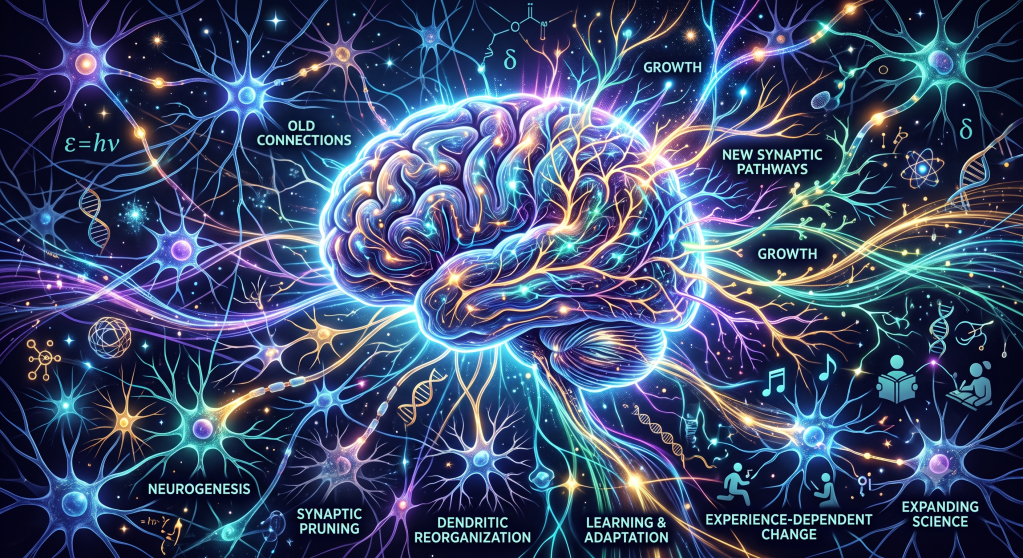
Neuroplasticity doesn’t stop in childhood. Explore the latest research on how adult brains keep changing through learning, rehabilitation, and aging.
In 2011, the idea that adult brains could change was still something of a revelation to the general public, even though scientists had been chipping away at the old orthodoxy for decades. Most people had grown up hearing a version of neuroscience that treated the brain like a piece of hardware: it wired itself during childhood, hit a fixed configuration sometime in early adulthood, and spent the rest of its life gradually losing capacity. Memory loss, slower reflexes, a harder time picking up new skills — these were treated as inevitabilities, the biological tax of getting older. Self-help culture at the time was fixated on the idea that certain windows closed forever. Learn a language young or not at all. Master an instrument as a child or resign yourself to permanent mediocrity. The brain, in this telling, was less like a living organ and more like drying cement.
That picture was already outdated by 2011, and a decade and a half of subsequent research has made it look even more threadbare. The brain is not static tissue that calcifies after adolescence. It is a system that continues to reorganize itself — physically, chemically, and functionally — in response to what a person does, learns, and experiences, right through old age. This capacity is called neuroplasticity, and it is one of the more genuinely optimistic findings in modern neuroscience, not because it promises limitless self-improvement, but because it establishes a basic biological fact: change remains possible longer than most people assume.
This article traces how the science of adult neuroplasticity developed, what researchers have confirmed since the concept moved from the scientific fringe to the mainstream, and what it actually means for learning, recovery from injury, and aging. The historical sections below preserve the original argument as it stood in 2011; the sections on current research incorporate findings published since, so the reader can see both how the field arrived at its present understanding and where that understanding stands now. Throughout, the goal is to be honest about where the evidence is solid and where public enthusiasm has occasionally run ahead of the data — because neuroplasticity has become one of those scientific concepts that gets stretched to justify almost anything, and the real science deserves better than that treatment.
A Brief History of a Stubborn Idea
For much of the twentieth century, neuroscience had long recognized certain narrow forms of adult brain change, but the prevailing scientific and public picture still badly underestimated how extensively the mature brain could reorganize itself. The working assumption in most corners of the field was that neurons formed during a critical developmental window, wired themselves into a largely permanent configuration, and after that the primary trajectory was decline through injury, disease, or aging. This assumption had a certain intuitive appeal. Children clearly learn languages, motor skills, and social behaviors with an ease that adults rarely match. It seemed reasonable to conclude that the brain lost most of its capacity for structural change once development was complete.
That assumption began cracking in the 1960s, when researchers studying rats in enriched versus impoverished environments found measurable differences in brain structure depending on the animals’ surroundings — evidence that experience itself could physically shape neural tissue. Through the 1970s and 1980s, work on the visual and somatosensory systems showed that the brain’s map of the body was not permanently fixed either. If a monkey’s finger was amputated, the brain region that had processed sensation from that finger did not simply go dormant. Neighboring regions expanded into the newly available cortical territory. The brain, it turned out, was actively redistributing resources based on use.
By the 1990s, neuroscientist Michael Merzenich and colleagues extended this work considerably, running controlled experiments in adult monkeys showing that the cortical map of the hand could be deliberately reshaped through repeated, structured tactile training — evidence that adult reorganization could be induced experimentally, not just observed after injury. Around the same time, brain imaging research on London taxi drivers found that experienced drivers had a measurably larger posterior hippocampus, a structure heavily involved in spatial memory, with volume correlating with years spent navigating the city’s famously complex street layout. That original study was cross-sectional, so it showed an association rather than proof that the training itself caused the change. A later longitudinal study, which scanned trainee drivers before and after they spent years memorizing the city’s roughly 25,000 streets, found that hippocampal structure changed within the same individuals over the course of training — considerably stronger evidence that experience was driving the difference. Together, these findings forced a genuine reconsideration of how the adult brain worked.
By 2011, when this article was first written, the scientific consensus had shifted decisively: the adult brain was plastic, meaning it retained a real, biologically grounded capacity to change in response to experience. What has changed in the years since is not the basic conclusion but the depth, precision, and clinical application of the evidence supporting it.
What Neuroplasticity Actually Means
It helps to be precise about what neuroplasticity is, because the term gets used loosely in popular media, often to imply something close to unlimited brain rewiring on demand. The more accurate picture is more modest and, frankly, more interesting.
Neuroplasticity refers to the brain’s ability to modify its own structure and function in response to experience, learning, injury, or changes in the body’s internal environment. It happens through several distinct biological mechanisms operating at different scales. At the smallest scale, synaptic plasticity involves strengthening or weakening the connections between individual neurons, based on how often and how strongly those neurons fire together — the classic “neurons that fire together, wire together” principle first proposed by psychologist Donald Hebb in the 1940s. At a larger scale, structural plasticity involves the physical growth or pruning of connections, and even, in a small number of brain regions, the formation of entirely new neurons, a process called neurogenesis. Finally, functional reorganization describes the way entire brain regions can shift what kind of information they process, particularly after injury, as seen in the finger-amputation and stroke-recovery research.
These processes are not exotic or rare. They happen continuously, in ordinary brains, as a normal part of living. Every time someone learns a new skill, forms a memory, or adapts to a change in their environment, some version of this reorganization is taking place at a microscopic level. What varies is the degree and speed of change, which depends heavily on factors like age, the specific brain region involved, the intensity and structure of the experience, and general health.
If there is one idea that should anchor everything that follows, it’s this: the brain doesn’t simply retain an abstract capacity for change. It changes in response to what a person repeatedly does. Skills that get practiced are reinforced; skills that get abandoned tend to fade, sometimes at the structural level, not just as a matter of rustiness. That two-way responsiveness — plasticity as an ongoing negotiation with demand, rather than a switch that’s either on or off — is the thread connecting learning, injury recovery, and aging throughout the rest of this article.
The Distinction Between Developmental and Adult Plasticity
It’s worth separating two related but distinct ideas that often get collapsed together in public discussion. Developmental plasticity refers to the dramatic, rapid reorganization that occurs during childhood and adolescence, when the brain is establishing its basic architecture and is unusually sensitive to environmental input — the “critical periods” responsible for phenomena like native-accent language acquisition or the visual system’s dependence on early visual experience. Adult, or experience-dependent, plasticity is a different and generally slower process, driven by ongoing behavior and repeated practice rather than a fixed developmental timetable.
The existence of critical periods in childhood does not mean the door closes afterward. It means the door narrows and the mechanics of change shift. Adults can still learn new languages, acquire new motor skills, and recover function after brain injury — the research on this is now extensive — but the process typically requires more repetition, more structured practice, and often more time than it would have required in childhood. This is an important nuance, because overstating adult plasticity risks setting people up for disappointment, while understating it risks discouraging genuinely achievable goals, whether that’s picking up a new skill in midlife or recovering movement after a stroke.
Learning and Skill Acquisition in the Adult Brain
One of the clearest demonstrations of adult neuroplasticity comes from research on skill learning. Studies using brain imaging have repeatedly shown that when adults practice a new motor skill — juggling, for instance, or learning a musical instrument — measurable changes appear in the brain regions associated with that skill, including increases in gray matter volume and changes in white matter, the bundles of insulated nerve fibers that carry signals between brain regions. These changes tend to be use-dependent: they grow with continued practice and can partially reverse if the skill is abandoned, which is itself informative. Plasticity is not a one-way ratchet toward improvement. It reflects ongoing demand.
Language learning offers a particularly well-studied example. A systematic review of neuroimaging research on adult second-language acquisition, compiling structural and functional brain-scan studies through 2025, found consistent evidence that learning a new language in adulthood produces measurable changes in brain structure and connectivity, including in regions associated with memory and executive control. <cite index=”2-1″>This research followed established review guidelines and drew from major scientific databases through mid-2025.</cite> The changes were not as sweeping as those seen in children acquiring a first language, but they were real, detectable, and linked to actual proficiency gains — a useful corrective to the folk belief that adult language learning is essentially futile.
This research has practical implications beyond satisfying curiosity about how the brain works. It supports the idea, now fairly well established in cognitive science, that engaging in effortful, sustained learning throughout adulthood is not simply a pleasant hobby but an activity with a genuine physiological signature. The specific neural demands of learning piano, acquiring a second language, and a child learning to read are not interchangeable — each recruits its own network of brain regions and unfolds on its own timeline. But the underlying principle holds across all of them: the adult brain responds to sustained, effortful learning as biologically meaningful input, producing measurable changes in whichever neural systems are involved in the skill being acquired.
Why Novelty and Effort Matter More Than Repetition Alone
Not all activity produces equal plastic change. A recurring theme in the training literature is that plasticity responds most strongly to tasks that are effortful, somewhat unfamiliar, and require sustained attention — rather than to passive or highly automated activity. Routine tasks that a person has already mastered demand relatively little of the brain’s adaptive machinery, because there’s little mismatch between what the brain predicts and what actually happens. Genuinely novel or challenging tasks, by contrast, generate a kind of prediction error that appears to be a meaningful driver of plastic change.
Some cognitive-training studies using genuinely difficult, escalating tasks have produced more encouraging results than passive engagement with familiar material, though the broader “brain training” industry has often overpromised, and transfer from narrow trained tasks to general cognitive ability remains genuinely contested. The more consistent, less marketable finding is simpler: novelty, effortful attention, and consistent practice over time are the ingredients that reliably show up across plasticity studies, whatever the domain.
Recent work has also identified a faster form of synaptic change, sometimes called behavioral timescale synaptic plasticity, capable of encoding a single, especially memorable experience within seconds rather than requiring extensive repetition — a reminder that not all learning follows the slow, repetition-driven pattern described above, which may help explain why certain experiences stick after only one exposure.
Rehabilitation: Where Plasticity Research Meets the Clinic
Nowhere has the shift toward recognizing adult neuroplasticity mattered more concretely than in rehabilitation medicine. Stroke recovery is the clearest example. For much of the twentieth century, the standard clinical assumption was that whatever function a stroke patient hadn’t recovered within the first six months to a year was likely gone permanently. That assumption has been substantially revised.
Modern stroke rehabilitation is built explicitly around the principle that the brain can reorganize itself to recover lost function, primarily through two related processes: undamaged regions taking over tasks previously handled by the damaged area, and existing neural pathways being strengthened through intensive, repetitive practice. Constraint-induced movement therapy — a technique in which the unaffected limb is deliberately restricted to force use of the affected one — was developed specifically to exploit this capacity, and it remains one of the more evidence-supported rehabilitation approaches for motor recovery after stroke.
More recent work has extended this further. A 2025 umbrella review — a type of study that synthesizes findings across multiple prior systematic reviews — concluded that combining brain-computer interface therapy with standard physical rehabilitation improved upper-limb motor recovery outcomes after stroke, though the review’s authors were careful to note this approach shouldn’t yet be treated as a universal standard of care across every stroke type, given variation in patient response and the relative newness of the technology. That caveat matters: rehabilitation neuroscience has a history of promising early results that don’t always generalize cleanly, and researchers in this area have grown more careful about distinguishing “promising in early trials” from “established best practice.”
This same logic — that structured, repetitive, sufficiently intensive practice can drive functional reorganization — now informs rehabilitation approaches for traumatic brain injury, and to varying degrees, for certain neurodegenerative and psychiatric conditions as well, though the strength of evidence differs considerably across these applications. It also explains why modern rehabilitation protocols tend to emphasize early, frequent, and demanding practice rather than passive rest, a significant departure from older clinical assumptions.
The Aging Brain: Decline Is Not the Whole Story
Aging remains the area where the old, fixed-brain model has been most stubbornly resistant to revision in popular understanding, partly because some decline in certain cognitive functions with age is genuinely real and well documented. Processing speed slows for most people. Working memory capacity tends to decrease somewhat. These are not myths. But the picture is considerably more nuanced than simple decline, and neuroplasticity research has been central to complicating it.
One of the more striking recent findings involves adult neurogenesis — the formation of new neurons — in the hippocampus, a brain region central to memory, and this has been one of the most genuinely contested questions in modern neuroscience. A 2013 study from Sweden’s Karolinska Institutet offered indirect evidence that new neurons form in the adult human hippocampus, but the finding was debated for years afterward, largely because researchers had never directly identified the progenitor cells — the precursor cells that give rise to new neurons — actually dividing in human brain tissue. In July 2025, the same Karolinska group published a study in Science reporting that they had identified these progenitor cells directly, in tissue from donors ranging up to 78 years old, and confirmed they were actively dividing well into late adulthood. The researchers were careful to note that individual variation was substantial — some donors had many of these cells, others very few — and that the functional significance of the ongoing neuron formation, meaning how much it actually contributes to memory, remains an open question. Given how contentious this area of research has been, that caution is worth taking seriously rather than treating the finding as fully settled. Still, it’s a meaningful data point reinforcing the broader picture that the aging brain retains more generative capacity than the “decline only” model suggests.
Separately, researchers at the Salk Institute reported in December 2025 that a protein secreted by support cells called astrocytes, known as CCN1, plays a central role in keeping neural circuits stable in the fully developed adult brain. The study, published in Nature, found that removing CCN1 from adult mice destabilized circuits normally locked in place after early development — evidence that adult circuits retain a dormant capacity for change that CCN1 actively suppresses, rather than a capacity that’s simply gone. That finding adds to evidence that reduced plasticity in adulthood is not simply the result of an irreversible loss of capacity, but is actively maintained by molecular and cellular mechanisms — which is why the discovery is being explored as a possible therapeutic angle for stroke and brain injury. The research was conducted in mice, and translating it into human treatments typically takes years, but it shows how actively the underlying cell biology of adult plasticity is still being mapped.
Cognitive Reserve and the “SuperAger” Phenomenon
Perhaps the most practically relevant strand of aging research concerns individual variation. Not everyone experiences the same trajectory of cognitive change with age, and researchers have become increasingly interested in a small subset of older adults — sometimes called “SuperAgers” — whose memory performance in their seventies, eighties, and beyond resembles that of people decades younger. Brain imaging studies of this group have found that they tend to show less age-related cortical thinning in memory-related regions, and in some cases, features associated with continued plastic capacity that most aging brains lose more rapidly.
The research on what distinguishes SuperAgers from typically aging peers is still developing, and it would be an overstatement to claim scientists have found a reliable formula for becoming one. But a related and better-supported concept, cognitive reserve, offers a useful framework: the brain’s ability to sustain function despite age-related or pathological changes, built up over a lifetime through education, cognitively engaging work, social interaction, and sustained mental activity. The American Psychological Association’s Monitor on Psychology, summarizing recent research, reported that leveraging neuroplasticity through structured learning interventions can increase older adults’ confidence and motivation to engage with new challenges — psychological factors that support functional independence, separate from any direct effect on brain tissue itself.
That is a meaningfully narrower claim than the sensational versions of “keep your brain young” advice circulating in wellness media, which sometimes imply that specific regimens can reliably reverse aging or dramatically cut dementia risk based on thin evidence. The more defensible version: sustained cognitive engagement, physical activity, and social connection are associated with better cognitive outcomes in aging populations, plasticity offers a plausible mechanism for why, and researchers are still working out how much of the benefit comes from direct brain change versus indirect psychological pathways.
Where the Evidence Gets Overextended
Because neuroplasticity is now a familiar term, it has also become something of a marketing device. Supplement companies, self-help authors, and wellness brands regularly invoke “rewiring your brain” to sell products with only a loose connection to the actual science. A few common overreaches are worth naming directly.
Plasticity is not infinitely elastic or instantaneous. Genuine structural change from a new activity typically takes weeks to months of consistent practice, not days, and the popular notion that a person can “rewire” a lifelong habit in a matter of days isn’t well supported by the research on how long structural change actually takes to consolidate.
Plasticity is also not always beneficial. The same mechanisms that let the brain build new skills can strengthen maladaptive patterns — chronic pain circuits, for instance, can become reinforced through the same use-dependent processes that strengthen a musician’s motor skills, which is part of why chronic pain is increasingly understood, in some cases, as involving pathological plasticity rather than ongoing tissue damage alone.
And individual variation is substantial. Much of the population-level research on plasticity and aging describes averages and associations, not guarantees for any given person. Genetics, overall health, and the specific type and intensity of an intervention all shape how much benefit someone is likely to see, and media coverage of promising early studies sometimes elides that variability in ways the original research does not.
None of this undermines the core finding that the adult brain retains a real and clinically meaningful capacity for structural and functional change. It simply means that capacity operates within biological limits, on realistic timescales, and with meaningful individual variation — a less dramatic but more accurate picture than the version that tends to circulate in popular media.
What This Means for How We Think About Ourselves
The scientific reframing of the adult brain as an ongoing, adaptable system rather than a fixed structure has implications well beyond neuroscience labs and rehabilitation clinics. It has quietly reshaped how educators think about adult learning, how clinicians approach recovery from brain injury, and how the general public thinks about aging and cognitive decline.
There is a psychological dimension worth taking seriously in its own right. Believing that meaningful change is biologically possible tends to affect whether people attempt it in the first place — a pattern well documented in research on motivation and self-efficacy, independent of the neuroscience. A model that treated the adult brain as essentially fixed likely discouraged some people from pursuing new skills, from persisting through the frustrating early stages of learning something difficult, or from believing recovery after injury was worth the effort it demands. The more accurate picture — that the brain remains a genuinely adaptable organ throughout life, even if the process is often slower than in childhood — offers a more honest foundation for those decisions.
Conclusion
The science of neuroplasticity has moved a long way since the early 2010s, from a genuinely contested idea to a well-established feature of how the brain works, supported by evidence spanning cellular biology, brain imaging, clinical rehabilitation, and studies of healthy aging. The adult brain is not the finished product it was once assumed to be. It continues to build new connections, prune unused ones, and in at least some regions, generate new neurons, in response to what a person does and experiences, well into old age.
What has changed most since this article’s original publication is not the basic conclusion but the precision of the evidence and the clinical seriousness with which it’s now applied — in stroke rehabilitation protocols, in research on cognitive aging, and in the ongoing effort to identify the cellular mechanisms, like the astrocyte protein CCN1 that appears to actively hold adult circuits in place, or the faster synaptic processes captured by behavioral timescale plasticity research, that govern when and how this reorganization happens in the first place. There is still a great deal researchers don’t fully understand, particularly about how directly various lifestyle interventions translate into measurable brain change versus how much of their benefit runs through indirect psychological and behavioral pathways. But the foundational claim has held up under two more decades of scrutiny: the brain remains a work in progress for as long as a person is alive to use it.
As imaging technology, rehabilitation techniques, and molecular biology continue to advance together, it’s a reasonable bet that the next decade of plasticity research will look less like the dramatic paradigm shift of the late twentieth century and more like a steady refinement — identifying which interventions work best for which people, at which ages, and through which specific biological mechanisms. That is less headline-grabbing than “your brain can rewire itself,” but it’s the direction the actual science is heading, and it’s arguably the more useful story in the long run.
Scientific Reference
- Maguire, E. A., Gadian, D. G., Johnsrude, I. S., Good, C. D., Ashburner, J., Frackowiak, R. S. J., & Frith, C. D. (2000). Navigation-related structural change in the hippocampi of taxi drivers. Proceedings of the National Academy of Sciences, 97(8), 4398–4403. https://doi.org/10.1073/pnas.070039597
- Woollett, K., & Maguire, E. A. (2011). Acquiring “the Knowledge” of London’s layout drives structural brain changes. Current Biology, 21(24), 2109–2114.
- Jenkins, W. M., Merzenich, M. M., Ochs, M. T., Allard, T., & Guíc-Robles, E. (1990). Functional reorganization of primary somatosensory cortex in adult owl monkeys after behaviorally controlled tactile stimulation. Journal of Neurophysiology, 63(1), 82–104. https://doi.org/10.1152/jn.1990.63.1.82
- Dumitru, I., Paterlini, M., Zamboni, M., Ziegenhain, C., Giatrellis, S., Saghaleyni, R., Björklund, Å., Alkass, K., Tata, M., Druid, H., Sandberg, R., & Frisén, J. (2025). Identification of proliferating neural progenitors in the adult human hippocampus. Science. Published online July 3, 2025. https://doi.org/10.1126/science.adu9575
- Sancho, L., Boisvert, M. M., Eddy, T., Burgado, J., Contreras, M., Labarta-Bajo, L., Wang, E., Tatsumi, L., & Allen, N. J. (2025). Astrocyte CCN1 stabilizes neural circuits in the adult brain. Nature. Published December 17, 2025. https://doi.org/10.1038/s41586-025-09770-w
- Alghamdi, A. H. (2026). Neuroplasticity in adult second language learning: A systematic scoping review of structural and functional neuroimaging evidence. Frontiers in Human Neuroscience, 20, Article 1824559. https://doi.org/10.3389/fnhum.2026.1824559
- Stringer, H. (2026, April 1). How learning protects the aging brain. Monitor on Psychology, 57(3), 48. American Psychological Association. https://www.apa.org/monitor/2026/04-05/learning-protects-aging-brain
- Neuroplasticity. (2026, May 24). In StatPearls. StatPearls Publishing. National Library of Medicine, National Center for Biotechnology Information. https://www.ncbi.nlm.nih.gov/books/NBK557811/









