
Originally published in October 2018 and comprehensively updated/edited in June 2026.
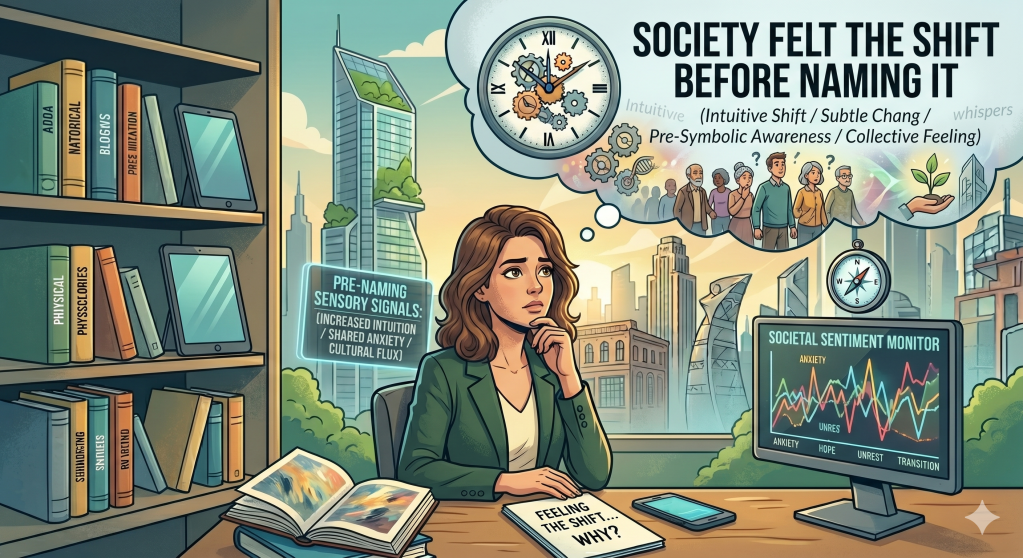
How the years 2012–2020 reshaped human psychology through social media, polarization, and loneliness — before we had words to describe what was happening.
There are moments in history when something large moves through society before anyone agrees on what to call it. People feel it in their relationships, in the way they consume news, in how they sleep, in the arguments that erupt at family dinners. The shift happens at the level of individual psychology long before sociologists develop a vocabulary for it. The years between roughly 2012 and 2020 were exactly such a period — a window when the psychological and social terrain of modern life was being quietly, irreversibly remapped.
What made this era unusual was not simply that people were under stress, or that technology was changing, or even that politics had grown combative. What made it distinctive was the convergence of all three at once, amplified by systems specifically engineered to hold human attention as long as possible. The cumulative effect on how people thought, related to one another, and experienced reality deserves close examination — not to assign blame, and not to indulge nostalgia for some imagined calmer past, but because understanding what happened helps explain a great deal of what came after.
The Architecture of Attention
To understand the psychological climate of this period, it helps to start with attention itself — specifically, what was competing for it and why.
The smartphone had existed in mature form since the late 2000s, but it was only in the early-to-mid 2010s that mobile internet access became the default mode of engaging with the world for a majority of people in wealthy countries. By 2018, the average American spent roughly three and a half hours per day on their phone, with much of that time inside social media applications. For younger adults and teenagers, those numbers were considerably higher.
This would not have been especially significant if the applications people were using had been designed neutrally. They were not. Researchers studying the behavioral economics of social media platforms have documented extensively how these systems were built around what the industry called “engagement” — a catch-all term for any behavior that kept users active within the platform. Likes, reactions, follower counts, and notification badges were not accidental features; they were deliberate applications of variable-ratio reinforcement schedules, the same mechanism that makes slot machines compelling. The reward is unpredictable, and unpredictability is what makes behavior persist.
What this meant in practice was that hundreds of millions of people were spending significant portions of their waking hours inside systems that had been tuned to exploit known vulnerabilities in human psychology. The neurological mechanisms involved are not exotic. Dopamine, the neurotransmitter most associated with anticipation and reward-seeking, responds powerfully to intermittent reinforcement. Social comparison, one of the most automatic cognitive processes humans engage in, was being triggered constantly and at a scale that had no historical precedent. Our brains evolved to track status and belonging within groups of roughly 100 to 200 people; suddenly they were navigating curated performance environments with audiences of thousands.
What the Research Was Already Showing
Academic psychology was not unprepared for this. Jean Twenge’s longitudinal research, drawing on data from millions of American teenagers, had been tracking a sharp inflection in adolescent mental health trends that began around 2012 — precisely when smartphone ownership crossed 50 percent among American teenagers. Her work documented rising rates of depression, loneliness, and anxiety, accompanied by declining rates of in-person socializing, sleep, and the kind of autonomous activity that had traditionally marked adolescent development.
The findings were contested, as social science findings often are. Some researchers pushed back on the strength of the causal claim, noting that correlation between smartphone adoption and mental health decline did not establish the mechanism. Others pointed to parallel rises in anxiety across populations that predated widespread smartphone use. Both criticisms were fair. But even the skeptics largely agreed that something was changing in the psychological lives of young people, and that the new media environment was at least a contributing variable.
For adults, the picture was more complicated but not entirely different. Research on social comparison theory — developed by Leon Festinger in the 1950s and extended significantly in subsequent decades — had long established that people evaluate their own circumstances partly by comparing them to others. Under normal conditions, this process operates within a relatively constrained and realistic reference group. Social media, by contrast, offered a relentless stream of curated self-presentation, with users naturally displaying the highlights of their lives. The psychological literature on “upward social comparison” — comparing oneself to those who appear to be doing better — consistently associates it with lower self-esteem and diminished wellbeing. By 2018, most adults with social media accounts were performing dozens of such comparisons daily, often without being consciously aware of it.
The Political and Informational Environment
It would be incomplete to examine the psychology of this period without accounting for the political climate, which was operating as its own independent source of stress while being amplified by the same technological systems.
The years between 2015 and 2020 were a period of intense political polarization across much of the democratic world. Brexit, the 2016 American presidential election, the rise of nationalist movements in Europe — these were not simply political events. They were experienced by large numbers of people as existential conflicts about identity, belonging, and the direction of society. Psychologists who study affective polarization — the degree to which people dislike and distrust those with opposing political views, distinct from simply disagreeing with their policies — documented a sharp acceleration of this phenomenon in the United States specifically, with trends showing that partisan identity had become deeply intertwined with personal and social identity in ways it had not been even a generation earlier.
The information environment in which this was happening had also changed in ways that compounded the psychological effect. The traditional media ecosystem, whatever its flaws, had operated around a set of shared institutional facts — events that were widely covered by outlets whose credibility, however imperfect, provided a rough common baseline. What emerged in the 2010s was something different: algorithmically sorted information environments in which each user’s feed was customized based on prior engagement. The practical consequence was that people with different political views were not simply interpreting the same facts differently; they were often operating with largely different sets of facts altogether.
The Concept of Reality Fracture
Sociologists and media scholars began reaching for terms like “epistemic bubbles” and “filter bubbles” to describe this phenomenon, though they disagreed about the precise mechanisms. The filter bubble concept, popularized by Eli Pariser in 2011, emphasized algorithmic curation as the primary driver of informational segregation. Critics noted that research on actual media consumption suggested people were more likely to actively choose reinforcing information — what psychologists call “confirmation bias” — than to be passively sorted into ideological silos. The distinction matters, because the remedies are different. But for the psychological experience of ordinary people, the outcome was similar: a growing sense that the version of reality occupied by people on the other side of the political divide was simply incomprehensible.
This had downstream effects that went beyond politics. Researchers studying trust found declining confidence in institutions — media, government, science, medicine — across multiple countries and demographic groups. The reasons varied: some people distrusted science from the right, others distrusted pharmaceutical companies or government health agencies from the left. What was consistent was the erosion of shared epistemic authority, the implicit social agreement that certain sources and processes for establishing truth were reliable enough to build collective decisions on. When that agreement fractures, the psychological load on individuals increases — they must now adjudicate truth claims that were previously handled by trusted institutions, without having either the time or the specialized knowledge to do so reliably.
A Population Living Under Chronic Activation
The physiological consequences of chronic stress are well-documented in the medical literature. Sustained elevation of cortisol, the primary stress hormone, is associated with impaired immune function, disrupted sleep, difficulty with sustained concentration, and increased vulnerability to anxiety and depression. What the 2010s represented, in a meaningful sense, was a chronic stress environment operating at a population level — not a specific acute trauma, but a persistent low-grade activation of the nervous system’s threat-detection machinery.
Sleep science provides one useful window into this. Studies consistently found that evening exposure to screen content — particularly the psychological effect of stressful news and heated social media interactions — disrupted the circadian shift toward sleep in ways that had little to do with blue light and everything to do with what people were reading. Matthew Walker’s research documented what sleep scientists had been demonstrating in controlled studies for years: that even moderate sleep deprivation cascades into impaired emotional regulation, reduced empathy, and compromised decision-making — the exact cognitive profile that seemed to characterize so much public discourse of the era.
Attention itself was also fragmenting. Studies of notification interruptions and task-switching found that the act of redirecting attention carries a measurable “switch cost” — a period of reduced performance as the brain reorients to the new focus. In environments where alerts arrive every few minutes, those costs accumulate into something more significant: a slow erosion of the capacity for the kind of sustained, concentrated thought that complex problems require. The same political and social questions that demanded careful analysis were being processed in information environments optimized for speed and emotional provocation rather than deliberation.
Loneliness as a Public Health Problem
Threading through this entire period, and receiving increasing research attention as it progressed, was a phenomenon that predated smartphones and social media but seemed to be accelerating alongside them: loneliness.
The social epidemiologist Julianne Holt-Lunstad had been publishing research for years on the health consequences of social isolation and loneliness, and her work was becoming difficult to dismiss. Her studies found that the mortality risk associated with loneliness was comparable to smoking fifteen cigarettes a day — a comparison striking enough that it began appearing in medical and policy discussions with regularity. In 2018, the United Kingdom appointed its first Minister for Loneliness, a gesture that was widely noted as a sign that loneliness had crossed from a personal misfortune into a recognized social problem of policy concern.
The apparent paradox of the era was that people were more connected, by conventional metrics, than at any point in history. More communication channels, more social media profiles, more options for remote contact. Yet multiple studies found that reported rates of subjective loneliness — the felt experience of insufficient meaningful connection — were increasing. Researchers working to explain this paradox pointed to a distinction that had long existed in the social psychology literature but had become newly urgent: the difference between the quantity and the quality of social interaction. Online social interaction, research suggested, tended to be weaker on the dimensions that made in-person connection most restorative: physical presence, undivided attention, nonverbal communication, and the vulnerability of sustained face-to-face engagement. People might have a thousand Facebook friends and still feel fundamentally unseen.
The Quiet Diminishment of In-Person Life
Jean Twenge’s generational research drew particular attention to trends in adolescent socializing: teenagers in the late 2010s were spending significantly less time with friends in person, going out less, dating less, and spending less time engaged in the kind of unsupervised, unstructured activity that developmental psychologists associate with the formation of identity and social competence. The question of causality remained contested — did smartphones displace in-person socializing, or did some other factor reduce the appetite for it, leading young people to turn to phones instead? The research could not definitively answer this. But the direction of the trends was consistent enough to suggest that, at minimum, the new media environment was not supplementing in-person connection so much as substituting for it, with a lower-quality version.
For adults, the decline was less dramatic in absolute terms but visible in data on civic participation, religious attendance, and informal neighborly contact — all of which had been declining since the 1990s, a trend documented in Robert Putnam’s influential 2000 work on the decline of American civil life. The 2010s did not reverse these trends. If anything, they accelerated them.
Identity Under Pressure
One of the more complex threads of this period was what was happening to identity — both individual and collective. The same social media environment that was increasing anxiety and loneliness was also serving as an arena for identity formation and expression in ways that were genuinely novel.
Social identity theory, developed by Henri Tajfel and John Turner in the 1970s and 1980s, describes how people derive a significant part of their sense of self from their membership in groups — national, religious, political, professional, cultural. When group identity is threatened, the psychological response tends to be defensive and competitive; people become more likely to derogate outgroups and assert their own group’s superiority. The polarization of the 2010s can be understood partly through this framework: as political and cultural identity became more salient — more central to how people understood themselves and judged others — the psychological dynamics associated with threatened group identity intensified.
What was newer was the role of social media in making identity performance both more constant and more consequential. Erving Goffman’s mid-20th century sociology had described social life as a form of theater, with individuals managing impressions in different social contexts — presenting differently to coworkers than to family, to close friends than to strangers. That contextual flexibility had always been a normal and healthy feature of social life. Digital public life collapsed those contexts together. What you said publicly on social media was simultaneously accessible to your employer, your family, your political opponents, and strangers who had encountered you five seconds ago with no background for understanding you. Researchers studying this phenomenon gave it a name: context collapse.
The psychological weight of context collapse is difficult to overstate. In ordinary social life, a person can be more than one thing at once — more cautious at work, more irreverent with friends, more vulnerable with a partner. Online, these selves were forced into a single unified public performance. And because that performance was permanent and searchable, a comment made in one context could resurface in another, stripped of its original meaning, years later. The result was a strange and exhausting combination: more self-expression than any previous generation had attempted, and more anxiety about self-expression than almost any previous generation had experienced.
The incentive, in such an environment, is to project rather than to reveal — to display confidence and belonging rather than uncertainty or need. Performed connection is not the same as actual connection, and the gap between the two may help explain the hollowness so many reported feeling during this period, even when their social metrics looked healthy.
Naming What Had Already Happened
The irony of this historical moment is that the vocabulary for describing it was still being assembled while the phenomena themselves were well underway. Terms like “doomscrolling,” “outrage culture,” “cancel culture,” “algorithmic radicalization,” and “information warfare” entered mainstream usage largely between 2016 and 2020, naming things that had been building for years. “Attention economy” — the idea that human attention had become the primary resource harvested by digital platforms — had been articulated by economists and scholars as early as the late 1990s, but it only became common parlance as the consequences became too visible to ignore.
This gap between experience and language matters. Naming something is a prerequisite for examining it critically, for developing social norms around it, for designing policy responses, and for giving individuals the conceptual tools to understand what is happening to them. The period from roughly 2012 to 2020 was, in an important sense, a period in which society was changing faster than it was thinking about the change.
What This Period Left Behind
Looking back from 2026, the legacy of the 2012–2020 period is visible in several dimensions. The mental health consequences — particularly for younger people who grew up with these technologies during critical developmental years — became an increasingly central public health concern. The United States Surgeon General’s advisory on adolescent mental health in 2023 cited the research on social media and youth wellbeing directly, a level of official recognition that would have seemed premature at the beginning of the period. Several countries moved toward regulatory approaches to social media, especially as applied to minors, reflecting a growing consensus that the technologies required external constraints rather than relying on user willpower and platform good faith.
The political and epistemic fractures of the period proved harder to repair. The informational environment became, in many respects, more rather than less fragmented in the early 2020s, as the proliferation of platforms and the collapse of common news consumption continued. The conversations that scholars and journalists were having in 2018 about trust, truth, and the conditions for democratic discourse had not yet produced durable solutions.
What may be the most significant legacy, though, is something quieter: a collective, if still incomplete, change in awareness. By the early 2020s, the general public’s understanding of how attention-harvesting platforms worked, and what the psychological costs of engagement might be, was substantially greater than it had been five years earlier. Concepts that had been the province of specialists — algorithmic curation, variable reinforcement, affective polarization — had entered public conversation. Whether that awareness would translate into changed behavior, changed systems, or both remained open.
Society felt the shift before naming it. It is naming it now, with varying degrees of clarity. But perhaps the most important corrective insight to emerge from all of this research is also the most personal: the difficulties that so many people experienced during this period — the anxiety, the exhaustion, the sense of falling short, the feeling of connection that somehow still left them lonely — were not individual failures of character or resilience. They were predictable responses to an environment that had changed faster than the collective understanding of it. People were navigating genuinely new psychological territory without maps, often while being quietly assured by the platforms profiting from their attention that everything was fine. Understanding that is not an excuse for passivity. But it is a necessary starting point for asking better questions about how we want to live inside the systems we’ve built.









