
Originally published in October 2019 and comprehensively updated/edited in June 2026.
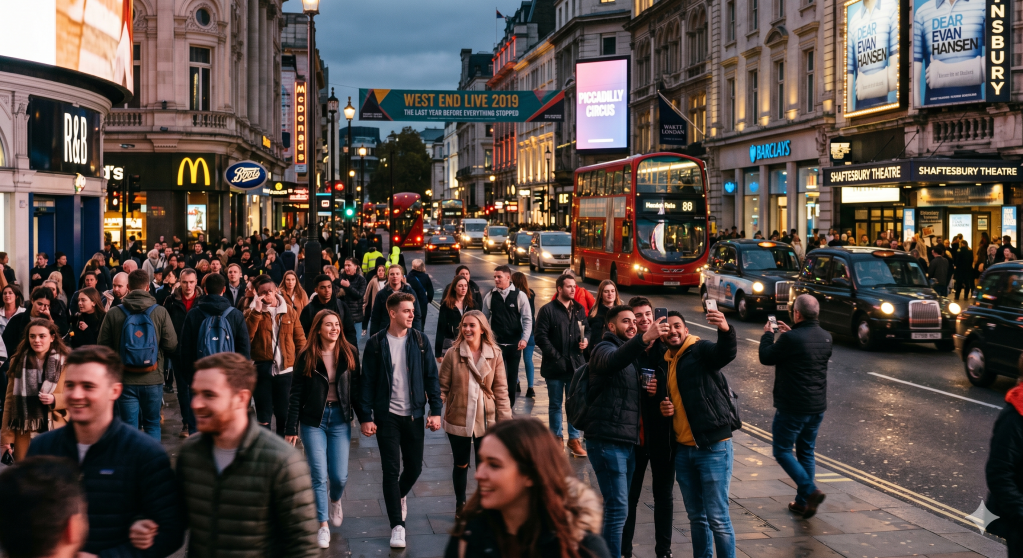
What did the pandemic actually find when it arrived? A deep look at the social, psychological, and structural conditions of 2019 — the last ordinary year.
There is something strange about looking back at a year that felt, at the time, entirely ordinary. October 2019 was unremarkable by most measures. The economy was humming. People were traveling, commuting, crowding into stadiums and concert halls and conference rooms without a second thought. And yet if you read the cultural output of that period now — the think pieces, the political arguments, the social media debates — you can see the outline of something that wasn’t quite right. A society that had been running at an unsustainable speed, grinding on its own friction, and had no idea that it was about to stop.
The year 2019 was the last full year before COVID-19 reshaped nearly every aspect of daily life. But to understand what the pandemic interrupted, it helps to understand what it found. What were people doing, thinking, and feeling in that final stretch of normalcy? What forces were already at work beneath the surface? And what does behavioral science tell us about why humans are so poorly equipped to see a rupture coming — even when the cracks are already there?
This is an attempt to answer those questions honestly, without the benefit of hindsight pretending to be foresight.
A World Caught Between Two Speeds
By 2019, much of the developed world had settled into a peculiar rhythm. Economically, the decade following the 2008 financial crisis had been one of the longest growth streaks in modern history. Unemployment in the United States had fallen to around 3.5 percent — a 50-year low. In the United Kingdom, Europe, and parts of Asia, similar patterns held. On paper, things looked good.
But “on paper” is doing a lot of work in that sentence. The prosperity of the 2010s was distributed in ways that made aggregate statistics deeply misleading. Research from economists like Emmanuel Saez and Gabriel Zucman had been documenting for years that income and wealth gains were disproportionately flowing to the top of the distribution, while median wages for working-class households had stagnated in real terms for decades. This wasn’t a fringe academic argument by 2019 — it had become mainstream political vocabulary. Politicians across the spectrum were talking about inequality. The language of “the 1 percent” had migrated from protest signs to presidential debates.
What this created, psychologically, was a kind of bifurcated experience of the same economy. Some people were genuinely thriving. Others were working harder than ever and not gaining ground. And a significant portion of the population had developed something researchers call “relative deprivation” — the feeling of falling behind not in absolute terms, but in comparison to others around them. Relative deprivation, according to decades of sociological research, is a more reliable predictor of social discontent than absolute poverty. It isn’t about how much you have. It’s about how much you have compared to how much you expected to have, or how much the people around you appear to have.
Social media, in 2019, was pouring accelerant on that particular fire.
The Comparison Machine
Instagram, Facebook, and Twitter had by 2019 been operating at scale for roughly a decade. The research on their psychological effects was accumulating, and it wasn’t particularly encouraging. A 2018 study published in the Journal of Social and Clinical Psychology found that limiting social media use to 30 minutes a day led to significant reductions in loneliness and depression among college students. A 2019 analysis by Amy Orben and Andrew Przybylski in Nature Human Behaviour complicated the picture — finding that the effect sizes for social media and wellbeing, while real, were smaller than some alarmed commentators had suggested. The science, in other words, was genuinely unsettled.
What was less unsettled was the observation, backed by considerable evidence, that social media platforms were algorithmically optimized to maximize engagement — and that engagement, as it turned out, was driven more reliably by outrage, anxiety, and social comparison than by contentment or connection. Facebook’s own internal research, which would only become public knowledge in later years through leaked documents, had already identified that the platform’s algorithms were amplifying emotionally extreme content because it generated more interactions.
The result was an information environment that systematically rewarded the most alarming, divisive, or emotionally provocative version of any story. People weren’t passive victims of this process. Many found the outrage satisfying — there is well-documented psychological research on what some researchers call “moral outrage” as a form of social bonding and identity reinforcement. Being angry about the right things, in the right ways, had become a form of social currency.
Neuroscientist Matthew Lieberman’s work on the “social brain” offers a useful frame here. Humans are not merely social creatures by preference — the neural circuitry that evolved for social cognition is among the most metabolically expensive and developmentally significant architecture in the brain. We are wired, at a deep level, to monitor our social standing, track what our group thinks, and respond to threats to our social identity. The platforms of 2019 were remarkably effective at feeding that circuitry with a constant stream of stimulation — much of it artificial, almost none of it resolved.
The Attention Economy’s Apex Year
By 2019, the term “attention economy” had escaped academic circles and entered general use. Cal Newport’s Digital Minimalism was published that year. Jaron Lanier’s Ten Arguments for Deleting Your Social Media Accounts Right Now had come out the year before. There was a growing cultural conversation about whether the relationship between people and their devices had become pathological.
And yet usage numbers kept climbing. Average screen time for American adults in 2019 was approaching four hours per day on mobile devices alone. For teenagers, it was higher. The knowledge that something might be bad for you and the behavioral change required to actually stop doing it are separated, of course, by a chasm that psychology has been trying to understand for centuries. The concept of “akrasia” — acting against your own better judgment — goes back to Aristotle. What was new in 2019 was the scale and sophistication of the systems engineered to exploit that gap.
This matters for understanding what happened later. When the pandemic arrived in 2020, it found a population that was already deeply enmeshed in digital life and already experiencing significant levels of anxiety, social fragmentation, and attention-related distress. The conditions were not created by COVID-19. They were revealed and amplified by it.
Political Atmosphere and the Exhaustion of Normal
2019 was, politically, an extraordinarily turbulent year in many parts of the world. In the United States, the House of Representatives launched an impeachment inquiry against President Trump in September. Brexit negotiations in the United Kingdom lurched through crisis after crisis, with Prime Minister Boris Johnson taking office in July and parliament and the courts becoming the arena for constitutional conflicts with few precedents. In France, the Yellow Vest movement continued into its second year. In Hong Kong, mass protests over an extradition bill evolved into a broader pro-democracy movement that would define the city’s autumn.
Political scientists were reaching for terms like “democratic backsliding,” “polarization,” and “populist wave” to describe a pattern visible across multiple continents. The academic literature on affective polarization — the degree to which partisans don’t just disagree with the other side but actively dislike and distrust them — showed the phenomenon intensifying throughout the 2010s, with 2019 data suggesting the trend was accelerating rather than moderating.
What the research on polarization consistently found was that it was not primarily driven by people moving to ideological extremes. Most people, in most countries, held a mix of views that didn’t map neatly onto party platforms. What had changed was the emotional valence of political identity. The “us versus them” psychology had become more intense, more personal, and more resistant to update by evidence. Psychologist Jonathan Haidt’s work on moral foundations theory had been arguing for years that political disagreements often weren’t really about policy — they were about incompatible moral intuitions concerning fairness, loyalty, authority, and care. By 2019, that framing had become almost impossible to dispute.
The exhaustion this produced was real and measurable. Surveys from organizations like the American Psychological Association consistently identified the political climate as a leading source of stress for Americans. Not just among partisans — across the board. The constant noise of political conflict, filtered through social media and a cable news ecosystem built on conflict, had become an ambient feature of daily life that many people found genuinely wearing.
A Generation Coming of Age in Uncertainty
Generation Z — broadly defined as those born from the mid-1990s onward — was entering adulthood in 2019 carrying a distinctive psychological profile shaped by forces their predecessors hadn’t faced in quite the same combination. They had grown up with smartphones from early adolescence. They had come of political age during the 2008 financial crisis, observing its aftermath and absorbing the anxieties of their parents. They had been educated in an era of active-shooter drills and climate change curriculum, and a significant portion of them had reported higher rates of anxiety and depression than previous cohorts at comparable ages.
Jean Twenge’s research, published in her 2017 book iGen and subsequent papers, documented a sharp inflection around 2012 in the mental health data for American teenagers — a date that corresponds, not coincidentally, to the widespread adoption of smartphones and social media by that age group. The research was contested in its methodology and the size of effects claimed, but even critics of Twenge’s strongest conclusions generally acknowledged that something had shifted in adolescent wellbeing metrics over the 2010s. They were also, in many surveys, more politically engaged and more acutely concerned about systemic risks — climate change, economic inequality, institutional fragility — than older cohorts. A generation arriving at adulthood with higher baseline anxiety and a sharper sense of institutional precariousness was, in ways no one had yet mapped, about to face a test of exactly those fears.
Technology at an Inflection Point
If social and political life in 2019 felt turbulent, the technological landscape was at an inflection point that most people weren’t fully registering.
Artificial intelligence had been moving fast. The transformer architecture, introduced in a 2017 paper from Google researchers, had begun reshaping the field of natural language processing. In 2019, OpenAI released GPT-2, a language model it initially declined to fully release, citing concerns about potential misuse. The decision attracted significant media attention — and a fair amount of skepticism about whether those concerns were warranted given the model’s actual capabilities. In retrospect, GPT-2 was a modest precursor. But the conversation it sparked about AI-generated text, disinformation, and the difficulty of distinguishing human from machine output was genuinely prescient.
5G networks were beginning to roll out. The debate over Huawei’s role in Western telecommunications infrastructure was becoming a proxy for broader anxieties about technological competition between the United States and China. Facial recognition technology was spreading into law enforcement, airports, and commercial settings, prompting pushback from civil liberties organizations and some local governments.
Streaming had decisively replaced physical media and was well on its way to displacing traditional television. Netflix had approximately 167 million subscribers globally by the end of 2019. Spotify had over 100 million premium subscribers. The way people consumed culture — the rhythms of anticipation, communal viewing, and shared reference — was changing at a pace that cultural critics were still trying to process. Beneath these seemingly separate developments was a common pattern: technologies were increasingly reshaping social behavior faster than governments, institutions, and cultural norms could adapt to them.
The Gig Economy and the Meaning of Work
One of the subtler but more consequential shifts underway in 2019 involved the structure of work itself. The “gig economy” — a somewhat misleading umbrella term for a range of arrangements from freelance creative work to Uber driving to warehouse contract labor — had grown substantially through the decade. In the United States, an estimated 36 percent of workers participated in some form of gig or independent work, according to Gallup research from 2018.
For some workers, particularly those with high-demand skills, these arrangements offered genuine flexibility. For others — particularly in lower-wage sectors — they transferred financial risk from employers to workers in ways that research on economic precarity linked to lasting damage to mental health and long-term stability. Less visible but equally important was the effect on meaning. Research from organizational psychologists like Adam Grant had documented how much people depend on a sense that their work matters to others. When employment relationships fragment and tasks become disconnected from any visible human impact, what tends to erode isn’t just job satisfaction — it’s something closer to purpose.
The Body in an Era of Abstraction
The costs of acceleration were not only social and psychological. They were increasingly visible in the body itself.
Something else was happening in 2019 that tends to get underweighted in retrospective analysis: a growing awareness of, and anxiety about, the physical costs of modern sedentary life.
The research on sitting as a health risk had been filtering into mainstream awareness throughout the decade. Standing desks had become common in open-plan offices. Concepts like “exercise snacking” — the idea that short bouts of movement distributed throughout the day were metabolically valuable — were being covered in health journalism. The wellness industry was booming, generating an estimated $4.5 trillion globally in 2019, according to the Global Wellness Institute.
At the same time, actual physical activity among adults and children in wealthy countries was not improving by most measures. The proliferation of wellness products and gym memberships coexisted with declining rates of unstructured physical activity — the kind of movement embedded in daily life rather than scheduled as a distinct activity. Researchers in public health were documenting what they called the “physical activity paradox” in some populations: people who performed demanding physical labor were actually showing worse health outcomes than their sedentary professional counterparts, due to the combination of occupational stress, poor posture, and insufficient recovery.
Sleep was another domain where the gap between what the science said and what people were doing was stark. Matthew Walker’s 2017 book Why We Sleep had made the extraordinary health costs of chronic sleep deprivation accessible to a general audience — and had become a bestseller. Yet surveys consistently showed that a substantial minority of adults were sleeping fewer than the recommended seven to nine hours per night, driven by work demands, screens, and a cultural valorization of busyness that made sleep feel like an indulgence.
What 2019 Felt Like From the Inside
Descriptions of historical periods from the outside — from data, research, and retrospective analysis — can create a false impression of clarity. From the inside, 2019 didn’t feel like the final chapter of an era. It felt, to most people, like Tuesday.
The psychologist Daniel Kahneman’s distinction between “experiencing self” and “remembering self” is useful here. The experiencing self lives in the present, registering moments as they happen. The remembering self constructs a narrative afterward, finding patterns and meanings that the experiencing self had no access to. The last year before everything stopped looked very different to the experiencing self — who was just trying to manage a workload, pay down debt, plan a holiday, navigate a difficult relationship — than it does now, to the remembering self equipped with knowledge of what came after.
That gap matters because it says something important about how humans relate to systemic risk. We are reasonably good at responding to visible, immediate threats. We are considerably worse at recognizing or preparing for diffuse, slow-moving, or unprecedented ones. Behavioral economists call this “normalcy bias” — the tendency to assume that the future will resemble the recent past, and to discount the possibility of disruptions for which we have no personal experience as reference points.
In October 2019, a global pandemic was not on most people’s personal risk registers. This was not irrational, exactly — for any individual in any given week, the probability of a world-altering pandemic beginning was indeed very small. What was failing was not individual rationality but collective risk perception and institutional preparedness. The Global Health Security Index, released in October 2019, assessed the United States as the most prepared country in the world for a pandemic. The ranking would age poorly. The problem was not merely resources or scientific capability — it was the gap between theoretical preparedness and the realities of political coordination, public communication, and institutional trust under crisis conditions. A high score on a preparedness checklist turned out to be a poor substitute for the social cohesion and functional governance those conditions actually required.
The Thread That Ran Through Everything
Looking across the social, psychological, technological, and political landscape of 2019, a common thread emerges: the growing gap between the pace of change and the human capacity to adapt to it.
The term “VUCA world” — for volatile, uncertain, complex, and ambiguous — had migrated from military strategy into management consulting and organizational psychology. It was being used to describe an environment in which the traditional tools of planning, prediction, and structured decision-making were increasingly inadequate. The concept captured something real. The rate at which new information had to be processed, new skills acquired, new social norms navigated, and new risks assessed had accelerated in ways that were deeply taxing for cognitive and emotional systems shaped by a much slower-moving ancestral environment.
Psychologist Martin Seligman, best known for his work on learned helplessness and later for founding the positive psychology movement, had by 2019 been arguing for years that the skills most valuable in uncertain environments were not competence at any particular task, but what he and others called “psychological flexibility” — the capacity to tolerate ambiguity, recover from setbacks, update beliefs in light of new evidence, and sustain effort toward long-term goals in the face of short-term discomfort. These capacities, research suggested, were not evenly distributed, and they were not being systematically cultivated by most educational or workplace environments.
The world of late 2019 was, in other words, making unprecedented demands on human adaptability — and many of the institutions and social structures that had historically buffered individuals against the psychological costs of rapid change were weakening or absent. Religious participation was declining across most wealthy countries. Geographic mobility had disrupted extended family networks. Trust in institutions — governments, media, corporations, even science — was at historic lows in many democracies. The social and psychological infrastructure for collective resilience was thinner than it had been in decades.
The View from 2026
When the pandemic arrived, it acted as a kind of pressure test on everything described above. The stresses that had been ambient became acute. The inequalities that had seemed manageable became untenable. The digital dependency that had felt like a lifestyle choice became a survival mechanism. The fragmentation of public information that had seemed like an irritant became a genuine crisis.
It also revealed, unexpectedly, some capacities that had not been visible before. The speed with which vaccines were developed — using mRNA platforms that had been in development for years but never deployed at scale — was a genuine triumph of institutional science. The adaptability that many workers, teachers, and caregivers showed in the early months of the pandemic was remarkable, if unsustainable. And the longing for exactly the kinds of physical, communal, unmediated human contact that 2019’s pace of life had made it easy to deprioritize — concerts, meals, travel, casual conversation — turned out to be both powerful and revealing.
What people missed, when it was taken away, told us something important about what had always mattered most.
The last year before everything stopped was not, in retrospect, a golden age. It was a complicated, anxious, unequal, technologically accelerating, politically turbulent stretch of time in which many people were struggling in ways that aggregate statistics obscured. But it was also a world with a physical texture — the ordinary weight and warmth of being in the same room as other people — that its inhabitants had taken entirely for granted. Understanding that world honestly, without nostalgia or revisionism, helps explain not only what the pandemic changed, but what it revealed.









