
Originally published in January 2020 and comprehensively updated/edited in June 2026.
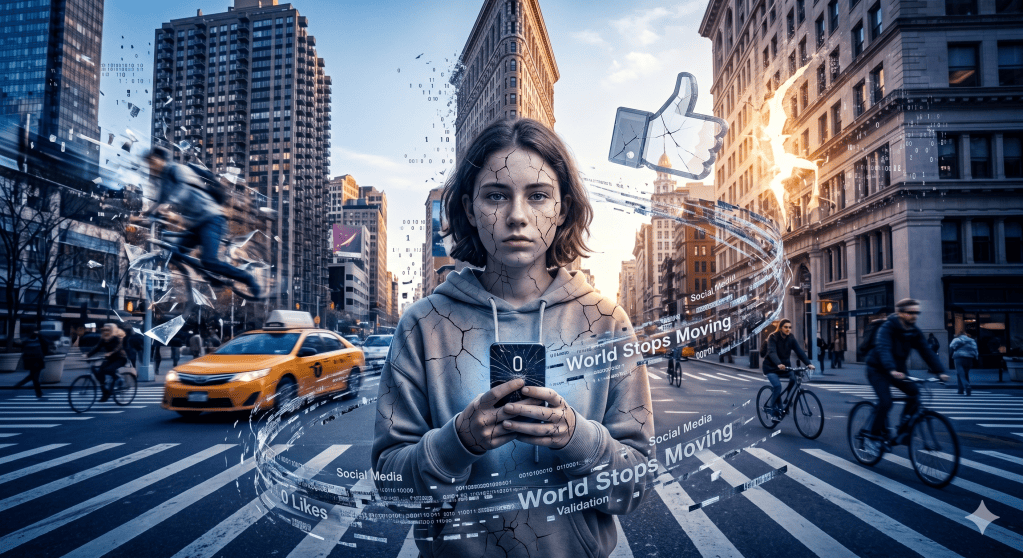
When the world suddenly stops moving, what happens to the human mind? A deep look at the psychology, neuroscience, and social upheaval of the 2020 pandemic era.
There is a particular kind of silence that only exists when something enormous has just happened. Not the silence of a library or a countryside evening, but the silence of held breath — millions of people pausing at the same moment, unsure of what comes next. In the early months of 2020, that silence settled over much of the world with a weight few living people had ever experienced. Flights stopped. Offices emptied. Schools locked their doors. Streets that had hummed with daily life fell eerily quiet.
The COVID-19 pandemic was, at its core, a public health emergency. But it was also something harder to name — a collective rupture in the ordinary texture of human experience. Almost overnight, the rhythms people had built their lives around simply ceased. The morning commute. The handshake. The crowded restaurant on a Friday night. Things that had seemed as permanent and unremarkable as gravity turned out to be fragile, conditional, revocable.
What happens to people — psychologically, socially, neurologically — when the world they knew suddenly stops moving? And what did that stillness reveal about how human beings are actually built: what we need, what we fear, and how we adapt when adaptation is the only option?
The Architecture of Ordinary Life
To understand what the pandemic disrupted, it helps to understand what it disrupted from.
Human beings are creatures of habit to a degree that most people underestimate. Neuroscientists estimate that roughly 40 to 45 percent of daily behavior consists of automatic actions — things we do without consciously deciding to do them. We take the same route to work. We sit in the same chair. We reach for our phones within minutes of waking up. These habits are not signs of laziness or thoughtlessness. They are the brain’s efficiency system at work.
The brain operates under a kind of energy budget. Conscious, deliberate decision-making is metabolically expensive. Habit formation — the transfer of repeated behaviors into automatic routines handled by a part of the brain called the basal ganglia — frees up cognitive resources for genuinely novel situations. In this sense, routine is not the opposite of freedom. It is what makes freedom possible. By automating the predictable, the brain reserves its deeper processing power for things that actually require it.
This is why disruption to routine carries costs that go far beyond inconvenience. When familiar patterns are removed, the brain has to consciously manage things it had long since delegated. Every decision, from what to eat to when to exercise to how to fill an afternoon, requires deliberate thought. The result is a kind of cognitive fatigue that many people experienced in 2020 without quite being able to explain it. They weren’t doing more. In many cases, they were doing less. But they were deciding far more, and that turned out to be exhausting in its own right.
What Isolation Actually Does to the Brain
Humans evolved as a social species. This is not a sentimental observation — it has measurable biological consequences. Social connection is so fundamental to human survival that the brain treats social exclusion much the same way it treats physical pain. Research by social neuroscientist John Cacioppo and his colleagues found that chronic loneliness triggers a cascade of physiological changes: elevated levels of the stress hormone cortisol, disrupted sleep, impaired immune function, and a heightened state of vigilance that the researchers described as the brain scanning the environment for threats.
From an evolutionary standpoint, this makes sense. For most of human history, being cut off from the group was genuinely dangerous. A person alone in a prehistoric environment was a person at risk. The brain developed an alarm system — loneliness — to motivate social reconnection, much as hunger motivates eating. The problem is that this ancient system has no way of distinguishing between being alone on the savanna and being alone in an apartment during a lockdown. It responds to social isolation the same way regardless of context.
This has consequences for cognition. Studies on social isolation consistently show impairments in memory, concentration, and the ability to regulate emotion. The hippocampus, a brain region central to memory formation and spatial navigation, appears to be particularly sensitive to social deprivation. Animal studies have shown that isolated individuals develop structural changes in the hippocampus — though the degree to which this translates directly to humans remains an active area of research, and researchers are careful not to overstate what the evidence currently supports.
What is clearer is the psychological picture. In surveys conducted during lockdown periods in 2020, rates of anxiety and depression spiked dramatically across demographics. A CDC survey conducted in June 2020 found that roughly 40 percent of American adults reported struggling with mental health or substance use — a number that stood in stark contrast to pre-pandemic baselines. Younger adults and essential workers were among the hardest hit. The causes were complex and interacting: fear of illness, economic uncertainty, grief, disrupted routines, and the simple fact of reduced human contact all contributed simultaneously.
The Paradox of Forced Rest
Something unexpected also emerged in those early months, and it deserves honest examination. For a significant number of people — particularly those whose pre-pandemic lives had been defined by relentless busyness — the initial lockdown brought something that resembled relief.
This was not a popular thing to admit. Acknowledging any positive dimension of a catastrophe that was killing people felt inappropriate, even callous. But the psychological reality was more complicated. Many people found, for the first time in years, that the external demands on their time had simply vanished. The long to-do list, the social calendar, the commute — all gone. What remained was the self, stripped of its usual scaffolding.
Some people discovered they had been running from that self for a very long time.
Psychologists have a concept called the “default mode network” — a set of brain regions that activate when the mind is not engaged in a specific external task. Despite its unglamorous name, this network is anything but idle. It underlies self-reflection, future planning, creative thinking, and mind-wandering — the inner life, loosely speaking. Modern life, and smartphones in particular, had become remarkably effective at suppressing it. Waiting in line, riding the subway, lying in bed — situations that once required the mind to occupy itself had become occasions for scrolling. The pandemic, by stripping away much of that stimulation, created conditions for a kind of involuntary introspection that many people had not experienced since childhood.
The results were not uniformly pleasant. For some, forced inwardness revealed anxieties and dissatisfactions they had successfully avoided confronting. For others, it created space for genuine reflection, reconnection with neglected interests, and a reassessment of what actually mattered to them. The psychological literature on this period is still developing, but researchers have noted measurable shifts in what people reported valuing — time with family, creative pursuits, and proximity to nature consistently ranked higher in post-lockdown surveys than they had before 2020.
Time Goes Strange
One of the most widely reported phenomenological experiences of the pandemic was a profound distortion of time. Days felt both interminable and indistinguishable. Weeks collapsed into one another. People genuinely lost track of what month it was. The internet coined the phrase “blursday” — a portmanteau of blur and the days of the week — to describe the experience.
This was not simply a figure of speech. It reflects something real about how the brain constructs its experience of time passing.
Human time perception is closely tied to the encoding of novel experiences. The brain marks time, in part, through the registration of distinct events. A day that contains new experiences, novel information, and varied interactions tends to feel rich and long in retrospect, even if it passed quickly in the moment. A day that is functionally identical to the one before it provides the brain with few new “timestamps,” so to speak. In memory, it collapses. When every day has the same structure, the same walls, the same view from the same window, the brain has less material to construct a distinct memory of that period. Time, perceptually speaking, compresses.
This is a well-documented effect. Research on time perception, including studies by cognitive psychologist Marc Wittmann, has shown that the richness of an interval’s experiential content predicts how long it will seem in retrospect. The pandemic robbed daily life of much of its experiential variety. The result was a collective experience of time that felt simultaneously endless and erased — a paradox that confused people partly because it was genuinely paradoxical.
Technology as Lifeline, Technology as Burden
The pandemic was the first global catastrophe to unfold against a backdrop of mature digital infrastructure. This mattered enormously. Remote work, which had existed for years as a niche practice, became the de facto mode of employment for large swaths of the workforce within a matter of weeks. Video calls replaced meetings. Telemedicine replaced waiting rooms. Digital classrooms replaced schools.
The speed of this transition was remarkable and, by some measures, successful. Many organizations discovered that work they had assumed required physical presence could in fact be accomplished remotely. Productivity, contrary to early fears, did not collapse — though what “productivity” meant in that context, and what it failed to measure in terms of human cost, became a more contested question as time went on.
But technology also amplified the worst dimensions of the moment. Social media, in particular, created a feedback environment in which fear, misinformation, and political conflict spread with an efficiency that no previous communications medium had matched. Research on information diffusion across platforms found that emotionally charged, ambiguous content spread faster than calm, factually grounded content — a feature of the attention economy that had existed before 2020 but became impossible to ignore during a public health crisis that hinged on accurate information.
The phenomenon of doomscrolling entered common parlance during this period. The term describes the compulsive consumption of negative news — a behavior that feels driven, even when the person doing it knows it is making them feel worse. From a psychological standpoint, this is not irrational. In an environment of genuine threat and uncertainty, information-seeking is adaptive. The brain wants to scan for danger. The problem is that modern information environments are designed to exploit this tendency. The scroll has no bottom. The news does not run out. What evolved as a useful threat-detection behavior becomes, in the context of infinite digital content, a feedback loop of anxiety with no resolution.
What Children Experienced
No group experienced the collision between isolation, technology, and disrupted routine more consequentially than children and adolescents. The pandemic’s effects on them occupy a chapter of this story that will take years to fully understand. The disruption to schooling, social development, and the routines that structure childhood was massive in scale and uneven in impact. Children in stable, well-resourced households experienced lockdown very differently from children in crowded apartments, abusive home environments, or households facing economic collapse.
What the research has established with reasonable confidence is that the pandemic coincided with measurable deterioration in child and adolescent mental health across many countries. Rates of anxiety, depression, and eating disorders among young people rose sharply during 2020 and 2021, and in many cases remained elevated well beyond the acute phase of the pandemic. Emergency department visits for mental health crises among adolescents increased substantially.
For adolescents in particular, the social dimension of this disruption carried special weight. Adolescence is developmentally a period of intense peer orientation — a time when the brain is quite literally reorganizing itself around social identity and peer relationships. The removal of in-person school, extracurricular activities, and casual social contact didn’t simply inconvenience teenagers. It removed the primary developmental context their brains were configured to inhabit.
Here too, the effects were not uniform. Some adolescents found relief from the social pressures and performance demands of school. Social anxiety, bullying, and the exhausting performance of peer-group identity became, for a time, less acute. But for many, the isolation was genuinely harmful in ways that self-report surveys only partly capture.
The Unequal Stillness
Any honest account of this period has to grapple with the fact that the world did not stop moving equally for everyone. The word “lockdown” described radically different realities depending on where you lived and what you did for work.
For people whose jobs existed in a laptop and a broadband connection, the pandemic was primarily a psychological and social disruption — serious, but survivable in material terms. For people whose jobs required physical presence — in warehouses, hospitals, grocery stores, delivery vehicles, meatpacking plants, and care homes — the world did not slow down at all. It became more dangerous.
This split became one of the defining social tensions of the period. The language of “we’re all in this together,” ubiquitous in the early weeks, rang increasingly hollow as the asymmetry became visible. Essential workers, disproportionately drawn from lower-income and minority communities, bore the greatest exposure risk while receiving the least latitude to protect themselves. The pandemic did not create these inequalities. But it lit them up with an unflattering clarity that made them difficult to look away from — for a while, at least.
What the Stillness Revealed
Six years on from those early months, it is possible to see that period with a perspective unavailable at the time. What the world’s sudden stillness ultimately revealed was not a single truth, but a collection of tensions that had been present all along — papered over by the momentum of ordinary life, and suddenly, briefly, exposed.
It revealed how deeply human beings need each other — not in the abstract, philosophical sense, but in the ordinary, physical, unremarkable sense of being near other people. It revealed how much of what passes for individual psychology is actually social scaffolding: that who we are, day to day, is partly constituted by our relationships, our roles, and our routines. Strip those away and something fundamental becomes uncertain.
It revealed the extent to which the pre-pandemic pace of life had become, for many people, a way of not thinking. And it raised the uncomfortable question of what a more intentional pace might look like — a question most societies have not answered in the years since, though individuals have answered it differently and more quietly, in the accumulation of small choices about what to return to and what to leave behind.
It revealed the fragility of the supply chains, institutions, and social contracts that modern life depends on — and, somewhat contradictorily, the resilience of human beings asked to adapt to conditions they had never encountered. The two things are not in tension. Systems can be fragile while the people within them are resourceful. Both things were true.
After the Stillness
The world did not, of course, stay still. By 2021, vaccines were being administered at scale. By 2022, most countries had removed the bulk of their restrictions. By 2023, a kind of aggressive normalcy had reasserted itself — people returning to offices, airports filling again, the ambient volume of daily life rising back toward its former pitch.
But something had changed, even if that change was difficult to measure or name. Labor markets shifted in ways that economists are still analyzing. Remote work persisted far more broadly than employers had expected or, in many cases, wanted. Birth rates and migration patterns moved in unexpected directions. The mental health consequences, particularly for young people, did not resolve when the restrictions lifted.
The pandemic arrived as a shock and receded as a slow renegotiation — with employers about where work happens, with cities about why people live in them, with the self about what the self actually requires to function. These negotiations continue.
What the world’s sudden stillness gave us, whether we wanted it or not, was a moment of involuntary clarity. The routines and structures we had built around ourselves were not, it turned out, the bedrock. They were a construction — useful, even essential, but a construction nonetheless. Underneath it was something more interesting and more uncertain: the question of how human beings actually want to live, when the default settings are cleared and they have to choose.
Most of us, given the choice, would not choose to live through such a rupture again. But it happened. And what we do with what it revealed is still, in many ways, the more important story.









