
originally published in February 2020 and comprehensively updated/edited in June 2026.
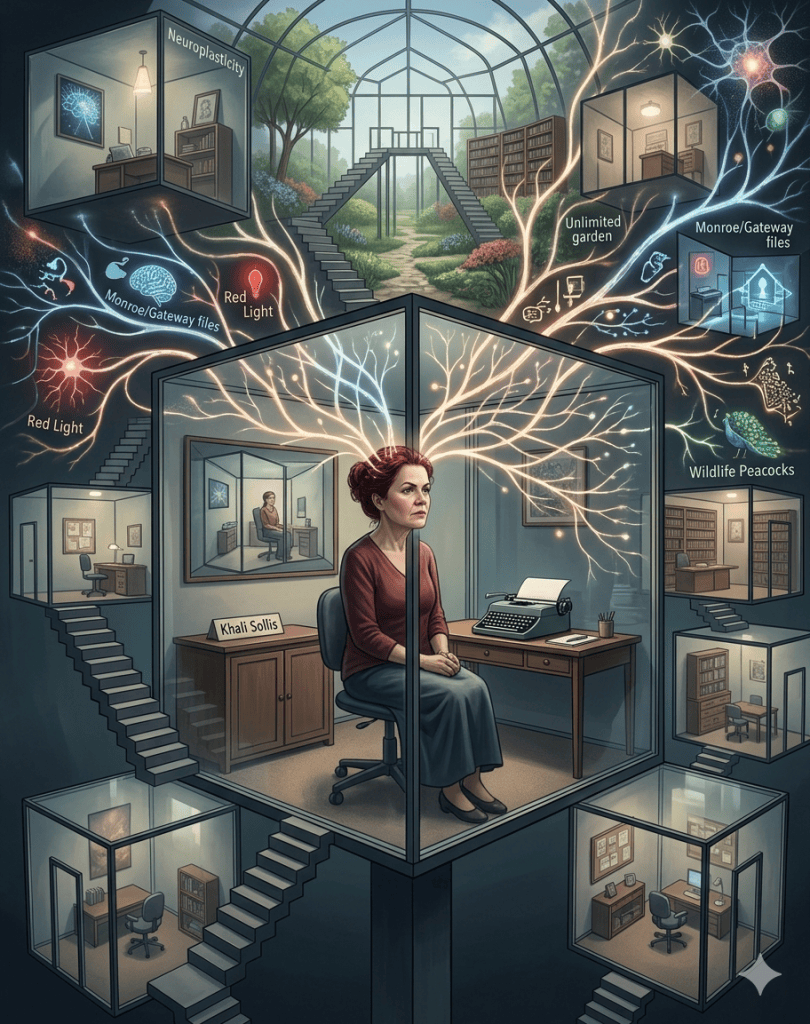
Confinement and the psychology of internal space — how spatial restriction affects the brain, what research reveals about inner resources, and what we learned about the mind when the world shrank.
There was a period, not so long ago, when the walls of people’s homes became the edges of their world. Millions of people across the globe found themselves confined to apartments, houses, and shared living spaces for weeks and then months at a time. For many, this was an unprecedented experience — not just logistically, but psychologically. The question of what happens to the human mind when external space collapses inward, when the commute disappears and the horizon shrinks to a kitchen window, turned out to be far more complex than most people anticipated.
What emerged from that period was a widespread, largely unplanned experiment in the psychology of confinement. Some people thrived in ways they hadn’t expected. Others deteriorated in ways that surprised them. And nearly everyone discovered something about the relationship between physical space and mental experience that they hadn’t previously had reason to examine. Confinement and the psychology of internal space — the way our minds construct, inhabit, and defend their inner territories — became one of the defining psychological themes of the early 2020s, and its lessons have only grown more relevant in the years since.
This essay examines what researchers, clinicians, and behavioral scientists have learned about what confinement does to the mind, why spatial experience is so deeply entangled with psychological health, and how the human capacity for internal space — imagination, reflection, and mental world-building — becomes both a resource and a burden when the external world contracts.
The Spatial Self: Why Physical Space Is Psychological
Most people intuitively understand that their mood shifts depending on their environment. A cramped, cluttered room feels different from an open one. A long walk outdoors produces something that sitting inside cannot replicate. But the relationship between physical space and psychological experience runs deeper than simple preference.
Cognitive scientists describe the brain as an embodied organ — one that does not merely receive information from the body and the environment but is fundamentally shaped by them. The neuroscientist Antonio Damasio spent much of his career demonstrating that emotion, cognition, and physical sensation are not separate processes that occasionally interact; they are a single integrated system. The body’s position in space, its proximity to other bodies, and its experience of openness or enclosure all feed directly into the emotional and cognitive states the brain generates.
Research in environmental psychology has documented this connection with real precision. Roger Ulrich’s landmark 1984 study established that exposure to natural views and open environments measurably reduces physiological stress markers. Rachel and Stephen Kaplan’s Attention Restoration Theory extended this work, proposing that natural, expansive environments replenish a specific cognitive resource — directed attention — that indoor, constrained environments deplete. Without periodic exposure to what they call “restorative environments,” the brain’s capacity for focused, voluntary attention degrades. People become irritable, impulsive, and cognitively fatigued in ways they often can’t clearly name.
Confinement, then, is not simply an inconvenience. For the brain, the loss of spatial variety and outdoor access is a form of chronic stress — quiet, persistent, and cumulative.
The Role of Personal Territory
There is also the question of territory. Environmental psychologists distinguish between primary territory (spaces that feel deeply personal and controllable, like a bedroom), secondary territory (semi-public spaces with regular presence, like a regular table at a café), and public territory (shared spaces one can use but not claim). Under confinement, secondary and public territories effectively cease to exist. What remains is primary territory — and when that single space must simultaneously serve as office, school, gym, kitchen, and refuge, its psychological function as a restorative private environment collapses under the weight of competing demands.
Control is one of the central variables in stress research, and confinement systematically erodes it. For individuals whose daily lives had previously moved through a variety of spaces — commutes, offices, gyms, social venues — the sudden compression into a single location could feel like a kind of ambient trap, one that offered no clear exit and no obvious way to act one’s way out of.
What Historical Confinement Tells Us
The psychological literature on confinement didn’t begin in 2020. Researchers and clinicians had been studying its effects for decades in contexts including solitary confinement in prisons, extended space travel, Antarctic overwinter missions, and submarine deployments. While none of these maps perfectly onto civilian home confinement, the accumulated evidence points toward several consistent psychological patterns.
Among the most extensively studied is the phenomenon researchers call “cabin fever” — a colloquial term for a recognizable syndrome of restlessness, irritability, depressive mood, and impaired concentration that develops under conditions of spatial restriction. The syndrome has been documented in Antarctic researchers, in prisoners, in explorers. It appears to involve disruptions to circadian rhythm (natural light cycles are often disrupted in confined settings), reductions in the variety of sensory input the brain receives, and the cumulative toll of social friction in close quarters.
Isolation, Monotony, and the Brain’s Need for Novelty
One of the clearest findings from confinement research is that the human brain requires novelty. Not the frantic novelty of constant stimulation, but regular variation in experience — new environments, new social interactions, new sensory inputs. This isn’t a cultural preference; it appears to be a fundamental feature of how the brain allocates attention and generates motivation.
The neuroscience here involves the dopaminergic system — the brain’s primary reward circuitry. Dopamine neurons are particularly responsive to novel stimuli and unexpected rewards. Environments that are predictable and unvarying produce declining dopaminergic activation over time, which manifests behaviorally as boredom, reduced motivation, and a restless search for stimulation. Under confinement, when the physical environment becomes relentlessly familiar, this system can be chronically understimulated.
The work of neuroscientist Jaak Panksepp on what he called primary emotional systems adds another dimension. His SEEKING system — the brain’s fundamental motivational drive toward exploration, curiosity, and engagement with the world — depends in part on having an actual world to engage with. When the world shrinks to a fixed square footage, this system doesn’t simply go quiet. It continues to generate restless, searching energy with nowhere to go.
The Inner Life as Substitute and Refuge
What happens when the outer world contracts? Some people build an inner world to compensate. This is perhaps the most psychologically interesting dimension of confinement, and one that distinguishes individual responses more than almost any other variable.
The history of confinement is full of accounts of people who turned inward with remarkable productivity. Viktor Frankl, confined in Nazi concentration camps, developed much of the philosophical framework that would become logotherapy. Fyodor Dostoevsky, sentenced to four years in a Siberian prison camp, underwent a transformation that he would later describe as the most formative experience of his intellectual and spiritual life. More recently, accounts from prisoners held in solitary confinement describe elaborate internal worlds constructed through memory, imagination, and mental discipline.
These are extreme cases, and they shouldn’t be romanticized — the suffering involved was real and lasting. But they point toward a genuine psychological capacity: the ability to use internal space — the mind’s own territory — as a habitable environment when external territory is unavailable.
Imagination, Reflection, and Mental World-Building
Psychologists have studied what might broadly be called “inner resources” — the cognitive and imaginative capacities people draw on when external stimulation is reduced. Mind-wandering, often treated as a cognitive failure in the attention literature, has been substantially rehabilitated in recent years. Research by Jonathan Schooler, Mary Helen Immordino-Yang, and others suggests that periods of inwardly directed thought — daydreaming, reflection, mental time travel — are associated with creativity, emotional processing, self-understanding, and the integration of experience. The brain’s default mode network, which activates during rest and inward reflection, is now understood to be doing important cognitive work rather than merely idling.
Confinement creates an unusual condition for this system: forced inwardness. People who have developed the habit of inner life — through reading, writing, meditation, or simply reflective temperament — often find they have resources to draw on. People who have organized their psychological life primarily around external activity and social stimulation may find the inward turn genuinely disorienting.
This is not a moral judgment. The degree to which a person has developed what psychoanalysts call “the capacity to be alone” — to tolerate and even enjoy one’s own company — is partly a function of developmental history, attachment patterns, and cultural context. The British psychoanalyst Donald Winnicott argued that the capacity to be truly alone, paradoxically, develops in the context of early relationships — through experiences of being alone in the presence of a reliable, non-intrusive other. People who had those early experiences often find solitude manageable or enriching. Those who didn’t can find it genuinely threatening.
The Double-Edged Nature of Introspection
There is, however, a well-documented risk to increased inwardness: rumination. Psychologists distinguish between adaptive reflection — the kind that promotes insight, emotional processing, and problem-solving — and maladaptive rumination, which is the repetitive, unproductive rehearsal of negative thoughts and feelings. Under confinement, both can increase. The same reduction in external stimulation that allows some people to think more deeply can trap others in loops of anxious or depressive thought.
The research of Susan Nolen-Hoeksema on rumination showed clearly that it is one of the strongest predictors of depression and anxiety, and that it tends to escalate under conditions of stress and reduced behavioral options. When you cannot act your way out of a problem, the temptation to think your way out of it intensifies — and for people prone to rumination, that thinking tends to become increasingly negative and self-referential. Confinement closes off the behavioral outlets that typically break ruminative cycles: exercise, social distraction, changes of scenery.
Social Confinement and the Paradox of Proximity
Confinement is rarely truly solitary. For most people, it means being confined with others — partners, family members, roommates — at a density and duration that even close relationships aren’t designed to handle continuously. The psychological effects of this enforced proximity have their own distinct character.
Research on crowding and density in social environments — much of it dating back to Jonathan Freedman’s work in the 1970s and later extended by environmental psychologists — suggests that the psychological effects of density depend heavily on context and perceived control. High density in a voluntary, pleasurable context (a concert, a party) produces different effects than high density in an involuntary, inescapable context (a prison, a quarantined household). The critical variable is not the number of people per square foot but whether individuals feel they can regulate their own access to space and solitude.
When that regulation becomes impossible — when there is simply nowhere to go, no closed door that functions as genuine privacy — interpersonal friction escalates in predictable ways. Research on conflict escalation in close relationships identifies one of its primary drivers as a failure of what psychologists call “emotion regulation” — the ability to manage one’s own emotional state before responding to another person. Emotion regulation requires, among other things, the ability to withdraw from a situation temporarily, to create physical distance that allows for deactivation of the stress response. Confinement systematically removes this option.
Children and Developmental Space
For children, spatial experience carries particular developmental significance. Play — especially unstructured outdoor play — is now understood by developmental psychologists to be one of the primary mechanisms through which children develop executive function, emotional regulation, social cognition, and physical competence. The work of Stuart Brown and others has established that play is not a luxury but a biological necessity, with its own neural substrates and developmental windows.
Confinement disrupts this developmental machinery in ways that are not immediately visible but may have lasting effects. Children confined to indoor spaces with limited outdoor access show measurable increases in behavioral problems, attention difficulties, and anxiety symptoms. The psychologist Peter Gray has argued at length that the long-term decline in children’s outdoor free play — accelerated sharply during periods of enforced confinement — represents one of the more serious and underexamined public health trends of the early twenty-first century.
Technology and the Mediated Interior
Any honest account of confinement psychology in the contemporary period must grapple with technology — and specifically with the question of what digital environments do to the psychology of internal space.
During the confinement period of the early 2020s, the internet and digital social platforms became, for many people, the primary substitute for the external world. Video calls replaced in-person meetings. Social media accelerated. Streaming platforms reported unprecedented usage. People built and inhabited digital environments with an intensity that had no real precedent, and the effects on psychological experience were mixed in ways that researchers are still working to understand.
There is a reasonable argument that digital technology partially mitigated some of the worst effects of confinement — that video calls, however imperfect, preserved social connection that would otherwise have been entirely severed, and that streaming entertainment provided the novelty and stimulation that the depleted dopaminergic system was seeking. Some research supports this. Studies of social connectedness during confinement found that people who maintained strong digital social ties showed better psychological outcomes than those who did not.
But digital environments have their own psychological costs that became increasingly apparent under conditions of heavy use. Research by Amy Orben, Andrew Przybylski, and others has examined the relationship between digital media use and wellbeing, finding that it follows a curvilinear pattern — moderate use appears neutral or slightly positive, while very heavy use shows small but consistent negative associations with mood, sleep quality, and life satisfaction. The effects are modest in magnitude and the research debate is ongoing, but proposed mechanisms include disruption of sleep architecture through evening screen exposure, the well-documented effects of social comparison on platforms designed to surface favorable self-presentation, and what some researchers describe as “attentional capture” — the way algorithmically optimized content colonizes the attention in ways that leave little cognitive space for the slower, more restorative modes of inner life.
There is something particularly interesting here. The very technologies that substituted for the external world during confinement may also have interfered with the development of internal resources. If the default mode network — the brain system associated with mind-wandering, reflection, and inner world-building — requires genuine downtime to function properly, and if screens fill every available moment of unstructured time, then the opportunity to develop internal space may have been foreclosed precisely when it was most needed.
What Persisted: The Legacy of Compressed Space
The experience of confinement did not simply end when restrictions lifted. Psychologists and sociologists documented a range of behavioral and attitudinal changes that persisted well into the post-confinement period — some of them surprising, others entirely predictable in retrospect.
Some adaptations were genuinely positive. Surveys conducted in the years following the acute period found that many people reported a lasting reorientation of priorities — greater investment in home environments, stronger attention to close relationships, and a reduced tolerance for empty social obligations. What some researchers described as a recalibration of the relationship between busyness and wellbeing turned out to have staying power. The experience of being forced to slow down had, for a significant subset of people, revealed that the previous pace of life had been covering over something — an inner life that, once discovered or rediscovered, proved unexpectedly worth keeping.
The changed relationship to home was particularly striking. Interior design and home renovation industries saw sustained increases in activity that outlasted the confinement period itself, reflecting what appeared to be a genuine shift in how people thought about domestic space. For many, the home had been primarily a place to sleep and recover between more important activities elsewhere. Confinement reframed it as a primary environment worth investing in — psychologically and literally.
The transition to remote and hybrid work followed a similar arc. What began as an emergency arrangement became, for millions of workers, a permanent or semi-permanent condition. The psychological literature on this shift is complicated. Remote work eliminated commutes that many people found draining and returned time to workers that they generally valued. But it also blurred the territorial boundaries that, as discussed earlier, structure psychological experience — the home’s function as restorative refuge became harder to maintain when it was also perpetually an office. Research on remote workers found elevated rates of both reported satisfaction and reported difficulty switching off, often in the same people.
Other changes were more troubling. Clinicians documented persistent increases in anxiety, particularly around social situations and crowded public spaces — what has been described as a form of spatial anxiety, a lasting discomfort with open, unpredictable environments that confinement had temporarily removed from daily life. Some people found that the contracted world had become, in a psychological sense, their new normal, and that re-expansion was not the relief they expected but its own form of challenge. The return to offices, restaurants, and public transit required an active adjustment that surprised people who had expected to simply slot back into their previous lives.
The phenomenon of what might be called “social rustiness” — the degradation of social fluency and comfort that comes from extended underuse — was observed across age groups, but was particularly pronounced among adolescents and young adults whose formative social development had been interrupted. Social skills are not stored capacities that simply lie in wait; they are practiced competencies that atrophy without use. Their restoration requires the same thing their development required in the first place: sustained, real-world social experience, with all the friction and unpredictability that entails. For younger cohorts, the gap between digital social fluency and in-person social ease became a measurable and clinically significant phenomenon.
Alongside these difficulties, something else emerged that was harder to categorize. A meaningful number of people — particularly those who had experienced what we earlier described as the productive turn inward — reported a lasting comfort with solitude that was new to them. Not isolation, exactly, but a genuine ease with their own company that the previous social tempo had never allowed them to discover. Whether this represents a permanent psychological shift or a situation-specific adaptation that will fade over time remains, as of this writing, an open question.
The Broader Significance: Space, Freedom, and the Architecture of Mind
The psychology of confinement ultimately points toward something broader: the intimate relationship between the physical architecture of our lives and the psychological architecture of our minds. Human beings are not pure interior selves who merely pass through space. We are spatial beings — our identities formed, our emotions regulated, our thoughts structured in ways that depend on the environments we move through.
This is not a new insight. It appears in architecture theory, in phenomenological philosophy, in landscape architecture’s long tradition of designing for psychological wellbeing. But it took an involuntary global experiment in confinement to make these ideas viscerally real for people who had no previous occasion to consider them.
What the experience revealed, at scale and with unusual clarity, is that internal space — the mind’s own capacity for richness, reflection, and world-building — is not a given. It is a cultivated resource. It exists in a dynamic relationship with external space rather than as a simple substitute for it, and it requires time, practice, and the right conditions to develop. The implications for how we think about education, urban design, mental health, and technology are significant and still unfolding.
But perhaps the most durable lesson is also the simplest. The size of a person’s world is not measured only in square footage. It is measured equally in the richness of the inner territory they are able to inhabit — the quality of attention they can sustain, the depth of reflection they can tolerate, the degree to which, when the outer world contracts, there is somewhere inside worth going.









