
Originally published in April 2020 and comprehensively updated and edited in June 2026.
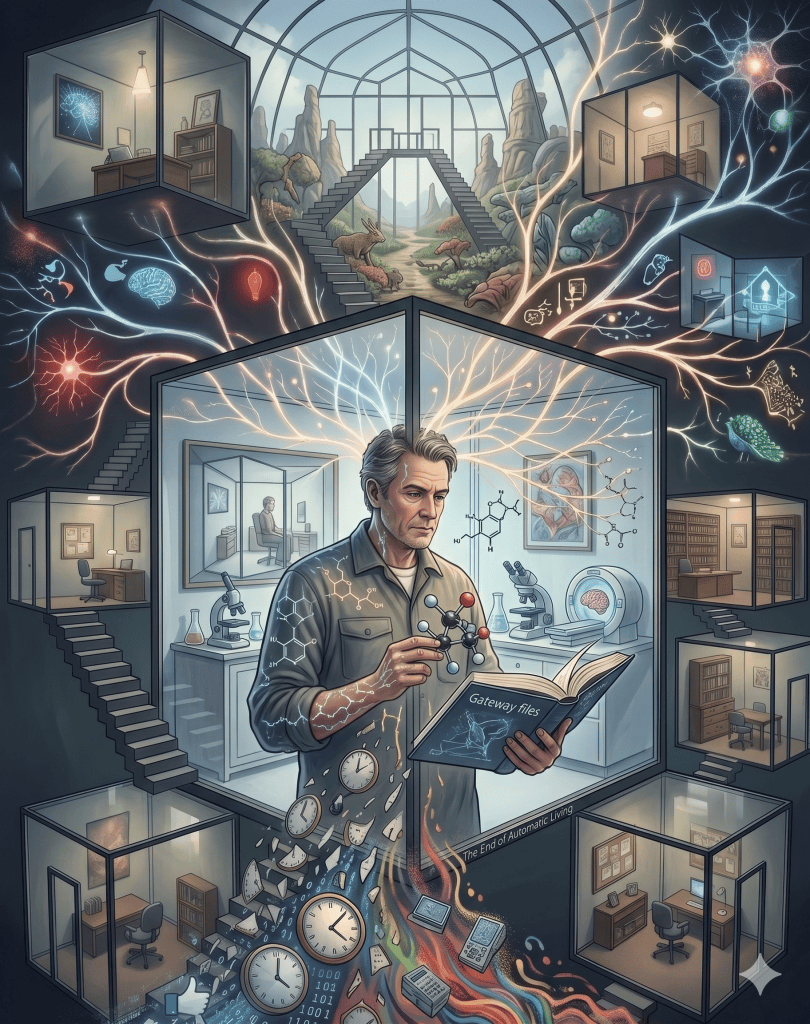
How the COVID-19 pandemic transformed the home into an unplanned psychological experiment — and what the science of stress, isolation, and human behavior reveals about what happened inside.
There is a particular kind of silence that settled over cities in the spring of 2020. Not peaceful silence — the kind you find on a quiet morning before anyone else wakes up — but something stranger and more disorienting. Streets that should have been full were empty. Schools sat locked. Offices went dark. And tens of millions of people found themselves inside their own homes with something they had almost forgotten existed: unstructured time.
For a few days, maybe even a few weeks, it felt like an unexpected pause. Then it didn’t. Then it became something else entirely.
The COVID-19 pandemic forced the largest unplanned behavioral experiment in modern history. Overnight, the home stopped being a place where life happened around work, school, and social obligations. It became the place where all of those things happened simultaneously — or not at all. People cooked obsessively, started projects they never finished, doomscrolled until 2 a.m., learned sourdough, took up running, stopped running, called their parents, fought with their partners, cried in bathrooms, and reorganized their kitchen cabinets three times. They did all of this while the rest of the world flickered on a screen in front of them.
What happened to people psychologically during that period was not random. It followed patterns that researchers in psychology, neuroscience, and behavioral science had been documenting for decades — patterns that most people had never had reason to encounter in their own lives until suddenly they had no other choice. The house became a laboratory, and every person living in it was both the scientist and the subject.
This essay is an attempt to understand what actually happened inside those homes, and why.
The Collapse of Structured Time
One of the most underappreciated aspects of ordinary life is how much of our psychological stability comes from structure we never designed ourselves. The alarm clock, the commute, the coffee at the desk before the first meeting — these aren’t just habits. They are what researchers call zeitgebers, a German word that translates roughly to “time-givers.” They are the external cues that synchronize our internal biological clocks with the outside world.
The human body runs on a roughly 24-hour internal cycle governed by the circadian system, a deeply ancient biological mechanism that regulates sleep, hormone release, body temperature, metabolism, and mood. Under normal circumstances, this system is constantly recalibrated by light exposure, social contact, meal timing, and physical activity. Take away the morning commute, the lunch break at noon, the after-work drink with a colleague, and the school pickup at 3 p.m., and the system begins to drift.
Within weeks of lockdowns beginning across the world, sleep researchers started noticing something striking. A large study published in Current Biology in 2020 found that sleep timing shifted significantly during lockdown — people were going to bed later, waking up later, and sleeping longer overall. On its face, this sounds like a benefit. In some ways it was. Many people, freed from early alarms, found themselves sleeping closer to their natural chronotype — the biological preference some people have for being night owls rather than early risers. Social jet lag, the accumulated fatigue from forcing a night-owl body to function on an early-bird schedule, temporarily decreased for some.
But the picture was more complicated than that. While sleep duration increased for many, sleep quality was more variable. Anxiety-driven insomnia rose sharply. The loss of consistent daily anchors — meals at regular times, exposure to natural morning light, a clear boundary between “work time” and “rest time” — destabilized many people’s circadian rhythms in ways that showed up as mood disturbances, difficulty concentrating, and a persistent sense of malaise that was hard to name.
The psychologist Mihaly Csikszentmihalyi spent decades studying what makes human beings feel good, and one of his central findings was that people are happiest not when they are simply relaxing, but when they are engaged in structured, challenging activity with clear goals — what he called a state of “flow.” Lockdown, for many people, was almost a clinical dismantling of the conditions that flow requires. Goals were unclear. Challenges were either overwhelming or nonexistent. The boundaries between effort and rest, public and private, work and leisure collapsed into a gray, undifferentiated fog.
This wasn’t a character flaw. It was a structural problem, and understanding it as one matters.
What Isolation Actually Does to the Brain
Loneliness has a reputation as an emotional problem — a feeling, something you work through. The neuroscience tells a different story. Loneliness, at the biological level, is a threat signal. The brain treats social isolation the way it treats physical danger: with activation of the stress response, heightened vigilance, and a shift toward self-protective thinking.
Neuroscientist John Cacioppo, who spent most of his career studying the effects of social isolation before his death in 2018, described loneliness as a signal that functions similarly to hunger. Just as hunger tells the body it needs food, loneliness tells the brain it needs social connection. When that signal is ignored or cannot be answered, the consequences are physiological, not merely emotional. Chronic loneliness is associated with elevated cortisol levels, disrupted sleep, weakened immune function, and over time, increased risk of cardiovascular disease and cognitive decline.
During the early months of the pandemic, the experience of loneliness was not uniform. Single people living alone faced a particular kind of deprivation — no incidental physical contact, no ambient social noise, entire days without another human voice in the room. For those people, video calls were genuinely helpful, but they also exposed the limits of the technology. Screens can transmit words and faces. They cannot transmit the regulatory effects that physical co-presence has on the nervous system — the way sitting near another calm person can actually slow your heart rate and lower your cortisol, a phenomenon researchers call co-regulation.
People living with others faced a different challenge. Proximity is not the same as connection, and enforced proximity under stress can corrode both. Conflict researchers saw this clearly in the data. Domestic violence rates increased significantly in many countries during lockdown periods. Divorce inquiries spiked. The particular claustrophobia of sharing space with another person while both of you are anxious, financially stressed, and stripped of the release valves that ordinary social life provides — friends, separate workplaces, evenings out — created enormous pressure on relationships.
And yet, counterintuitively, many relationships also deepened. Research published in the years following the initial lockdown period found that some couples reported stronger relational bonds after navigating the pandemic together. The explanation is not paradoxical: shared adversity, when it doesn’t overwhelm a relationship, often functions as a bonding mechanism. This has been documented in research on military units, disaster survivors, and couples who have weathered serious illness together. Stress, when it is genuinely shared, can create intimacy. The difference between the couples who fell apart and those who drew closer often came down to pre-existing relational quality, communication skills, and whether they maintained any sense of individual identity within the shared confinement.
The Anxiety Economy: News, Doom, and the Attention System
No account of the pandemic’s psychological landscape can ignore what was happening on the screens. The spring of 2020 was, among other things, a stress test for human attention under conditions of relentless, high-stakes, ambiguous information flow. And the attention system, as it turned out, was not well-equipped for what it was asked to do.
Human beings generally tolerate difficulty better than uncertainty. A difficult situation can be adapted to once it becomes predictable. Early 2020 offered almost no predictability at all. People did not know how dangerous the virus was, how long restrictions would last, whether their jobs would survive, or when ordinary life might return. Psychologists have long found that uncertainty itself is a potent stressor, sometimes producing more distress than a known negative outcome. The pandemic combined genuine danger with radical uncertainty, creating a psychological environment unlike anything most people had previously experienced.
The human brain is wired for threat detection. The amygdala — a small, almond-shaped structure deep in the brain — processes emotionally charged stimuli, particularly threatening ones, faster than the cortex can consciously evaluate them. This is adaptive in environments where threats are specific and time-limited: a predator, a falling branch, a hostile stranger. It is considerably less adaptive in an environment where threat cues are perpetual, ambiguous, and algorithmically served to maximize engagement.
News organizations and social media platforms were not designed with mental health in mind. They were designed to hold attention, and the easiest way to hold human attention is to trigger the threat-detection system. In normal times, most people buffer themselves against this through simple temporal limits — you check the news in the morning, maybe again in the evening, and in between you go about your life. Lockdown removed those buffers. Work-from-home meant a phone or laptop was always within reach. Without the physical and social structure of ordinary life to compete for attention, news and social media consumption expanded to fill available time.
The term “doomscrolling” entered common usage precisely because it described something nearly everyone recognized: the compulsive, almost involuntary act of scrolling through bad news long past the point of useful information, unable to stop despite a growing feeling of dread and helplessness. Psychologists described it as a form of reassurance-seeking behavior gone wrong — the same mental process that makes people check whether the door is locked drives them to check the news feed, looking for the signal that things are under control, and finding instead more ambiguity and alarm.
Media psychologist Bryan McLaughlin described this as “severely problematic news consumption” — not simply following the news, but an inability to disengage even as it caused distress, a pattern associated with significantly elevated anxiety, depression, and stress-related physical symptoms. What made it so hard to correct was that staying informed about a genuine public health emergency was not irrational. The information mattered. But calibrating how much was useful versus merely activating required a kind of deliberate metacognition that is genuinely hard to maintain in a state of chronic stress.
Creativity, Productivity, and the Myth of the Productive Quarantine
Early in the lockdown period, a particular cultural narrative took hold. It circulated on social media and in lifestyle publications with the implicit premise that this enforced pause from ordinary life was, if you approached it correctly, an opportunity. You could finally write the novel. Learn Italian. Master a musical instrument. Get into shape. The implication was that what had previously prevented these things was simply a lack of time, and time was now available.
The results, for most people, were humbling.
Some people were genuinely productive. Researchers working in fields directly relevant to the crisis threw themselves into their work with unusual intensity. Some writers and artists found that the compression of domestic life gave them clarity. There are documented cases of remarkable creative output during the pandemic, and they are real.
But for the large majority of people, the expected productivity surge didn’t materialize — and understanding why is worth dwelling on.
Psychologist Adam Grant, writing during the pandemic, popularized a concept coined by the sociologist Corey Keyes: languishing. Not depression, not burnout, not crisis — something more like a low-grade absence of vitality. A sense of aimlessness and stagnation that didn’t feel serious enough to name but was pervasive enough to make it difficult to start things, complete things, or care much about either. Grant argued that languishing was probably the dominant emotional experience of the pandemic for a large portion of the population — not the dramatic suffering of those hit hardest by illness, loss, or financial devastation, but a quieter, grinding erosion of motivation and engagement.
The neuroscience of creativity helps explain why. Creative cognition depends on the interaction between two major brain networks: the default mode network, which is active during mind-wandering, daydreaming, and associative thinking, and the executive control network, which is responsible for focused, goal-directed effort. Creative breakthroughs typically emerge from a fluid movement between these two states — periods of unfocused incubation followed by focused work. Chronic stress and anxiety, which were the ambient conditions of lockdown for many people, tend to impair both. High cortisol levels suppress the kind of loose, associative thinking the default mode network enables, while also reducing the sustained attention needed for focused execution.
There was also the matter of the home environment itself. Creative work generally benefits from environmental cues that signal “this is where work happens.” The separation of spaces — the commute, the office, the library — serves a cognitive function. It tells the brain what mode to be in. When the kitchen table becomes the office, the classroom, the meeting room, and the dinner table all at once, those cues blur and weaken. This is part of why productivity researchers have long emphasized the importance of dedicated workspaces, and why so many people found it hard to concentrate even when they technically had the time.
The Body Kept the Score
The pandemic’s psychological effects did not stay in the mind. They expressed themselves in the body.
Stress researchers have long documented what is sometimes called the “mind-body problem in reverse” — the way psychological states produce measurable physical effects. The pandemic provided an unusually clear natural experiment. Within months, reports of unusual physical symptoms were emerging that were difficult to explain through COVID infection alone: widespread increases in back pain, headaches, and musculoskeletal problems linked to improvised home workspaces; significant increases in alcohol consumption across multiple age groups; dramatic changes in eating patterns, with some people losing appetite almost entirely and others experiencing compulsive eating in response to stress.
The relationship between stress and eating is well-documented and genuinely complex. The stress hormone cortisol increases appetite, particularly for foods high in sugar and fat — a mechanism that made sense in ancestral environments where stress usually meant physical danger requiring energy. In a modern lockdown, where stress is psychological and sustained, the same mechanism produces what researchers refer to as “comfort eating,” a compensatory behavior that provides short-term emotional regulation at the cost of longer-term health consequences.
Physical activity patterns also shifted dramatically. For people who had been active through gym memberships or team sports, the overnight closure of those facilities removed a primary stress-management tool. Exercise is one of the most robustly supported interventions for anxiety and depression in the scientific literature — it reduces cortisol, stimulates the release of endorphins and brain-derived neurotrophic factor (BDNF), and improves sleep quality. Losing access to regular exercise was, for many people, like having an essential medication suddenly withdrawn.
At the same time, some people moved more than they had before. Walking rates increased substantially in many cities during early lockdown, partly because it was one of the few outdoor activities permitted and partly because the morning commute, however stressful, had at least involved movement. The relationship between lockdown and physical health was, like so much else about the period, deeply unequal: it depended heavily on housing, income, geography, and prior habits in ways that exposed existing inequalities more starkly than almost anything else.
Children, Screens, and Developmental Disruption
For children and adolescents, the pandemic’s psychological consequences deserve their own consideration, because the developmental stakes were different.
Adolescence is a critical period for social development. The peer interactions, the group experiences, the navigation of conflict and belonging that happen in schools and social settings aren’t peripheral to development — they are development. The brain’s social circuitry is particularly active and plastic during adolescence, and the experiences of those years shape social competence in ways that persist into adulthood. Removing those experiences isn’t a neutral event.
The data that accumulated in the years after 2020 showed a significant and disturbing trend: rates of anxiety, depression, loneliness, and self-harm among adolescents worsened substantially during the pandemic and, in many countries, did not return to pre-pandemic levels even after schools reopened. Researchers and clinicians are still working to disentangle how much of this reflects the specific disruptions of lockdown versus longer-term trends in adolescent mental health, the effects of social media, or other factors — but the evidence that the pandemic caused real developmental harm to a significant portion of young people is now difficult to dispute.
The question of screens and children became, during lockdown, newly urgent and newly complicated. In ordinary circumstances, discussions about children’s screen time were already contested, with researchers debating how much was harmful, what kind of content mattered, and how context shaped outcomes. Lockdown collapsed those debates into an impossible practical question: when school has moved entirely online, when friends can only be reached through devices, when physical activity outdoors is restricted — what does “too much screen time” even mean?
The answer, it turned out, was that context mattered enormously. Research on pandemic-era screen use found that the nature of the activity — not simply the duration — was the more meaningful variable. Video calls that maintained genuine social relationships with peers were associated with better outcomes than passive consumption of entertainment. Active creative use of technology fared better than pure passive consumption. The simple metric of “hours per day” proved less useful than asking what the screen time was replacing and what it was providing.
The educational consequences were substantial and uneven. Learning loss during the pandemic was documented across most school systems, but it was not distributed equally — children from lower-income households, those without reliable internet access, and younger children still developing foundational literacy and numeracy skills fell furthest behind. Beyond academics, researchers flagged concerns about executive function development: the self-regulation, planning, and sustained attention skills that children typically build through structured classroom environments, group projects, and the routine friction of navigating school life. Those developmental inputs were largely absent for months, and in some cases years, at precisely the ages when they matter most. The full extent of that gap is still being assessed.
What We Learned, and What We Carried Forward
By mid-2020, something unexpected was happening in the psychological literature: alongside all the documented harm, researchers were also finding evidence of resilience — and of growth.
Post-traumatic growth, a concept developed by psychologists Richard Tedeschi and Lawrence Calhoun in the 1990s, describes the phenomenon in which people who have navigated serious adversity sometimes report meaningful positive changes as a result: deeper relationships, a revised sense of what matters, a greater appreciation for ordinary life, and sometimes a new sense of personal capability they didn’t know they had. Post-traumatic growth is not a universal outcome, and it doesn’t negate suffering — you can report having grown from an experience while also wishing it hadn’t happened and acknowledging the real harm it caused. But it is real, and the pandemic produced it in documented numbers.
People reported finding clarity about their values. Long commutes, jobs that felt meaningless, social obligations maintained purely out of habit — the lockdown stripped these away, and some people found, on the other side, that they didn’t want all of them back. The “Great Resignation” of 2021, in which workers across multiple industries voluntarily left their jobs at historically high rates, was at least partly a downstream consequence of this reexamination — though labor shortages, rising wages in competing sectors, pandemic-related burnout, and broader economic disruption all contributed as well. Millions of people had spent months asking themselves whether the life they had been living was actually the life they wanted, and a significant number answered no.
Remote work, which had been resisted by many organizations for years on the grounds that it was impractical or damaging to collaboration, was revealed within a matter of weeks to be technically feasible at scale. That discovery did not resolve the genuine debates about what remote work costs — the spontaneous collaboration, the mentorship of junior employees, the social fabric of organizational culture — but it permanently shifted the negotiating position of workers who wanted flexibility. The post-pandemic workplace was a different place, and a different conversation.
The mental health crisis that the pandemic accelerated also changed the cultural conversation about psychological wellbeing. In 2019, admitting to anxiety or depression in professional contexts carried a stigma that limited who sought treatment and when. By 2022 and 2023, that stigma had measurably decreased — not disappeared, but reduced. Therapy wait lists grew to extraordinary lengths not only because more people needed help, but because more people were willing to ask for it. The normalization of psychological struggle that the pandemic enforced, simply because the struggle was so widespread and so visible, had the unintended effect of making it somewhat less shameful to struggle.
The Laboratory Closes (Incompletely)
The house eventually stopped being a laboratory in the acute sense. Schools reopened. Offices refilled, at least partially. Restaurants and theaters came back. The specific conditions of the early pandemic — the enforced confinement, the closed institutions, the ambient uncertainty about a novel and poorly understood threat — receded.
But the experiment left marks. Some of them are still being measured.
The long-term psychological consequences of the pandemic are ongoing research subjects. Post-COVID syndrome, in which a subset of infected individuals experienced persistent neurological and psychiatric symptoms months and years after the acute infection, complicated the task of separating the psychological effects of social disruption from the direct neurological effects of the virus itself. The adolescents who missed critical years of social development are now adults navigating workplaces, relationships, and emerging independence with experiences that differ from those of any previous generation.
The home itself changed in ways that reflect the experiment it was forced to undergo. Home office spaces became standard features in real estate listings. Suburban and exurban housing markets surged as people decoupled where they lived from where they worked. Sound insulation and dedicated workspaces moved from luxury to practical consideration. The physical architecture of living began to catch up with the new reality of what homes were being asked to do.
What the pandemic demonstrated, perhaps above all else, is how fragile the structures of ordinary life actually are — and how much psychological work those structures invisibly perform. The commute was annoying, until it was gone and people found they had lost not just inconvenience but the buffer between two modes of self. The casual conversation at the office coffee machine seemed trivial, until it became clear that it was doing something essential for belonging and identity. The Saturday morning errands were mundane, until they were unavailable and the absence of that mundane rhythm revealed itself as a kind of grief.
Human beings are social, structured, embodied, and temporal creatures. We are calibrated to move through space, gather in groups, mark time with shared ritual, and anchor ourselves in predictable patterns of activity and rest. The pandemic suspended all of that at once, and what happened next was not simply inconvenience or hardship. It was a large-scale revelation of the biological and psychological machinery that ordinary life, in all its apparent ordinariness, keeps running.
The house became a laboratory. The subjects did not consent to the experiment. And what they learned about themselves — about their needs, their limits, their adaptability, and their fragility — did not leave entirely when the laboratory closed.









