
Originally published in April 2020 and comprehensively updated and edited in June 2026.
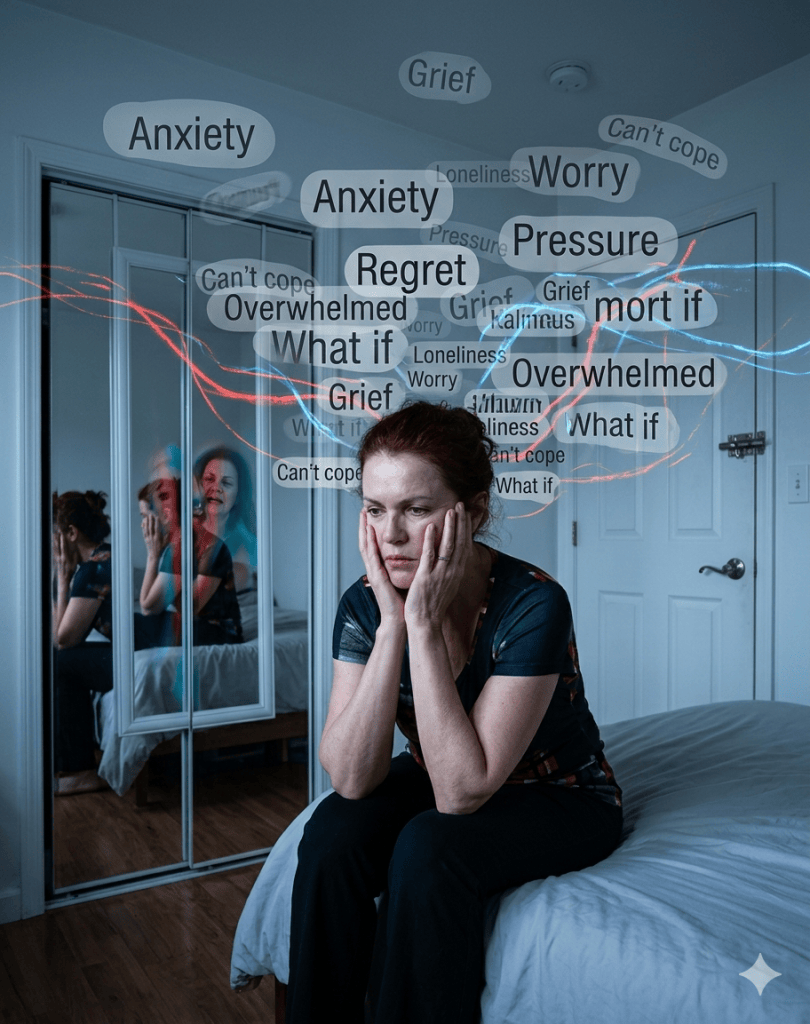
The psychology and neuroscience of pandemic isolation: how lockdowns amplified loneliness, distorted time perception, fueled doomscrolling, strained relationships, and revealed the importance of human connection and resilience.
There is a particular kind of silence that is actually very loud. It is the silence of a person sitting alone in an apartment, listening to the city outside grow quieter by the day, while the noise inside their own head gets louder. In the spring of 2020, that experience became nearly universal. Billions of people withdrew into their homes at roughly the same moment, carrying their full psychological weight with them — their fears, their habits, their relationships, their unresolved tensions — and closed the door.
What happened next was not simply an episode of collective boredom or inconvenience. It was one of the largest unplanned psychological disruptions in modern history, playing out on a global scale. The COVID-19 pandemic did not create new human emotions. But it did something arguably more revealing: it stripped away the routines, distractions, and social scaffolding that most people rely on to manage the emotions they already had. What was left — raw, concentrated, inescapable — was emotional noise inside closed rooms.
Six years later, the full weight of that period is still being measured. Researchers are still publishing findings. Clinicians are still treating patients whose trajectories were shaped by those months. And for many people, the psychological reverberations of early pandemic life remain present in ways both obvious and subtle. Understanding what actually happened — not through the lens of political debate, but through what psychology and neuroscience can tell us about human beings under pressure — matters for making sense of who we are now and how we got here.
The Architecture of Normal Life
To understand what the pandemic disrupted, it helps to understand what it disrupted from. Most people do not think of their daily routines as psychological infrastructure. They think of them as the ordinary texture of life — commuting, working, going to the gym, sharing meals, running errands. But behavioral scientists have long understood that routine serves a much deeper function than logistics.
Why Routine Is Not Just Habit
Routine provides what psychologists call temporal structure — a framework that organizes time into meaningful units and gives the day a shape. This matters more than it sounds. Research on circadian rhythms and mental health has consistently found that predictable daily schedules help regulate not just sleep, but mood, cognition, and emotional reactivity. When the structure of a day is stable, the nervous system has less to manage moment to moment. The brain can allocate more resources to focused thought and less to the kind of low-grade vigilance that uncertainty produces.
Social interaction is another underappreciated element of that structure. Even interactions that feel minor — a brief exchange with a barista, a few words with a coworker in the hallway, making eye contact with a stranger on the street — contribute to what researchers call social regulation. Human beings are intensely social animals, and the presence of others, even in superficial ways, continuously calibrates our emotional state. This is not a metaphor. Studies using neuroimaging have shown that social contact activates reward pathways in the brain and helps dampen the physiological stress response. Isolation, conversely, is associated with elevated cortisol levels and heightened amygdala reactivity — the brain’s alarm system becoming more sensitive over time.
Loneliness, it turns out, is not merely an emotional inconvenience. Neuroscientist John Cacioppo spent decades studying what happens in the brain and body when people feel socially disconnected, and his findings were striking. Loneliness functions as a biological signal — much like hunger or pain — that the organism’s survival needs are not being met. Critically, it is perceived loneliness that drives the effect, not physical isolation alone. A person surrounded by others can feel profoundly lonely; a person living alone may not. Chronic loneliness is associated with increased inflammation, disrupted sleep architecture, elevated blood pressure, and immune dysregulation. Some researchers have compared the long-term health effects of chronic loneliness to other major health risks such as heavy smoking. The pandemic put millions of people into conditions that were biologically, not just emotionally, threatening.
When lockdowns began in March 2020, millions of people lost both of these things simultaneously. The workday collapsed into the living room. The gym closed. The coffee shop closed. The commute disappeared. For people who lived alone, entire days could pass without a single face-to-face interaction. For people living with family, the opposite problem emerged: the closed room suddenly contained too many people, with too little space and no opportunity for the quiet individuality that cohabitation normally allows.
Neither situation was what human neurobiology is designed for.
The Stress Response, Extended
The body’s stress response is built for short-term threats. When the brain perceives danger — whether a physical threat or a social one — the hypothalamic-pituitary-adrenal axis activates, releasing cortisol and adrenaline. Heart rate increases, attention sharpens, and the system is primed for action. Under normal circumstances, the threat resolves, the system quiets, and the body returns to baseline. This is a sophisticated and effective mechanism.
What it is not designed for is a threat that is invisible, global, potentially lethal, and indefinite in duration.
When the Alarm Won’t Turn Off
The pandemic presented a threat profile that was deeply disorienting for the human threat-detection system. The danger was real but probabilistic, largely out of the individual’s control, and with no clear end point. There was no obvious action that would definitively resolve it. Public health information changed rapidly and sometimes contradictorily. The future was genuinely unknowable.
This combination — real threat, high uncertainty, low personal control — is one of the most psychologically corrosive situations a human being can face. Research on learned helplessness, first developed by Martin Seligman in the 1960s, showed that organisms repeatedly confronted with uncontrollable situations stop trying to escape even when escape becomes possible. The neurological correlate is reduced activity in the prefrontal cortex — the region responsible for problem-solving and emotional regulation — and chronically elevated stress hormones that, over weeks and months, interfere with sleep, impair memory, and suppress immune function. By spring 2020, large segments of the global population were living inside that chronic stress environment, with no clear exit.
Mental health data from that period, collected in dozens of countries, reflected this biology. Surveys conducted in the early weeks of lockdown documented sharp increases in anxiety and depression symptoms across virtually every demographic. A study published in The Lancet reviewing the psychological effects of quarantine and isolation found significant rates of post-traumatic stress disorder symptoms, confusion, and anger among quarantined individuals — effects that persisted for months after physical isolation ended.
Relationships Under the Microscope
Few aspects of pandemic life were as psychologically consequential as what happened to close relationships. When people are confined together indefinitely, under stress, without the normal social outlets that allow for individual identity and emotional release, the relationship becomes both refuge and pressure cooker.
The Intimacy Paradox
Psychologist John Gottman’s decades of research on couples identified specific patterns — contempt, defensiveness, criticism, stonewalling — that reliably predict relationship deterioration. The pandemic created conditions in which the triggers for all of them were simultaneously amplified. A survey conducted by the American Association for Marriage and Family Therapy in 2020 found that 35 percent of therapists reported a significant increase in couples seeking counseling, with conflict over shared space, financial stress, and parenting among the most common presenting issues. Couples who had been managing the normal friction of shared life suddenly lost the daily separations that provide natural reset points. The space to miss someone, to arrive home with perspective, to process frustration before it became a conversation — all of that compressed, often into the same 800 square feet, all day, every day.
At the same time, many couples reported the opposite: a sense of clarity about what their relationships were actually built on, stripped of social obligation and pretense. The pandemic functioned as a kind of relationship audit. Some relationships deepened. Others revealed cracks that had always been present.
Parenting in Confined Spaces
Parents with young children faced a distinct psychological burden that rarely received enough attention in public discourse. The closure of schools and daycares simultaneously eliminated childcare infrastructure and increased demands on parents who were often also working from home. Child development research has long established that children’s stress responses are deeply intertwined with their caregivers’. When a parent is anxious, children frequently become anxious too — they are remarkably sensitive to shifts in a caregiver’s tone and demeanor, even when a parent believes they have successfully concealed their emotional state. In homes where parental anxiety was elevated, children absorbed it through ordinary processes of emotional attunement.
For parents themselves, the collapse of boundaries between work, care, and personal time was a core driver of pandemic burnout. Rest, exercise, social connection, and quiet time alone — the mechanisms by which most people replenish their cognitive and emotional resources — were systematically eliminated, while the demands on those resources grew.
The Screen as Surrogate World
One response to the collapse of in-person social life was a rapid transfer of human interaction to digital platforms. Zoom usage went from approximately 10 million daily meeting participants in December 2019 to over 300 million by April 2020. People held birthday parties on video calls, attended concerts streamed from artists’ living rooms, and maintained relationships they could no longer access in person.
What the Screen Does and Does Not Carry
Neuroscientist Stephen Porges proposed that the human nervous system uses a sophisticated range of cues — including the prosody of the human voice, facial muscle movement, and physical proximity — to determine whether a social environment is safe. Many of these cues are degraded or absent in digital communication. Video calls compress facial expression, often introduce latency that disrupts the natural rhythm of conversation, and eliminate the physical dimension of presence entirely. In this framing, digital communication triggers a kind of low-level social ambiguity — the nervous system receives social signals but cannot fully process them, leaving a residual sense of incompleteness.
This may help explain the phenomenon widely reported during the pandemic as Zoom fatigue — a genuine and fairly rapid exhaustion produced by video calling. Research published in 2021 by Stanford communications professor Jeremy Bailenson proposed several mechanisms, including the cognitive effort required to process non-verbal cues at screen scale and the unusual experience of seeing one’s own face continuously during conversation.
At the same time, digital connection was not nothing. For many people — particularly those living alone, older adults in isolation, or individuals with disabilities — it was genuinely sustaining. The technology carried more than information. It carried presence, in a diminished form. And research on social support has consistently found that perceived connectedness matters, even when the connection is not ideal. People who maintained active digital social networks during the pandemic showed better mental health outcomes than those who withdrew entirely.
Time, Memory, and the Dissolution of the Ordinary
Among the more unusual psychological effects of the pandemic period was its distortion of time. Researchers studying human memory and time perception observed a widely reported phenomenon: the months of lockdown felt simultaneously interminable and oddly featureless. People described difficulty remembering the sequence of events from that period, or distinguishing one week from another. Some described feeling as if the months had somehow compressed, leaving behind a stretch of time that was hard to account for.
Why Disrupted Routine Disrupts Memory
This is not mysterious from a cognitive standpoint. Human autobiographical memory — the narrative we construct of our own lives — relies heavily on distinctive events as temporal anchors. Birthdays, trips, concerts, social milestones, even ordinary variations in routine provide the hooks on which memory is organized. When daily life becomes largely uniform, as it did during lockdown, the brain has fewer anchors to attach to, and memory for that period becomes correspondingly thin and difficult to navigate.
Psychologist Cornelia Wrzesniewski has described how people’s sense of meaning in their lives is partly constructed from a coherent sense of their own story — a narrative that moves through time, with distinct chapters. The pandemic did not simply disrupt the present. For many people, it disrupted the machinery of narrative itself. The story felt like it had stalled.
This has implications beyond inconvenience. Meaning-making is a significant predictor of psychological resilience, and people who integrate difficult experiences into a coherent personal narrative tend to recover more fully than those who cannot. The pandemic’s disruption of temporal structure complicated that process for many people, potentially prolonging its psychological effects well past the acute phase.
Resilience, Adaptation, and What Actually Helped
It would be misleading to characterize the psychology of the pandemic period as uniformly negative. The science of resilience suggests that human beings have considerable capacity to adapt to difficult circumstances, and that capacity showed itself in a variety of ways.
The Unexpected Gains
A subset of people reported genuine improvements in their psychological wellbeing during the early pandemic period. For those who had been chronically overextended before — commuting long hours, maintaining demanding social schedules, struggling with work-life boundaries — the forced slowdown produced something like relief. Research surveys captured reports of increased time with family, improved sleep, reduced pressure around social performance, and a clarification of personal values.
One of the more unexpected social developments was the rapid growth of mutual-aid networks — informal, community-organized systems through which neighbors helped each other with grocery runs, prescription pickups, childcare, and financial support. These networks emerged within days of lockdowns in cities around the world. Research on prosocial behavior consistently finds that helping others produces measurable improvements in the helper’s own mood and sense of meaning, and participating in mutual aid gave people a form of agency at a moment when most had been removed.
Creative production also surged in ways that surprised observers who expected collective paralysis. Home baking, painting, learning musical instruments, starting gardens, writing — all showed sharp increases. This was partly a product of time, but research on creativity and wellbeing suggests it was more than that. Engaging in creative activity, even at a basic level, activates what psychologist Mihaly Csikszentmihalyi described as flow — a state of absorbed engagement in which self-consciousness recedes and time seems to distort. For people experiencing heightened anxiety and rumination, creative activity offered a form of psychological relief that passive consumption — streaming television, scrolling social media — could not. The widespread turn toward making things was, in this reading, not merely a hobby trend but a coping mechanism at scale.
Psychologist Adam Grant described a phenomenon he termed languishing — a state of feeling neither depressed nor flourishing, but drifting through life without particular engagement or meaning — as one of the defining psychological experiences of the pandemic period. But the flip side of languishing, for some people, was discovering what the absence of distraction revealed about what actually mattered to them. Some people used the period to develop creative practices, deepen relationships, or reassess career trajectories. These were not trivial outcomes.
Research on post-traumatic growth — a concept developed by psychologists Richard Tedeschi and Lawrence Calhoun — has consistently found that adversity can produce genuine psychological development, not despite the difficulty but in some ways because of it. The growth is not automatic, and it requires processing the experience rather than simply enduring it. But it is real, and the pandemic period generated it in measurable quantities.
What the Research Found About Coping
Studies examining which coping strategies produced better mental health outcomes during the pandemic converged on several consistent findings. Physical activity — even modest amounts — had a notably protective effect on mood and anxiety, even when conducted indoors or in limited space. Maintaining any semblance of routine and temporal structure helped, as did finding ways to maintain social connection, however imperfect the medium.
Meaning-focused coping — interpreting the situation not just as a threat but as a period with some form of significance or purpose — was associated with better outcomes than purely problem-focused coping, in part because so many aspects of the pandemic were beyond individual problem-solving. And perhaps counterintuitively, acceptance — not passive resignation, but active acknowledgment of the situation as it was — consistently outperformed avoidance as a psychological strategy.
The Infinite News Feed
The room was physically closed. The information environment was not.
If anything, the digital information environment of 2020 expanded to fill every available hour of lockdown life. Pandemic dashboards tracked infections and deaths in real time. Push notifications arrived in waves. Social media feeds filled with arguments about transmission rates, mask mandates, and government response. People refreshed news sites dozens of times a day, watching case counts climb with a mixture of dread and compulsion. Doomscrolling — a word that entered common usage almost overnight — described the phenomenon of consuming distressing news continuously, knowing it was making you feel worse and continuing anyway.
This behavior is not irrational, even if it is counterproductive. Psychologists who study threat monitoring describe it as hypervigilance: the tendency, under conditions of genuine danger and uncertainty, to scan the environment continuously for updated information. The impulse has evolutionary logic. The problem is that the information environment of the modern internet is not structured to satisfy that impulse — it is structured to sustain it. Algorithmic feeds are optimized for engagement, and fear and outrage are among the most engaging emotions human beings experience. The result, for many pandemic news consumers, was a feedback loop: anxiety drove information-seeking, and information-seeking amplified anxiety.
Research on media exposure and stress found a dose-response relationship: more hours of pandemic news consumption were associated with greater psychological distress, independent of actual infection risk. A study published in Health Psychology found that people who reported high levels of pandemic media exposure also reported higher rates of physical health complaints — headaches, fatigue, sleep disruption — than lower-exposure counterparts. The information environment was not merely reflecting the crisis. For many people, it was adding a separate layer of psychological harm on top of it.
What made this particularly difficult to navigate was that the line between responsible awareness and harmful overconsumption was never clearly drawn. Staying informed mattered. Knowing what restrictions were in place, what health guidance recommended, what was happening in one’s community — these were genuine needs. The problem was that algorithmic platforms made no distinction between information that was actionable and information that simply provoked more anxiety. A person who checked the news three times a day and a person who refreshed the same site three hundred times were served by the same systems, optimized by the same logic.
The Long Aftermath
By mid-2026, the acute phase of the pandemic has been over for several years. But the psychological effects of that period have not simply dissolved. A 2024 meta-analysis examining longitudinal mental health data from multiple countries found that rates of anxiety and depression, while lower than their 2020 peaks, remained elevated above pre-pandemic baselines in most populations. The increases were largest among young adults, women, and people in lower socioeconomic groups — populations that faced not just the psychological stressors of isolation but the compounded weight of economic disruption, caregiving demands, and reduced access to mental health resources.
The Generation Shaped by Closed Rooms
The pandemic’s effects on children and adolescents deserve particular attention. Developmental psychology is clear that early and adolescent experience shapes neurological development, social learning, and psychological templates in ways that have lasting consequences. The cohort of children who experienced the pandemic at ages five through fifteen — losing years of in-person schooling, social development, and extracurricular life — represents a natural case study, still being analyzed, in the developmental effects of social deprivation.
Early findings have been concerning. Studies in multiple countries documented significant learning loss, increased rates of anxiety and depression in adolescents, and disruptions to the social developmental milestones that normally structure that period of life. The long-term implications of those disruptions are not yet fully understood. But researchers who study developmental trajectories are watching this cohort closely, and the picture emerging is one of genuine, if uneven, impact.
What the Closed Room Taught Us
The emotional noise of pandemic life — the anxiety, the loneliness, the relational friction, the temporal disorientation, the surprising moments of clarity and meaning — ultimately revealed something important about human psychology that was true before the pandemic but perhaps not as visible. Human beings are extraordinarily dependent on each other and on structure. The social, temporal, and spatial architecture of ordinary life is not merely convenient. It is load-bearing. Remove it, and what stands is the raw psychology underneath: powerful, often difficult, fundamentally social, and in need of more careful attention than it typically receives.
The closed rooms of 2020 were extreme conditions. But the questions they surfaced — about how we regulate our emotional lives, what we need from each other, how we construct meaning in uncertain times, what resilience actually requires — are not extreme questions. They are ordinary ones, rendered suddenly unavoidable. The answers, still unfolding in research and in individual lives, are likely to matter long after the crisis that forced the question has passed.









