
Originally published in May 2020 and comprehensively updated/edited in June 2026.
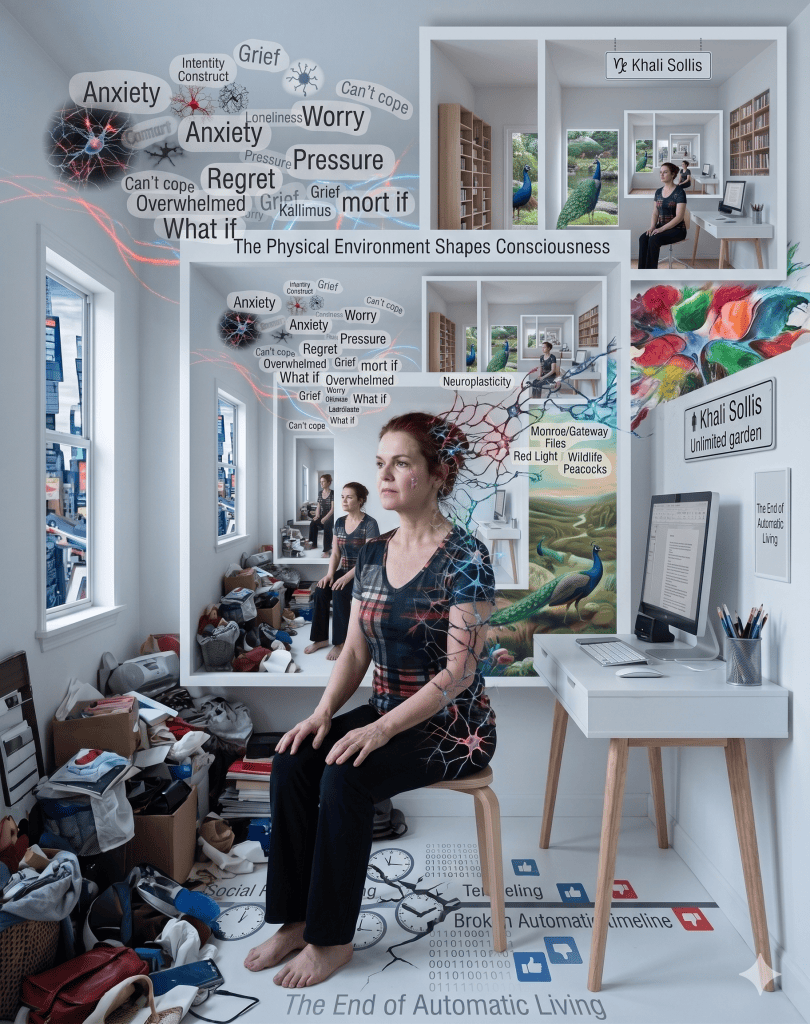
How the spaces we inhabit — natural, built, and digital — shape our attention, memory, mood, and sense of self, and why this matters for design, well-being, and society.
There is a particular quality to how the world felt in the spring of 2020. Streets emptied. Offices went dark. Gyms, libraries, coffee shops, and concert halls — all the ordinary infrastructure of daily life — shut down with a speed that few people had ever imagined possible. For many people, the world shrank to the distance between a bedroom, a kitchen, and a screen. Life contracted almost overnight to the dimensions of an apartment, a house, a single room. And almost immediately, something started to shift. Not just in mood, but in something deeper: in how people thought, remembered, dreamed, and perceived time itself.
That experience turned out to be an accidental and massive demonstration of a principle that psychologists, neuroscientists, and philosophers have explored for decades: the physical environment shapes consciousness. Where we are — what we see, hear, smell, and move through — does not just provide a backdrop to our mental lives. It actively structures them. The spaces we inhabit influence how we think, what we feel, how we form memories, and even who we believe ourselves to be.
This essay explores that relationship. It draws on research from environmental psychology, neuroscience, and behavioral science to examine how the spaces around us reach inward and configure the mind. It traces how a growing body of scientific evidence has pushed back against the old idea that consciousness is something sealed inside the skull, immune to geography. And it looks at why understanding this connection matters — not just for individual well-being, but for how societies design the environments in which human beings live and work.
The Old Assumption and Why It Was Wrong
For a long time, the dominant view held that the mind was interior, private, and essentially portable — a reasoning engine that could be carried anywhere and function more or less the same regardless of its physical surroundings. What mattered was what was inside: your intelligence, your character, your will. The environment was just scenery. Early cognitive science reinforced this picture by modeling the mind as something like a computer running software largely independent of its surroundings. A thought, on this view, was a thought — and whether you had it in a meadow or a basement was more or less irrelevant.
The evidence, accumulated slowly over the second half of the twentieth century and now voluminously, says otherwise.
What Environmental Psychology Discovered
The field of environmental psychology began in earnest in the 1960s and 1970s, when researchers started taking seriously the question of how designed spaces affected human behavior. Early work was practical and sometimes counterintuitive. Researchers found that hospital patients with windows overlooking nature recovered faster from surgery than those with views of a brick wall — a finding published by Roger Ulrich in Science in 1984 that became one of the most cited studies in the field. They found that classrooms with natural light improved student performance. They found that noise, density, and lack of control over one’s surroundings produced measurable increases in physiological stress.
These were not subtle effects. They showed up in blood pressure readings, in immune function, in standardized test scores. The environment was not inert. It was doing something to the body and, through the body, to the mind.
Space, Attention, and the Architecture of Thought
One of the most robust findings in environmental psychology is the effect of natural settings on what researchers call directed attention — the kind of focused, effortful concentration required to ignore distractions and stay on task. This capacity is limited. It fatigues. And modern urban environments, with their constant demands for attention management — traffic, notifications, signage, noise — tend to deplete it quickly.
Rachel and Stephen Kaplan’s Attention Restoration Theory, developed over several decades of research, proposes that natural environments restore this depleted capacity in ways that built environments typically cannot. The key mechanism, in their account, is what they call “fascination” — the effortless engagement that natural settings produce. Watching water move, observing clouds, listening to wind in trees: these experiences hold attention without requiring effort, allowing directed-attention systems to recover. Urban environments, by contrast, tend to demand rather than restore.
The research evidence supporting this theory is extensive. Studies have found that even brief exposures to nature — walks in parks, views from windows, photographs of natural scenes — improve performance on tasks requiring sustained attention and working memory. A 2008 study by Marc Berman and colleagues at the University of Michigan found that a walk in a natural setting improved memory performance by about 20 percent compared to a walk in an urban environment. That is a striking number for such a simple intervention.
The Geometry of Cognition
Physical space influences not just how well we think but what kinds of thoughts we have. Research on embodied cognition — the study of how bodily and spatial experience shapes mental life — has produced a series of findings that challenge the assumption that abstract thought is purely symbolic and disconnected from physical experience.
People think about time spatially. In most Western cultures, the past is experienced as behind and the future as ahead. But this mapping is not universal — the Aymara people of the Andes conceptualize the past as in front of them, since it is visible and known, while the future lies behind, unseen. When researchers physically move people backward, they become somewhat more likely to think about the past. When they move people forward, they orient more toward the future. The body’s position in space subtly primes cognitive orientation.
Ceiling height affects the nature of thought. A 2007 study by Joan Meyers-Levy and Rui Zhu found that high ceilings promoted more abstract, conceptual thinking, while low ceilings encouraged more concrete, detail-focused processing. The effect was real enough to suggest that architects designing creative workspaces should think carefully about the vertical dimension — something that most space-planning conversations tend to ignore entirely.
Even the metaphors we use to describe thought reveal its spatial underpinnings. We grasp ideas. Concepts are clear or murky. Arguments are solid or shaky. These are not arbitrary word choices. Research by Lakoff and Johnson, and a large body of subsequent cognitive science, suggests they reflect a deep architecture in which abstract thought is partly built from spatial and bodily experience. The mind reaches out into the world and uses it as raw material.
Memory and Place
The relationship between space and memory is one of the oldest subjects in the study of mind, and one of the most practically significant. The ancient Greek and Roman technique of the memory palace — also called the method of loci — involved mentally placing items to be remembered at specific locations within an imagined architectural space, then “walking” through that space to retrieve them. Modern memory champions still use this technique, and it remains remarkably effective. The reasons why illuminate something important about how memory works.
Memory is not simply stored in the brain like files on a hard drive. It is reconstructive, context-dependent, and intimately tied to place. The hippocampus, the brain structure most centrally involved in forming new memories, is also critically involved in spatial navigation. This is not coincidental. John O’Keefe and May-Britt and Edvard Moser won the 2014 Nobel Prize in Physiology or Medicine for discovering place cells and grid cells — neurons in the hippocampus and adjacent regions that fire specifically when an animal is at particular locations in its environment. These cells appear to form the neural basis of a cognitive map, a spatial representation of the environment that the brain uses for navigation.
The deep connection between spatial and mnemonic processing explains why memory has a topography. Why returning to a place often brings back memories formed there. Why the smell of a childhood kitchen can unleash a cascade of recall that deliberate effort cannot produce. Why people who are asked to recall a memory often instinctively direct their gaze downward and to one side, as if looking for the memory in a particular location in mental space.
Context-Dependent Memory
Research on context-dependent memory — the phenomenon in which being in the same environment where something was learned helps you remember it — has practical implications that are routinely ignored. A classic study by Godden and Baddeley in 1975 found that scuba divers who learned a list of words underwater remembered them better when tested underwater than when tested on land, and vice versa. The environment was not just where learning happened — it was woven into the memory itself.
Subsequent research has extended this finding across dozens of contexts. Students who study in the same room where they will be tested often outperform those who study in different rooms. Recovering alcoholics may find that returning to environments associated with drinking triggers cravings that would not otherwise occur — not because of any conscious decision, but because the environment reactivates memories and associations laid down in that context. This is one reason why addiction treatment research has increasingly emphasized the importance of environmental restructuring alongside behavioral and pharmacological interventions.
Stress, Space, and the Body
The body’s response to its environment is not mediated only by conscious appraisal. Much of it happens below awareness, through physiological systems shaped by evolution for environments very different from the ones most people inhabit today.
The autonomic nervous system — the network that governs heart rate, breathing, digestion, and the stress response — responds to environmental signals automatically. Noise activates the sympathetic nervous system and elevates cortisol. Darkness triggers melatonin. Crowding produces physiological markers of stress even when people report feeling fine. The body is doing a constant, largely unconscious assessment of its surroundings, and those surroundings are pushing back.
Crowding, Control, and Learned Helplessness
Research on crowding has a long and important history. Jonathan Freedman’s work in the 1970s established that crowding per se does not invariably produce negative outcomes — what matters is the sense of control. Crowded environments that people have chosen, and in which they feel some agency, are experienced differently from crowded environments that people cannot escape and in which they have little control. The latter reliably produce elevated stress, impaired cognitive performance, and over time, a psychological phenomenon Martin Seligman identified as learned helplessness — a generalized expectation of powerlessness that can persist even when circumstances change.
The implications here extend well beyond comfort. Environments that systematically deny people a sense of control — whether through noise, ugliness, unpredictability, or physical confinement — do not merely reduce satisfaction. They alter the expectation structures with which people approach the world. They contribute to a psychological posture of passivity and defeat that can affect motivation, health behavior, and social participation in ways that compound over time.
The Digital Environment Is Still an Environment
The discussion of physical environment and consciousness has grown considerably more complicated in recent decades by the emergence of what might reasonably be called a digital environment — the perceptual and cognitive landscape created by screens, platforms, and networked devices.
There was a period when technologists and commentators alike tended to treat the digital world as categorically different from the physical one: virtual, weightless, non-spatial. This was always somewhat misleading — digital devices exist in physical space and create physical effects, from blue-light interference with circadian rhythms to the postural consequences of looking at phones — but it was particularly wrong in psychological terms. Digital environments shape attention, memory, mood, and social cognition in ways that are continuous with what physical environments do, even if the mechanisms are sometimes different.
Research over the past decade and a half has examined what heavy smartphone and social media use does to sustained attention, finding evidence of reduced capacity for extended focus among heavy users. The design of digital platforms — infinite scroll, notification systems, algorithmic content curation — is explicitly engineered to capture and hold attention, drawing on the same psychological vulnerabilities that make noisy, chaotic physical environments fatiguing. The difference is that digital environments can be personalized and optimized at scale in ways that physical environments cannot, and their effects are therefore potentially more potent.
Spatial Cognition in a GPS World
Navigation is one of the oldest ways humans actively engage with physical space — reading landmarks, building mental maps, orienting the body within a landscape. When that engagement disappears, some of the cognitive systems built to support it may change as well. The hippocampus, as noted earlier, is centrally involved in both spatial navigation and episodic memory. Research by Eleanor Maguire and colleagues found that London taxi drivers, who spent years learning the complex geography of the city, had measurably larger hippocampal gray matter volume than controls — and that this difference was correlated with time spent driving. The hippocampus appeared to grow in response to navigational demand.
Studies have found that reliance on GPS-based navigation is associated with reduced performance on spatial memory tasks and reduced ability to form integrated cognitive maps of environments. Whether this represents genuine atrophy or simply a reallocation of cognitive resources remains to be determined. But the pattern is consistent with a broader principle: the mind is shaped by what it is required to do in the spaces it inhabits. Remove the environmental demands, and the systems that evolved to meet them appear to recede.
The Spaces We Design for People
If the physical environment shapes consciousness, then the design of environments is not merely an aesthetic or engineering question. It is, at least in part, a question about what kinds of minds the designed environment will tend to produce.
This perspective has begun to influence architecture, urban planning, healthcare design, and workplace design in meaningful ways. Biophilic design — the incorporation of natural elements, materials, and patterns into built environments — has moved from a fringe interest to a mainstream consideration in building design, supported by growing evidence that it reduces stress, improves mood, and enhances cognitive performance. The WELL Building Standard, launched in 2014, attempts to codify the research on environment and well-being into certification criteria that buildings can be evaluated against.
Urban planners have increasingly attended to research showing that walkable neighborhoods, access to parks and green space, and the quality of street-level experience affect not just physical health but mental health outcomes, social cohesion, and measures of community trust. The design of public space is, among other things, the design of the social and psychological conditions in which people encounter one another.
Healthcare facilities have undergone significant redesign in light of research on environment and healing. Single-patient rooms reduce infection rates and also reduce the noise and loss of control that Ulrich’s early work identified as recovery-impairing. Views of nature, acoustic management, and access to daylight are now standard considerations in hospital design, supported by evidence that they reduce the need for pain medication, shorten hospital stays, and improve patient-reported well-being.
What 2020 Revealed
The sudden and involuntary reduction of most people’s physical world to their home environment during the early pandemic period provided an unplanned natural experiment in the psychology of confined space. The effects were not uniform — they depended heavily on the quality and size of the space, on access to outdoor areas, on whether children were present, and on a dozen other variables. The pandemic made visible, with unusual clarity, how unequally physical environments are distributed: a person confined to a studio apartment shared with others occupied a fundamentally different psychological world than someone sheltering in a house with a yard. But across those differences, the effects were broadly consistent with what environmental psychology had predicted.
People in small, dark, or noisy spaces fared worse. People with access to natural light and outdoor space fared better. The inability to vary one’s environment — to move through different spaces in the course of a day — had effects on cognition and mood that went beyond what simple boredom could explain. Researchers found elevated rates of depression, anxiety, and sleep disturbance, and while these had many causes, the environmental dimension was real and measurable.
There was also a collective reconfiguration of spatial values. Urban residents began moving to suburbs and rural areas in higher numbers than typical migration patterns would have predicted. Demand for homes with outdoor space surged. People who had previously spent little conscious thought on the qualities of their domestic environment suddenly had reason to attend to them carefully — and what they found mattered to them, and in some cases to their mental health, more than they had understood.
Conclusion: The Mind That Lives in the World
The accumulation of evidence across environmental psychology, neuroscience, and embodied cognition points consistently toward a picture of the mind as something that does not merely inhabit the world but is partly constituted by it. Consciousness is not sealed inside the skull. It extends outward into the space around it, is shaped by that space, and in turn shapes how the space is experienced. The relationship is dynamic and reciprocal.
This matters practically. It matters for how we design the places where people live, work, learn, and heal. It matters for how we think about inequality — since access to good physical environments is very unequally distributed, and that inequality has cognitive and psychological consequences that extend across lifetimes. It matters for how we think about the digital environments that now occupy an increasing share of human attention, and that have been designed with little or no reference to what environmental psychology has learned about the conditions under which the mind flourishes.
And it matters philosophically, as a corrective to the persistent intuition that what we think and feel is purely internal — a product of our genes, our upbringing, our choices — and that the external world is only incidentally related to who we are. The physical environment shapes consciousness. It has always done so. Recognizing that fact with appropriate seriousness is, among other things, an act of intellectual honesty about what human beings actually are: minds woven into the fabric of the spaces they inhabit, inseparable from the world around them.









