
Originally published in December 2020 and comprehensively updated/edited in June 2026.
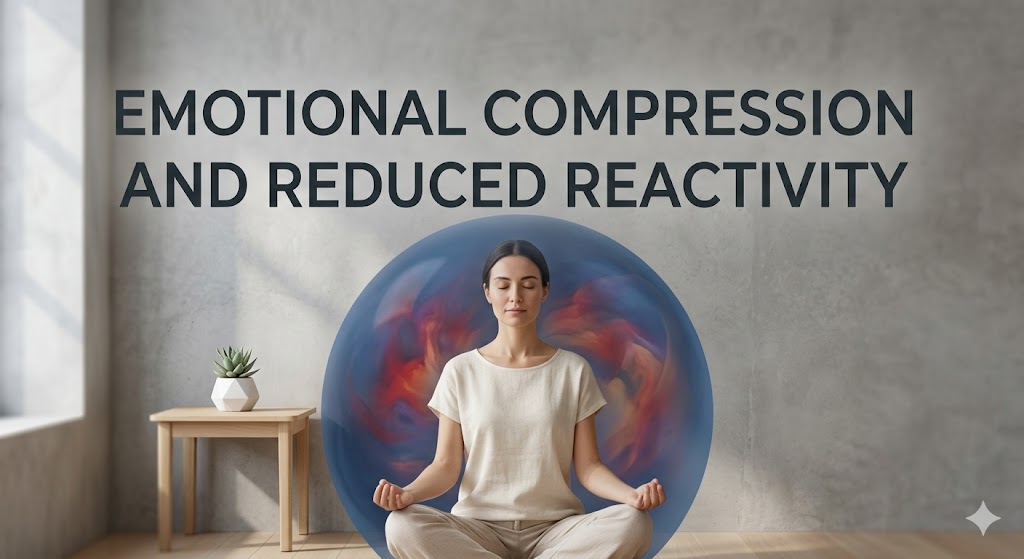
Emotional compression and reduced reactivity explain why so many people felt emotionally flat during and after 2020. Explore the psychology, neuroscience, and social forces behind this widespread experience.
There is a particular kind of exhaustion that doesn’t show up on any medical chart. It isn’t the tiredness that comes from poor sleep or overwork, though those were certainly present in abundance. It’s something quieter — a flattening of response, a dampening of the emotional register that under normal circumstances would swing upward into joy or downward into grief with some regularity. By the end of 2020, many people had stopped swinging much at all.
That year forced a strange reckoning with the nature of human emotional experience. A global pandemic, economic disruption, social unrest, and the relentless pressure of digital information created a psychological environment unlike anything most living people had encountered. And one of the most consistent reports from therapists, researchers, and ordinary people trying to make sense of their inner lives was this: feelings had become harder to access. Not absent, exactly. Compressed.
This piece is an attempt to understand what happened — and why it makes sense that it did. Emotional compression and reduced reactivity aren’t signs of damage, necessarily. They’re often signs that a nervous system is doing exactly what it evolved to do. But that doesn’t mean the effects are harmless, or that understanding them isn’t worth the effort.
What Emotional Compression Actually Means
The phrase “emotional compression” isn’t a clinical diagnosis. It’s a descriptive term for something that shows up in therapy rooms, in casual conversation, and in research under a handful of different labels: emotional numbing, affective blunting, psychological distance, and what researchers sometimes call “diminished emotional responding.” The common thread is a reduction in the intensity, frequency, or accessibility of emotional experience — a narrowing of the bandwidth through which feelings move.
This is different from depression, though the two can overlap significantly. A person experiencing emotional compression might function normally by most external measures. They go to work (or the pandemic equivalent of work), take care of their families, make decisions, hold conversations. They might even laugh at jokes. But something underneath has gone quieter. Grief doesn’t hit as hard. Joy doesn’t quite land. Anger flickers and then dissipates before it can be fully felt or understood.
Reduced reactivity is the behavioral counterpart to this experience. Where emotional compression describes the internal state, reduced reactivity describes what it looks like from the outside — and from the inside, in terms of how a person responds to events that would once have provoked a stronger reaction. You get news that might have disturbed you six months ago, and you notice that you’re not particularly disturbed. You watch something that should move you, and you find yourself watching it from a distance, as if through glass.
These experiences are related but not identical. Someone can have blunted internal emotions while still exhibiting reactive behavior — irritability and snapping at people, for instance, are forms of reactivity even when deeper emotional processing has slowed. And someone can maintain internal emotional richness while suppressing outward responses, particularly in cultures or circumstances where emotional expression carries social costs. But in periods of prolonged stress, the two tend to converge.
The Nervous System Under Sustained Load
To understand why emotional compression happens, it helps to understand something about how the nervous system processes threat and stress over time.
The human stress response — often simplified to “fight or flight” — is more layered than that phrase suggests. Neuroscientist Stephen Porges’s Polyvagal Theory, while debated on some of its specific anatomical claims, points to a pattern that appears throughout the broader stress literature: when threat is acute and escapable, the nervous system mobilizes energy and attention. When it’s chronic and inescapable, the system may shift into a lower-energy, conservation mode — reducing both physiological arousal and emotional sensitivity.
This is what the pandemic created for many people. You couldn’t fight the virus directly. You couldn’t outrun it. The usual tools for managing acute stress — taking action, seeking support in person, changing your environment — were either ineffective or unavailable. Emotional compression, in this light, is partly an adaptive response to a situation in which full emotional engagement became physiologically unsustainable over time.
The Role of Allostatic Load
Researchers use the term “allostatic load” to describe the cumulative wear on the body and brain that results from chronic stress. Coined by neuroscientist Bruce McEwen in the 1990s, allostatic load refers to the physiological cost of repeatedly activating and then attempting to down-regulate the body’s stress response systems. When this happens over a long period, the result isn’t just fatigue — it’s a recalibration of the system’s baseline.
Cortisol, the primary stress hormone, is instructive here. In the short term, cortisol helps mobilize energy and sharpen attention. But chronically elevated cortisol has measurable effects on the brain, particularly on the hippocampus (involved in memory and context), the prefrontal cortex (involved in emotional regulation and decision-making), and the amygdala (involved in detecting and responding to threat). High allostatic load is associated with changes in how these regions communicate — and the prefrontal cortex’s capacity to modulate emotional responses is particularly affected.
This matters for emotional compression because much of what we experience as rich emotional life — the nuance of feeling, the layering of emotion with meaning — depends on prefrontal cortex involvement. When that capacity is diminished, emotions don’t disappear, but they do lose texture. The system defaults to simpler, more primitive processing. What remains may be more like the raw signal of stress than the differentiated emotional landscape a person might experience under ordinary circumstances.
Social Isolation and the Emotional Echo Chamber
One of the more counterintuitive aspects of the 2020 experience was how digital connectivity contributed to emotional compression rather than alleviating it. The intuitive assumption was that video calls, social media, and constant messaging would substitute meaningfully for in-person contact. Research suggests the substitution was only partial, and in some ways generated its own problems.
Social psychologist Sherry Turkle had been writing for years before the pandemic about what she called “the flight from conversation” — the tendency of digitally mediated communication to flatten the emotional complexity of human interaction. When we communicate through screens, we lose a significant portion of the nonverbal information that makes face-to-face interaction emotionally regulating: the micro-expressions, the physical presence, the synchronization of breathing and movement that happens when people share physical space. Neuroscientist Uri Hasson’s research on what he calls “neural coupling” — the way brain activity actually synchronizes between people during live conversation — suggests that this synchronization is disrupted in remote communication, even when the content of the conversation is identical.
What many people experienced in 2020, then, was a paradox: more communication than ever, in terms of raw volume, combined with less of the specific kind of contact that actually regulates the nervous system. Zoom fatigue, which became a topic of intense study as the year progressed, turned out to be partly about the cognitive load of managing a video call (processing a face at that distance, on a flat screen, requires more sustained attention than in-person processing), and partly about the absence of the unconscious co-regulation that happens in shared physical space.
The social media dimension complicated this further. Information environments in 2020 were extreme by almost any historical standard — a constant stream of health updates, economic news, social unrest, and political conflict, all delivered with an algorithmic preference for emotional salience. Research on media exposure during crisis periods consistently shows a dose-response relationship: greater exposure is associated with greater distress. But the exposure was also difficult to escape, both because the news was genuinely significant and because the social functions of these platforms — maintaining connections, checking in on people — were more important than ever.
Emotional Contagion at Scale
There is a well-established phenomenon in social psychology called emotional contagion: the tendency for emotions to spread from person to person through mimicry and synchronization. This happens automatically and largely below the level of conscious awareness. When you see someone smile, your own facial muscles respond. When someone around you expresses anxiety, your own nervous system registers it.
In 2020, emotional contagion operated at an unprecedented scale. A study published in the journal PNAS found that emotional states expressed on social media influenced the emotional states of others even without direct interaction — though the magnitude of that effect has been debated, and the study’s methodology drew significant criticism. What it did suggest, consistent with the broader literature, is that negative emotional content travels particularly efficiently through digital networks. The result was a kind of collective emotional amplification — millions of people picking up and re-transmitting distress signals, creating a feedback loop that had no natural dampening mechanism.
At some point, the nervous system responds to an environment of constant emotional stimulation by turning down the sensitivity dial. This is a fairly well-understood neurological process: repeated stimulation of the same neural pathways leads to habituation, a reduction in response strength. The same stimulus that once generated a strong reaction generates a weaker one after repeated exposure. When the “stimulus” is sustained emotional intensity from one’s entire social environment, the habituation can be broad and substantial.
The Cultural Dimension: Suppression, Stoicism, and Social Permission
Emotional compression isn’t only a biological phenomenon. It’s shaped at every level by culture, and 2020 introduced a specific set of cultural dynamics that influenced how people related to their own emotional experience.
One was the strange moral calculus of comparative suffering. As conditions deteriorated — job losses mounted, people got sick, the news cycle darkened — a cultural norm emerged around not complaining too loudly, because someone else always had it worse. This produced a kind of emotional suppression that operated through guilt: if you felt grief about something relatively minor (a canceled trip, a missed graduation, a year of social isolation), acknowledging that grief felt like a betrayal of people experiencing more serious losses.
The psychological literature on emotional suppression is fairly clear about its costs. James Gross at Stanford, one of the leading researchers on emotion regulation, has distinguished between two broad strategies: reappraisal (changing the way you interpret a situation) and suppression (inhibiting the outward expression of emotion). Reappraisal tends to reduce the emotional experience itself and has relatively neutral cognitive costs. Suppression tends to leave the underlying emotional activation intact while creating additional cognitive load — the work of monitoring and controlling one’s expression. Over time, chronic suppression is associated with reduced wellbeing, impaired memory for emotional events, and reduced social connection.
This doesn’t mean emotional restraint is always harmful. Context matters enormously, and some degree of emotional modulation is socially necessary and personally adaptive. But when suppression becomes a cultural norm during a period of collective stress — when there is simultaneously more to feel and less social permission to feel it — the compression effect compounds.
Masculinity, Vulnerability, and Differential Compression
Not everyone experienced emotional compression in the same way, and the differences were not random. Research on gender differences in emotional processing suggests that socialized norms around emotional expression — which vary significantly across cultures and subcultures — produce meaningful differences in both how people experience and how they manage their emotional lives.
In many Western cultural contexts, men are socialized from early childhood to minimize emotional expression, particularly of “soft” emotions like sadness, fear, or grief. The research on men’s emotional health is complex, but a consistent finding is that this suppression doesn’t eliminate the underlying emotional experience — it detaches it from expression and, often, from conscious awareness. Men in crisis often report irritability, substance use, or physical symptoms rather than recognizing the emotional distress underneath.
This pattern, sometimes described by researchers as “alexithymia” (difficulty identifying and describing emotional states) in its more extreme forms, was likely exacerbated by the conditions of 2020. A culture that was simultaneously generating more distress and offering fewer outlets for its expression produced particular pressure on people who were already inclined toward suppression.
Trauma, Grief, and the Specific Weight of 2020
The concept of collective trauma has been used to describe what 2020 did to communities and societies. Trauma researchers are careful about this term — individual trauma is a clinical construct with specific characteristics, and applying it broadly risks diluting its meaning. But there are genuine parallels worth considering.
Judith Herman, whose work on trauma remains foundational, describes traumatic experience as characterized by helplessness in the face of overwhelming force, and by the disruption it causes to ordinary systems of care and meaning. The pandemic fit both criteria for many people. The sense of helplessness — over one’s health, one’s economic security, one’s social life — was pervasive and sustained. And the disruption to ordinary systems of meaning (work, community, ritual, celebration) was thorough and prolonged.
One of the most consistently observed responses to traumatic experience is emotional numbing — the psyche narrowing its bandwidth when full engagement with a situation would be destabilizing. This shows up in the clinical criteria for PTSD as “emotional numbing” and “diminished interest or participation in significant activities,” but it also occurs in subclinical form among people who experienced stress and loss without meeting the full diagnostic threshold.
The grief dimension of 2020 added additional weight. Grief, under ordinary circumstances, is a process that unfolds over time and benefits from community support, ritual, and social acknowledgment. The pandemic disrupted all of these. Funerals were restricted or canceled. The accumulation of losses — for some people, multiple losses in a short period, with no time for processing between them — created what grief researchers call “bereavement overload.” The social rituals that normally help people move through grief (gathering, sharing stories, physical presence with others who are also mourning) were largely unavailable. The result was grief that had nowhere to go — and grief with nowhere to go often goes inward, flattening into something that doesn’t quite register as grief anymore.
Recovery, Reconnection, and the Limits of Resilience
Resilience is a word that was used extensively during and after 2020, and not always helpfully. In its best usage, resilience refers to the capacity to recover from adversity — to return, more or less, to prior functioning after a period of stress. But resilience is not a fixed trait, and it is not equally distributed. It depends on resources — social, economic, physical, psychological — that were not equally available to everyone in 2020.
What research on psychological recovery from collective stressors does suggest is that reconnection is central to the process. The emotional compression that sustained stress produces tends to ease when the conditions that generated it change — when threat reduces, when social connection becomes possible again, when there is some return of agency and meaningful engagement with the world. The nervous system’s capacity for openness is most accessible when people feel safe enough to use it.
The challenge is that for many people, the conditions that generated emotional compression didn’t fully reverse when the acute phase of the pandemic ended. Economic stress persisted. Social environments had been restructured in ways that weren’t easily undone. The relationship with technology — specifically the habits of information consumption and digital social interaction that had intensified during lockdowns — had shifted in ways that continued to affect emotional regulation.
There is also a complication that recovery researchers sometimes call the “smiling depression” problem: people who present as functional but are carrying unprocessed emotional material that hasn’t been given the conditions it needs to move. The numbness that protected someone through a period of crisis doesn’t automatically lift when the crisis ends. Sometimes it requires active effort — therapeutic engagement, intentional reconnection, the slow work of allowing feelings that were compressed to expand again.
What the Research Suggests About Moving Forward
The science on emotional recovery points in a few consistent directions. Social reconnection matters most — not volume of contact, but quality, the kind that actually regulates the nervous system. Physical embodiment matters more than 2020’s cultural conversation acknowledged: movement, sleep, and physical contact with trusted others are foundational, not supplemental. And meaning-making matters over time — the capacity to build a coherent narrative around difficult experience is consistently associated with better outcomes, which is less about optimism than about integration.
What Emotional Compression Leaves Behind
There is a long tail to periods of widespread emotional compression, and it tends to be underestimated in real time. The effects on individual psychology can persist long after the conditions that generated them have changed. But there are also effects at the social level that are worth considering.
Emotional compression can make empathy more difficult — not because people become selfish, but because empathy requires the capacity to resonate with another person’s emotional state, and a narrowed emotional register makes that resonance harder to sustain. Research by Sara Konrath and her colleagues at the University of Michigan found declining empathy scores in college students in the years leading up to 2020, a trend they linked partly to increased media consumption and reduced face-to-face interaction. The conditions of 2020 were not designed to reverse this trend.
Political scientists and sociologists have noted that periods of widespread psychological distress tend to affect civic life in specific ways: reduced civic engagement, increased polarization (partly because emotional numbing makes nuanced engagement harder and binary thinking easier), and a preference for simple explanations over complex ones. These are not permanent effects, but they are real ones, and they extend the influence of emotional compression beyond individual wellbeing into collective life.
There is also something to be said about the relationship between emotional compression and creativity, and between emotional compression and moral engagement. Full emotional engagement with the world — the capacity to be moved by beauty, troubled by injustice, delighted by small things — is not separate from human flourishing. It is part of it. Periods in which that capacity is diminished are periods in which something important is temporarily lost.
The Longer View
Looking back on 2020 from the distance of several years, the emotional landscape of that period comes into clearer focus. What many people were experiencing wasn’t breakdown — it was adaptation. The nervous system, the psyche, and the social organism were all doing what they’re designed to do: adjusting to extraordinary conditions by narrowing exposure, reducing reactivity, and conserving resources.
That is, in its way, a remarkable thing. The human capacity to endure sustained adversity without permanent collapse is genuinely impressive, and the research on resilience — even accounting for its uneven distribution — supports a cautiously hopeful view of what sustained pressure does to most people over time.
But adaptation is not the same as recovery. And the habits of mind, body, and relationship that emotional compression installs can persist past their usefulness. The flattened emotional register that helped someone survive 2020 is a liability in a world that has returned to demanding the full range of human response. The disconnection from feeling that protected someone through grief can become a barrier to the joy that ordinary life also contains.
The work of recognizing and reversing emotional compression — in oneself, in communities, in institutions — is not dramatic. It doesn’t tend to announce itself clearly. It happens in the gradual return of curiosity, the slow lowering of defenses, the moment when something touches you again after a long period of watching from behind glass. It happens through the accumulation of small acts of presence: staying in a difficult conversation, allowing a feeling to complete itself, choosing connection over comfort.
Understanding the mechanisms behind emotional compression and reduced reactivity doesn’t make the process easier. But it does make it less mysterious. And that, at minimum, is somewhere to begin.









