
Originally published in January 2023 and comprehensively updated/edited in June 2026.
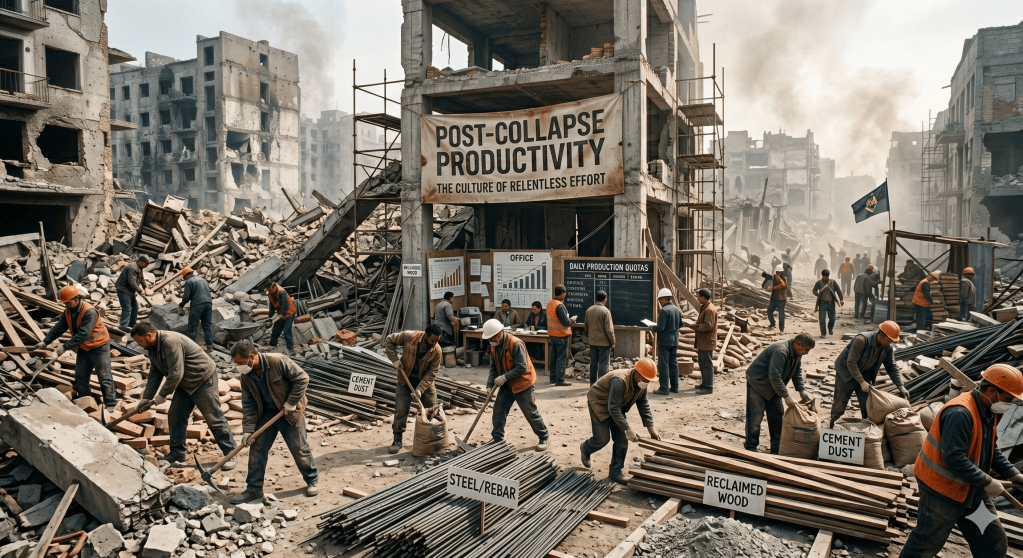
How the pandemic reshaped productivity culture — exploring the psychology, neuroscience, and social forces behind the shift from hustle to burnout and beyond.
There is a particular kind of exhaustion that doesn’t come from working too hard. It comes from working hard while also believing, somewhere underneath everything, that working hard might not matter. That’s the mood that settled over much of American life in the years following the pandemic — a strange, low-grade dissonance between the cultural pressure to be productive and a growing suspicion that the whole framework was broken.
Productivity culture — the broad set of values, habits, and rhetoric that prizes optimization, output, and self-improvement above most other things — didn’t die when COVID-19 arrived in early 2020. If anything, it briefly intensified, with a peculiar early-lockdown phenomenon where people felt compelled to emerge from quarantine having learned a language, written a novel, or built a sourdough empire. But something cracked underneath that performance. The months and years that followed created one of the more revealing social and psychological case studies in modern memory: an entire society forced to confront what it was actually doing, and why.
This article examines what happened to productivity culture after that crack appeared — how attitudes toward work, ambition, hustle, and self-improvement shifted between 2020 and the mid-2020s, what the science says about why, and where the culture seems to be settling now.
The Productivity Gospel Before the Fall
To understand what changed, it helps to understand what existed before.
The 2010s were arguably the peak decade of productivity culture as a mainstream ideology. Books like The 4-Hour Workweek, Deep Work, and Atomic Habits sold in the tens of millions. Podcasts dedicated to morning routines, time-blocking, and peak performance dominated listening charts. The concept of “hustle culture” — the belief that relentless work and self-optimization were not just paths to success but moral virtues — moved from Silicon Valley into everyday conversation. Influencers documented their 5 a.m. wake-ups, their cold plunges, their gratitude journals. LinkedIn became a stage for competitive displays of ambition.
This wasn’t entirely new. Americans have always had a complicated relationship with industriousness — the Puritan work ethic runs deep in the cultural soil. But the digital economy gave productivity culture new tools and new urgency. When knowledge work became location-independent, the boundary between work and life started dissolving. When social media made everyone’s output visible, the pressure to produce became social as well as economic.
Psychologists who study motivation were watching all of this with some ambivalence. The research on what actually drives sustained performance had been piling up for decades, and it didn’t line up neatly with what productivity culture was selling. Self-determination theory, developed by Edward Deci and Richard Ryan at the University of Rochester over several decades, identifies three core psychological needs that support genuine motivation: autonomy (feeling like your actions are your own), competence (feeling capable and effective), and relatedness (feeling connected to others). When those needs are met, people tend to engage with work in ways that are energizing rather than depleting. When they’re not met — when work is driven primarily by external pressure, comparison, or fear — productivity tends to come at a significant cost to well-being.
The hustle culture of the late 2010s frequently worked against all three of those needs. Constant availability eroded autonomy. The emphasis on output metrics over actual skill made competence feel contingent and fragile. And the relentless individualism of “you have to want it more” left little room for genuine connection. The system was running on borrowed psychological fuel — and then came 2020.
Collapse and Recalibration
The pandemic didn’t destroy productivity culture. But it forced a confrontation with it — and in doing so, revealed tensions that had been present all along.
When offices closed in March 2020, the physical theater of busyness disappeared overnight. Gone were the visible signals — arriving early, staying late, looking stressed in the right ways — that had functioned as proxies for commitment and value. What remained was the actual output, stripped of its staging. For many workers, that was clarifying in ways that were both liberating and unsettling. Some discovered that their jobs could be done in far less time than they’d been spending on them. Others discovered they couldn’t do them at all, crushed by caregiving responsibilities, mental health struggles, or the ambient horror of a global catastrophe.
The early pandemic also produced a strange cognitive phenomenon that researchers later found hard to explain cleanly. In the first weeks of lockdown, many people reported a manic productivity surge — the sourdough baking, the online courses, the pandemic projects. Behavioral scientists have offered several explanations for this. One is that stress can initially sharpen focus by activating the sympathetic nervous system’s “fight or flight” response, temporarily boosting alertness and energy. Another is that routine-seeking is a known anxiety coping mechanism — keeping busy feels like maintaining some control over an uncontrollable situation. A third, more sociological explanation is simply that the norms hadn’t shifted yet; people were performing productivity because they didn’t yet have permission to stop.
That permission came slowly, unevenly, and was never fully granted. But the mood changed. By mid-2020, the sourdough projects had mostly been abandoned, and something more subdued had taken hold. Surveys from that period consistently showed rising rates of burnout, anxiety, and what researchers were calling “languishing” — a concept popularized by the sociologist and organizational psychologist Adam Grant in a widely shared 2021 New York Times essay. Languishing wasn’t depression, exactly. It was a kind of joyless stagnation, an inability to feel absorbed by anything, a going-through-the-motions quality that seemed to infect large swaths of the population.
The neuroscience here is worth pausing on. Prolonged stress, particularly the chronic, low-grade variety that the pandemic produced, has well-documented effects on the prefrontal cortex — the region of the brain most responsible for planning, decision-making, and what’s often called executive function. Research going back decades shows that chronic stress can reduce the density of synaptic connections in the prefrontal cortex while simultaneously strengthening pathways in the amygdala, which processes threat and emotional reactivity. The practical upshot is that under prolonged stress, humans become worse at exactly the kind of deliberate, goal-directed behavior that productivity culture prizes — and more reactive, short-term, and defensive in their thinking. The culture was asking people to optimize while their brains were literally reorganizing around survival.
The Great Resignation and What It Actually Was
By late 2021, a new phrase had entered the conversation: the Great Resignation. The numbers were striking — in the United States, monthly “quit rates” hit record highs through late 2021 and into 2022, with millions of workers voluntarily leaving their jobs. The media initially framed this as a kind of collective epiphany, a mass awakening in which workers had discovered, thanks to the pandemic, that life was short and meaning mattered and they weren’t going to spend their remaining years in soul-crushing jobs.
That narrative was appealing but incomplete. The actual picture was more complicated, and more interesting.
Research by economists including Anthony Klotz (who coined the term), Nick Bloom, and others found that the Great Resignation was driven by multiple overlapping factors that varied significantly by demographic group. For lower-wage service workers, many resignations were responses to genuinely poor and dangerous working conditions exposed by the pandemic, combined with enhanced unemployment benefits that temporarily altered the calculus of staying in a bad job. For higher-wage knowledge workers, the picture was more about leverage than liberation — workers who’d discovered they could do their jobs remotely used their scarcity in a tight labor market to demand better terms, often moving to new jobs rather than leaving the workforce entirely.
The philosophical layer — the “I’ve discovered what matters” dimension — was real, but it was unevenly distributed and not always durable. Organizational psychologist Anthony Klotz had predicted before the resignations peaked that pent-up pandemic dissatisfaction would eventually express itself as mass turnover. What he perhaps didn’t predict was how quickly many of those who left would rediscover the various ways that work — even imperfect work — serves psychological functions beyond the paycheck.
Work, even when it’s not particularly meaningful in any deep sense, provides structure, social connection, identity, and what psychologists call a sense of agency — the feeling that your actions have consequences in the world. When those things disappear, particularly all at once, the result is often not the liberated flourishing that the resignation narrative implied but something more disorienting. Several researchers noted in follow-up studies that many people who left the workforce during this period struggled more than they’d expected with the psychological dimensions of not working — a finding that doesn’t make a case for bad jobs but does complicate the simple story that work was the problem.
Anti-Hustle Goes Mainstream
Even as the Great Resignation narrative grew more complicated, a genuine cultural shift was underway in attitudes toward productivity culture itself.
The anti-hustle backlash had been building before the pandemic — writers like Anne Helen Petersen, whose 2019 BuzzFeed essay on millennial burnout went explosively viral, had been articulating a generational exhaustion with the optimization imperative. But after 2020, that backlash accelerated and found new vocabulary. “Quiet quitting” — a phrase that went viral in the summer of 2022 — described the practice of doing exactly what your job required and nothing more, refusing the cultural expectation of going above and beyond as a default mode. The term itself was arguably misleading (it described not quitting at all, just working to the terms of one’s contract), but it captured something real: a generational shift in the relationship between workers and the unspoken demands of workplace culture.
On social media, particularly TikTok, a parallel phenomenon emerged. Content celebrating rest, doing nothing, and rejecting ambition accumulated enormous audiences. Concepts like “bed rotting” — spending deliberate time in bed with no productive purpose — were framed not as failure but as radical self-care. In China, the tang ping (“lying flat”) movement had made similar arguments: that opting out of the relentless pressure to achieve was a legitimate philosophical position, not a personal failure.
These movements attracted a fair amount of condescension from commentators who read them as laziness dressed up in the language of wellness. That reaction missed the more interesting underlying dynamic. What was being expressed wasn’t a rejection of effort or even ambition per se, but a rejection of a specific and relatively recent cultural arrangement: the idea that one’s productivity is a measure of one’s worth, that rest requires justification, and that the appropriate response to burnout is to optimize harder.
Psychologists studying this period generally viewed the pushback with more sympathy than skepticism. Research on recovery from work — sometimes called “psychological detachment” — had been accumulating for years, largely ignored by mainstream productivity discourse. Studies by researchers including Sabine Sonnentag at the University of Mannheim found that the ability to mentally disconnect from work during non-work time is a significant predictor of both well-being and, counterintuitively, subsequent work performance. The hustle culture norm of staying perpetually engaged, perpetually available, perpetually thinking about work, turned out to be actively counterproductive for sustained output — not just for quality of life, but for the very performance metrics it claimed to optimize.
The Science of Rest They Weren’t Teaching
While the culture was arguing about quiet quitting, the science of rest was having something of a moment.
Research on sleep, cognitive recovery, and the neuroscience of downtime had been accumulating for decades, but much of it had failed to penetrate the productivity conversation, which tended to treat sleep as a variable to be minimized and rest as a reward for sufficient output rather than a physiological requirement for good output. Matthew Walker’s 2017 book Why We Sleep helped bring some of this research to a broader audience, and the pandemic — which disrupted sleep patterns dramatically across the population — made it newly urgent.
The core findings were not subtle. Sleep deprivation degrades cognitive performance in ways that closely mimic intoxication, while simultaneously impairing the sleeper’s ability to accurately assess their own impairment. Chronic partial sleep deprivation produces compounding deficits that most people are unaware of, because the subjective sense of sleepiness adapts while the objective performance deficits keep accumulating.
Researchers studying the default mode network — a set of brain regions that activate when the mind is at rest and not focused on external tasks — were also challenging the assumption that idle time is wasted time. The default mode network appears to be involved in memory consolidation, creative insight, and the kind of wandering, associative thinking that often precedes creative breakthroughs. Studies of incubation effects in problem-solving had long suggested that stepping away from a difficult problem often produces better solutions than grinding through it — a finding that the relentless-focus model of productivity struggles to accommodate.
The research landscape, taken together, suggested something that hustle culture had no framework for: that the relationship between effort and recovery is cyclical and interdependent, not a simple trade-off.
Technology’s Role in All of This
Any examination of productivity culture in this period has to grapple with technology, because technology was simultaneously the primary tool for remote work, the primary platform for anti-hustle content, and a significant driver of the attention fragmentation that made genuine deep work harder than ever.
The smartphone had already restructured attention before the pandemic. Research on notification interruptions — each of which, studies showed, required an average of over twenty minutes to fully recover from in terms of focused concentration — had been accumulating since the mid-2010s. The pandemic’s push to remote work compounded this. Without the physical separation of workplace and home, the digital always-on state became total. Notifications from work apps arrived at all hours. The boundary between professional communication and personal life collapsed further.
The emergence of large-scale AI tools, particularly from 2022 onward, added another layer to the productivity conversation. When ChatGPT launched in late 2022 and the category of generative AI tools exploded in the years following, productivity culture found a new obsession. The discourse shifted from optimizing human habits and routines to optimizing human-AI collaboration — a genuinely different question with different implications.
By 2025 and 2026, the productivity conversation in many professional contexts had reorganized substantially around AI augmentation. The anxiety was no longer primarily about whether you were waking up early enough or blocking your calendar correctly; it was about whether you were using AI tools effectively, whether your skills were being automated away, and what, exactly, human contribution to knowledge work would mean in an economy where first-draft generation, research summarization, and routine analysis could be done by machines at scale. This produced its own psychological pressures — different from hustle culture but no less intense — and reopened questions about meaning, purpose, and what work is actually for that the anti-hustle moment had only begun to address.
Where the Culture Has Landed
It would be tidy to say that the years following the pandemic produced a genuine, durable shift in how people related to productivity — that the collective exhaustion, the scientific evidence about rest, and the cultural backlash against hustle combined to produce a healthier equilibrium. The reality is messier.
What seems to have happened is a fragmentation of the consensus. The productivity culture of the late 2010s, whatever its flaws, had a certain coherence — a shared set of assumptions that cut across industries and demographics. That coherence is largely gone. In its place are multiple competing frameworks that coexist in uncomfortable tension.
There are still devoted practitioners of the optimization model — still large audiences for high-performance podcasts, still markets for habit-tracking apps and productivity systems, still a substantial cohort of professionals who define themselves significantly through their work output. But alongside this, there’s a more established language of boundaries, sustainability, and psychological safety in workplaces that has made genuine inroads in HR culture, management discourse, and organizational behavior. The research-backed arguments for recovery time, psychological detachment, and intrinsic over extrinsic motivation have moved from academic papers into management training in ways that would have seemed unlikely in 2018.
There’s also a generational dimension that’s worth naming carefully, because the generational explanations often get oversimplified. Younger workers entering the labor market in the early to mid-2020s showed, in survey after survey, somewhat different priorities than their predecessors in the millennial generation had reported at similar career stages — with more explicit emphasis on meaningful work, clear boundaries, and flexibility. Whether this reflects a genuine generational shift in values, a reasonable response to a different economic and technological context, or simply the kind of idealism that tends to characterize early career stages regardless of cohort remains an open question that longitudinal research will eventually answer.
The Unresolved Question
Underneath all the cultural back-and-forth, there’s a question that productivity culture in all its forms tends to skirt: productive for what?
The optimization model implicitly assumes that more output is better, that efficiency serves goals worth serving, that the what-for is settled and the only interesting problem is the how. What the pandemic years disrupted, more than any particular work habit or career norm, was that assumption. When the ordinary texture of life was interrupted — when people couldn’t do the things that had given their schedules meaning, when the future felt genuinely uncertain — the question of what all the productivity was in service of became harder to avoid.
That question doesn’t have a clean answer, which is probably why productivity culture tends to avoid it. Purpose is subjective, contextual, and hard to optimize. Neuroscience and psychology can tell us quite a lot about the conditions under which people engage sustainably with demanding work — autonomy, competence, relatedness, adequate recovery — but they can’t tell us what the work should be for. That’s a philosophical and personal question that each person has to work out for themselves, in ways that take time and quiet and the willingness to sit with uncertainty.
What the post-collapse period may have given people — unevenly, imperfectly, and amid considerable suffering — is a little more permission to ask it.
The productivity conversation was never going to resolve cleanly, and it hasn’t. But it has shifted. The language of sustainability has entered workplaces where it was previously unwelcome. The research on recovery, rest, and intrinsic motivation has reached audiences that would never have sought it out in 2019. The assumption that relentless output is a virtue has lost some of its unquestioned status.
Whether that shift proves durable — whether it survives the economic pressures, the AI disruption, and the next crisis, whatever form it takes — is the question that the coming years will answer. What’s clear is that the collapse forced a reckoning, and reckonings, even uncomfortable ones, tend to leave marks.









