
Originally published in April 2025 and comprehensively updated/edited in June 2026.
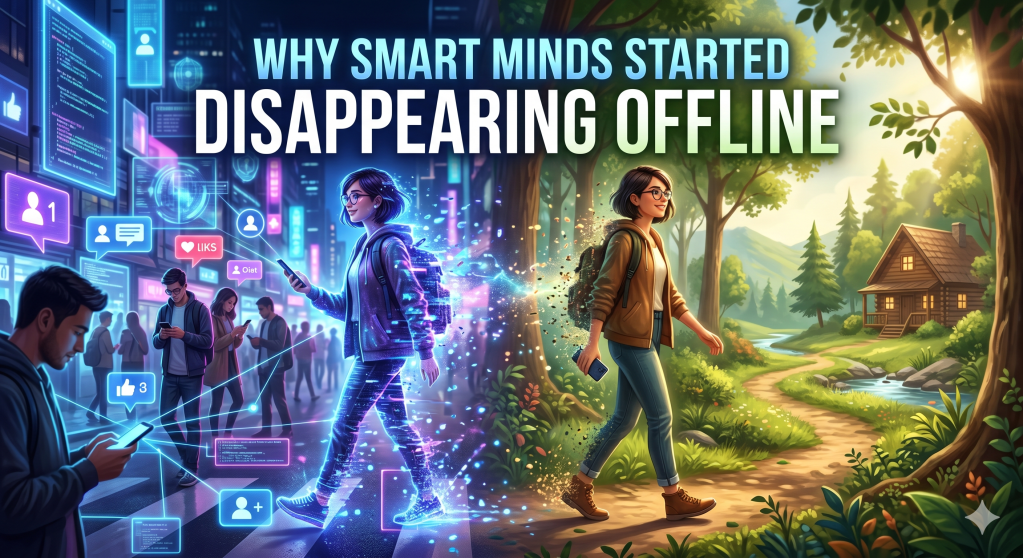
Why did thoughtful, expert voices start disappearing from social media? This essay explores the psychology, neuroscience, and social dynamics behind why smart minds went offline.
There was a moment, somewhere around the early 2020s, when people started noticing something odd. Certain writers, researchers, engineers, and thinkers — people who had once been reliably present on social media, who had built followings and contributed to public conversations — began quietly stepping back. Not with dramatic farewell posts or manifestos. Just gone. Accounts going dormant. Replies slowing to a stop. A kind of withdrawal that, at first, seemed like a personal decision but gradually revealed itself as something more widespread.
This wasn’t about burnout in any simple sense. It wasn’t merely that people were tired. Something more specific appeared to be happening: the environment of online life, particularly on platforms built around public discourse, had become structurally uncomfortable for a certain cognitive style. The kind that needs space to think. The kind that would rather sit with a complicated question than fire off a take. The kind that finds the social feedback loops of algorithmic platforms not energizing but exhausting, even distorting.
The argument here is not that clever people left while less clever people stayed — that would be both too simple and too flattering to anyone who tells it about themselves. The more precise claim is that specific platform incentives selected against specific communication styles: the qualified, the uncertain, the willing-to-revise. Understanding how that happened — and what it cost — requires looking at psychology, the economics of attention, and the particular cultural pressures that built up over the better part of a decade. It’s a story about what happens when the public square is redesigned not for the exchange of ideas but for the capture of engagement.
The Architecture of Distraction
How Platforms Were Built to Hold Attention
To understand why certain voices pulled back, you first have to understand the environment they were pulling back from. Social media platforms — particularly the major ones that dominated the late 2010s and early 2020s — were not designed primarily as communication tools. They were designed as attention economies. The product was not the platform itself. The product was user attention, packaged and sold to advertisers.
This isn’t a conspiracy theory; it’s a business model that the platforms themselves largely acknowledged over time. Former insiders wrote books about it. Whistleblowers testified before Congress. The mechanics were openly discussed in tech circles for years before they reached mainstream awareness. The core insight driving platform design was simple: the more emotionally arousing a piece of content, the longer people stayed. And among emotions, outrage was particularly effective at keeping users engaged.
Research published over the past decade consistently found that negative emotional content spreads faster and farther on social networks than positive or neutral content. A 2017 study by researchers at New York University found that each additional moral-emotional word in a tweet increased its retweet rate by around 20 percent. The platforms’ recommendation algorithms, refined through billions of data points, learned to surface content that provoked strong reactions — not because anyone explicitly programmed them to spread outrage, but because outrage kept people scrolling, and keeping people scrolling was the entire point.
The result was an environment where measured, nuanced thinking was systematically disadvantaged in terms of reach. A tweet that said “this is complicated and I’m not sure” generated far less engagement than one that said “this is a catastrophe and here’s who to blame.” The architecture wasn’t neutral. It applied pressure. And over time, that pressure shaped what kinds of participation were rewarded — and what kinds were not.
What Constant Connectivity Does to Focused Thinking
One thread of research worth examining here comes from cognitive psychology rather than social science. The human brain manages attention through systems that are genuinely taxed by constant interruption. Researchers studying what’s often called “cognitive load” have found that switching between tasks — or even anticipating interruption — reduces the quality of sustained thinking. A study published in the Journal of the Association for Consumer Research in 2017 documented a related effect: participants performed worse on cognitive tasks when their phones were nearby compared to when the phones were left in another room, even though neither group used their phones during the task. The authors suggested that the habituated pull of connectivity was consuming attentional resources just by existing as a possibility.
This line of research doesn’t directly prove that social media drove anyone away from public platforms. But it does establish something relevant: the environment created by always-on connectivity is measurably costly to the kind of sustained, uninterrupted thinking that produces careful analysis. For people whose work depends on holding complex ideas in mind over long periods — researchers, writers, engineers working on difficult problems — that cost is not trivial. What author Cal Newport called “deep work” was becoming structurally harder to achieve. Not impossible, but requiring active defense against an environment optimized to interrupt.
The connection to platform withdrawal is inferential rather than direct. What we can say with reasonable confidence is that the cognitive demands of social media engagement — rapid response, high volume, continuous context-switching — are in tension with the cognitive demands of careful, sustained thinking. Whether that tension caused individuals to leave is harder to establish from the research alone. Anecdotally, many writers and researchers who reduced their social media presence cited exactly this friction. But anecdote is not data, and the essay holds that distinction.
The Social Dynamics That Pushed People Out
Public Discourse and the Performance of Certainty
Parallel to the cognitive pressures were the social ones. Public discourse online had developed its own grammar, its own norms, its own demands. And one of its central demands was certainty.
Nuance — the acknowledgment that something is complex, that evidence points in multiple directions, that reasonable people disagree — was not rewarded by the social dynamics of platforms where every post was a performance in front of an audience. In the attention economy, admitting uncertainty was algorithmically punished and socially risky. The crowd rewarded confident takes. It rewarded people who knew exactly what was wrong and exactly who was responsible. Hedging, qualifying, changing one’s mind based on new information — these were liabilities.
This created what sociologists sometimes call a “preference falsification” dynamic at scale. Individuals who privately held nuanced views learned to perform confidence they didn’t entirely feel, because the social incentives rewarded it. Or they simply stopped participating. Research on self-censorship online has consistently found that people with more complex or dissenting views are disproportionately likely to stay silent in environments where they expect pushback — a phenomenon that mirrors what political scientist Elisabeth Noelle-Neumann described as the “spiral of silence” in her work on public opinion formation, now playing out at the speed of a notification ping.
For people whose intellectual habits lean toward qualification — who have encountered enough competing evidence to distrust simple narratives — this environment created a specific kind of friction. The social cost of expressing uncertainty was high. The reward for simplification was immediate. Some adapted by simplifying. Others chose a third option: stepping back.
The Risk of Being Wrong in Public
There was also the matter of what happened when you got something wrong. Or when you said something that a portion of your audience, however large or small, decided to treat as wrong.
The phenomenon of coordinated pile-ons — where large numbers of people simultaneously direct negative attention at a single individual — had been documented and studied since the early days of Twitter. Journalist Jon Ronson wrote extensively about public shaming in 2015, and the basic mechanics he described only intensified as platforms grew and as political polarization deepened throughout the late 2010s. The experience of being at the center of such an event, even briefly, could be genuinely distressing. Research on cyberbullying and online harassment found measurable effects on psychological wellbeing — elevated anxiety, social withdrawal, hypervigilance — even among people who had not been targeted directly but had witnessed others go through it.
The rational response to this risk, for someone with meaningful professional standing to protect, was caution. And caution, on platforms that punished anything short of confident engagement, often translated to silence. The potential downside — career damage, reputational harm, the psychological cost of a public pile-on — was concrete and immediate. The potential upside of sharing a carefully considered idea was diffuse and uncertain. For many, the math started to look unfavorable.
This calculus was sharpest in fields where reputations were built slowly and could be damaged quickly. Academics, researchers, journalists, and professionals in regulated industries found themselves navigating environments where a single poorly-worded post could follow them indefinitely. Search engines didn’t forget. Screenshots persisted. Context collapsed.
The COVID Stress Test
The public health response to the COVID-19 pandemic accelerated many of these dynamics in ways that were difficult to ignore in real time. It is worth examining as more than a footnote, because it offered an unusually clear illustration of what happens when the gap between expert communication and platform incentives becomes too wide to bridge.
Scientists and public health officials who attempted to communicate nuanced, evolving information through social media found the environment genuinely treacherous. Early uncertainty about transmission routes, about the effectiveness of masking, about the relative severity of different risk profiles — the kind of uncertainty that is entirely normal in a fast-moving scientific situation — was poorly handled by platforms that rewarded confident clarity and algorithmically punished revision. Updating a position based on new evidence, which is what scientists are supposed to do, looked to casual observers like inconsistency or dishonesty. Expressing appropriate uncertainty about emerging data could be clipped, decontextualized, and used to undermine credibility.
Misinformation, by contrast, was well-suited to the platform environment. It was confident. It was emotionally engaging. It often provided simple explanations for frightening events. It spread effectively. A 2020 study published in BMJ Global Health found that health misinformation on social media was not only prevalent but was being amplified by the same algorithmic systems that amplified other high-engagement content — because engagement, not accuracy, was what the systems measured.
Many health researchers, after difficult experiences during the early months of the pandemic, pulled back from public social media communication. Some said so explicitly. Others simply went quiet. The result, in at least some domains, was a communication vacuum that other voices — less careful, less constrained by evidence — were prepared to fill. The pandemic didn’t create the underlying tensions between expert communication and platform incentives, but it made them visible at a scale that was hard to dismiss.
What Research Says About Cognitive Style and Platform Fit
Why Certain Communication Styles Face More Friction
Personality psychology offers a useful lens here, though one that requires careful handling. Decades of research on cognitive styles — including on a construct called “need for cognition,” which describes individuals who genuinely enjoy effortful mental processing and tend to think carefully before forming opinions — has found consistent differences in how people engage with complex or ambiguous information.
People high in need for cognition tend to process information more slowly and more thoroughly. They are less comfortable with rapid-fire, reactive communication. They are more likely to see multiple sides of an argument, which makes confident public positioning genuinely difficult rather than merely inconvenient. Research has also found that this cognitive style correlates with greater sensitivity to social context — which, in adversarial online environments, raises the emotional cost of participation.
To be clear about what this does and doesn’t establish: it suggests that the specific demands of algorithmic social media — speed, confidence, emotional activation, continuous availability — are a worse fit for some cognitive styles than others. It does not establish that the people who found those platforms uncomfortable were smarter, more knowledgeable, or more valuable contributors than those who thrived there. Intelligence and cognitive style are not the same thing. And plenty of quick, confident thinkers produce genuinely important work, while plenty of careful, deliberate ones produce very little. The claim is about fit between environment and style, not about the hierarchy of minds.
The Expertise Problem
One dynamic that is better documented involves expertise specifically. Social media initially seemed like a useful tool for distributing specialist knowledge. Scientists could explain their research directly. Economists could correct widely shared misconceptions. Historians could add context that daily journalism often compressed away. And to some extent, that happened.
But expertise came with structural complications. Experts qualify their claims. They acknowledge limitations in the evidence. They say things like “the data suggests” rather than “the data proves.” They change their minds when new evidence emerges — which, to audiences accustomed to the confident certainty rewarded by engagement algorithms, can look like inconsistency or weakness.
Meanwhile, confident generalists could generate enormous engagement. The Dunning-Kruger effect — the well-replicated finding that people with limited knowledge in a domain tend to overestimate their own competence, while people with deeper knowledge tend to have a more calibrated sense of uncertainty — meant that the voices most willing to project absolute certainty were sometimes the least equipped to justify it. The incentive gradient ran in an unhelpful direction.
Many researchers and subject-matter experts eventually concluded that the effort of public participation was not worth the return. Being misunderstood was frustrating. Being deliberately misrepresented was worse. And the cognitive overhead of defending careful claims against bad-faith simplifications was a tax on the time and attention they needed for the actual work.
The Quiet Migration
What Withdrawal Actually Looked Like
“Retreating from social media” is perhaps too dramatic a phrase for what most people actually did. Very few deleted all accounts and disengaged entirely. What happened was more granular. People stopped posting on public platforms while continuing to communicate through private or semi-private channels — encrypted messaging apps, email lists, Discord servers, small group chats, Substack newsletters requiring explicit subscription. The texture of their intellectual engagement moved from broadcast to narrowcast.
This shift was visible in aggregated data, though imperfectly. Platform engagement metrics, which social media companies increasingly treated as carefully guarded trade secrets, told a complicated story. Total time-on-platform often remained high, driven by short-form video and algorithm-fed content. But original text-based posting — the kind of discursive contribution that had characterized the early promise of social media — appeared to concentrate among a narrowing share of users. Twitter’s internal data, portions of which became public through various disclosures following Elon Musk’s acquisition of the company in 2022, showed that a very small percentage of users generated the vast majority of original content, and that this concentration had been increasing over time.
The people who reduced their public posting didn’t disappear from intellectual life. Many of them became, in some respects, more productive. Long-form newsletters flourished. Podcast listenership grew substantially. Independent blogs, declared dead many times, quietly persisted and in some cases thrived. The ideas were still being generated. They were simply reaching audiences through different channels — slower channels, less algorithmically mediated, often requiring more deliberate engagement from readers who chose to seek them out.
The Revival of Smaller Communities
There is something sociologically interesting about the revival of relatively bounded intellectual communities during this period. The salons and correspondence networks of earlier eras had rough analogues in the online spaces that people began preferring. A Discord server with a few hundred carefully chosen participants could sustain nuanced, good-faith conversation in ways that a Twitter thread with fifty thousand impressions couldn’t. A paid newsletter with a few thousand subscribers who actively chose to receive it created a different social dynamic than a public post subject to algorithmic amplification and decontextualization.
Researchers studying online community dynamics have noted that smaller, bounded communities with explicit norms tend to sustain healthier discourse than large, open, algorithmically-mediated ones. The reasons are not surprising: when people feel accountable to a stable community rather than performing for an anonymous mass audience, the social contracts that govern ordinary conversation tend to reassert themselves. Size matters. Anonymity matters. The presence or absence of consequences for bad behavior matters enormously.
What Gets Lost — and What Doesn’t
The Cost to Public Discourse
The withdrawal of certain voices from major public platforms did not leave those platforms empty. It left them with a different character. The center of gravity shifted. The conversations that took place on the most visible, most algorithmically amplified stages often appeared to reward confident simplicity more reliably than carefully qualified reasoning.
This had consequences that extended beyond the platforms themselves. Public discourse on social media increasingly influenced journalism, politics, and institutional decision-making — partly because journalists used the platforms to gauge opinion, partly because politicians used them to communicate with and understand their constituencies. When the discourse on those platforms became less epistemically careful, the institutions downstream were affected too. The signal was distorted before it ever arrived.
What Wasn’t Lost
At the same time, it would be a mistake to treat this as purely a story of loss. The people who moved to smaller, more deliberate venues were not silenced. They were, in many cases, writing more carefully and reaching audiences who were actively choosing to engage rather than passively encountering content in a feed. The relationship between writer and reader, when it becomes voluntary and direct, changes in ways that can improve both the writing and the reading.
There is also something to be said for the long-term value of ideas that develop slowly, in less adversarial environments, before reaching a broader public. Not everything benefits from being subjected to the dynamics of a viral moment at the moment of its formation. Some arguments need time to be refined. Some conversations need privacy to be honest. The migration to smaller spaces preserved the conditions for that kind of intellectual work, even as it reduced its immediate public reach.
Looking Forward
The period between roughly 2017 and 2025 can now be understood, with some distance, as a stress test for the relationship between public intellectual life and digital platforms. The test revealed serious structural tensions — not accidental ones, but tensions that were inevitable given the economic models and incentive systems underlying the major platforms. Engagement-optimized design and careful communication are not natural allies.
What came after was not a clean resolution. The platforms didn’t fundamentally reform themselves. The attention economy didn’t go away. But the ecosystem diversified. The concentration of public discourse on two or three dominant platforms began to break up. New entrants with different models — federated networks, subscription-supported platforms, community-owned spaces — captured growing segments of the audience that found the major platforms inhospitable.
More importantly, there was growing cultural awareness of what had happened. The mechanisms of algorithmic curation became common knowledge in a way they hadn’t been a decade earlier. Media literacy — understanding how feeds are curated, how engagement metrics distort incentives, how platform architecture shapes the content on it — became a more widely discussed topic in schools, in journalism, in policy debates. The understanding that social media platforms are not neutral mirrors of public opinion but actively shaped environments was no longer a fringe concern. It had become fairly ordinary.
Whether that awareness translates into meaningful structural change remains genuinely uncertain. The economic incentives that created the original problem haven’t gone away. Outrage still travels faster than nuance. That is unlikely to change without either a shift in the underlying business model or regulatory pressure that has so far been slow to materialize.
But the voices that retreated didn’t stop producing. Many of them kept writing, thinking, and building — for smaller audiences, through different channels, with less algorithmic amplification and more intentional readership. The question that still matters is whether the ideas developed in those quieter spaces eventually find their way back into broader public conversation, and whether the platforms they return to will be better designed to receive them.









