
Originally published in October 2025 and comprehensively updated/edited in June 2026.
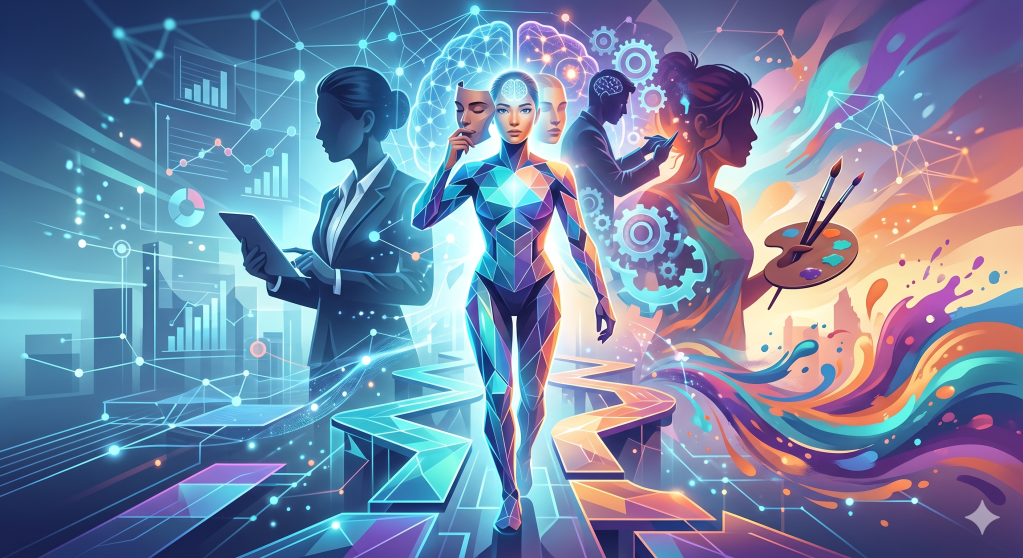
Identity switching and mental adaptability explain how people navigate multiple social roles. Explore the psychology, neuroscience, and cultural dimensions of flexible selfhood.
There is something quietly extraordinary happening in how people navigate their sense of self. Spend enough time in contemporary digital spaces and you will find the same person presenting as a devoted parent in one moment, an irreverent wit in another, a serious professional in a third — all within the span of a single afternoon. For previous generations, this kind of contextual shape-shifting might have raised eyebrows. Today, it barely registers as unusual. We have entered an era where the ability to modulate one’s identity across contexts is not just common — it may be one of the defining psychological skills of contemporary life.
Identity switching, as researchers and cultural observers have increasingly come to call it, refers to the capacity to adapt one’s presentation, communication style, values emphasis, and even self-concept depending on the social environment. It sits at the intersection of psychology, sociology, neuroscience, and technology, and it has become more visible — and more studied — than at any point in modern history. Understanding why this capacity matters, how the brain supports it, and what its limits are reveals something essential about what it means to be human in a fragmented, hyperconnected world.
The Many Selves We Carry
The idea that people present differently in different situations is not new. William James, the pioneering American psychologist, wrote in 1890 that a person “has as many social selves as there are individuals who recognize him.” The sociologist Erving Goffman expanded on this in his 1956 classic The Presentation of Self in Everyday Life, arguing that all social interaction is a kind of performance — people manage impressions the way actors manage a stage.
What has changed in recent decades is the sheer number of stages we perform on simultaneously, and the degree to which those stages are documented, archived, and visible across social networks. A teacher in the 1970s might have maintained a professional persona at school and a more relaxed one at home, with very little overlap between the two audiences. Today, that same teacher might be navigating a LinkedIn profile, a private Instagram, a school email address, parent-teacher communication apps, and a group text with former college friends — all at once, with constant potential for audience bleed. The stakes of context collapse, the term researchers use for the moment when distinct audiences unexpectedly merge, have risen considerably.
This is not merely a social inconvenience. It has genuine psychological weight. When the self we show in one domain suddenly becomes visible to audiences from another, the dissonance can produce anxiety, shame, or a sense of violation — even when nothing objectively wrong has occurred. The underlying challenge is that identity switching is not deception. It is a normal feature of social cognition, and the discomfort people feel about it often reflects a cultural ideal of singular, consistent selfhood that human psychology was never fully built around.
What Neuroscience Reveals About a Flexible Self
The human brain does not appear to represent identity as a single, fixed structure. Research in cognitive neuroscience has shown that self-representation is distributed across multiple neural networks, many of which overlap with systems used for social cognition, memory, and emotional regulation. The medial prefrontal cortex, a region active when people think about themselves, is also activated when thinking about others — particularly others we feel close to or identify with. This overlap lends support to the view that the self is, in part, a relational construction: built through interaction and calibrated in response to social feedback.
The concept of cognitive flexibility — the brain’s ability to shift between mental frameworks, rules, or behavioral responses — is central to understanding identity switching. The prefrontal cortex, which houses much of the machinery for executive function, enables people to hold competing representations of a situation and switch between them as context demands. Studies using functional MRI have shown that individuals who score high on measures of cognitive flexibility also tend to perform better on tasks requiring perspective-taking and social adaptability. Different facets of a person’s identity become more or less salient depending on environmental cues — not as performance or pretense, but as the brain efficiently allocating attention and behavioral programs to match the demands of the situation.
There is also evidence that early life experiences shape the range and flexibility of identity adaptation available to a person. Individuals raised in environments requiring constant social navigation — children of immigrants who move between cultural worlds, people who grew up in households with significant emotional unpredictability, those who experienced early exposure to diverse social settings — often develop unusually strong context-switching abilities. The same psychological mechanisms that help people survive complexity early in life can become adaptive strengths in adulthood.
Cultural Identity and Code-Switching
Nowhere is identity switching more visible — or more politically charged — than in the phenomenon of cultural code-switching. The term, originally from linguistics, described the way bilingual individuals alternate between languages depending on context. Over the past two decades, it has expanded to describe the broader practice of shifting one’s cultural presentation, speech patterns, mannerisms, and self-expression depending on the racial or social composition of a given environment.
For many people from marginalized groups — racial minorities, immigrants, people from working-class backgrounds navigating professional environments — code-switching is not a choice so much as a survival skill. Research by organizational psychologists Courtney McCluney and colleagues, published in the Harvard Business Review, has documented the significant cognitive and emotional labor involved. Constantly monitoring one’s speech and behavior to fit into a dominant cultural context draws on the same executive function resources used for self-regulation and decision-making. Over time, this kind of sustained identity management can produce what researchers describe as identity fatigue — a depletion of the psychological resources needed to maintain consistent self-presentation.
This creates a genuine tension. Cognitive flexibility in identity switching is generally associated with better social outcomes, greater empathy, and more effective communication across difference. But when identity switching is demanded asymmetrically — when one group consistently adapts to another rather than both adapting reciprocally — the psychological toll falls unevenly. The neurological capacity for flexible self-presentation is a human universal, but the social conditions under which it is exercised are anything but.
Digital Life and the Architecture of Multiple Identities
The rise of digital and social media platforms has not created identity switching, but it has profoundly restructured its terrain. The internet introduced something genuinely new: the ability to maintain parallel identity projects simultaneously, often with different names, communities, and norms, with varying levels of anonymity. Academic researchers studying online behavior began noting in the early 2010s that many users maintained meaningfully different personas across platforms — not as a form of deception, but as a form of contextual self-expression that felt authentic within each specific community.
Psychologists have described this as “identity compartmentalization online,” and the research on whether it is healthy is nuanced. In controlled studies, people who maintain clear separations between their various online identities tend to report lower levels of social anxiety compared to those who feel pressure to maintain a single, coherent digital self across all platforms. The compartmentalization appears to function as a kind of mental buffer — a way of protecting one social self from judgment by another audience. On the other hand, individuals who experience their various online identities as deeply inconsistent with one another — not just contextually different, but fundamentally contradictory — report higher rates of identity confusion and psychological distress. What determines the difference is less the amount of switching and more whether the person experiences their varied selves as expressions of a coherent core or as competing fragments with no common thread.
Mental Adaptability as a Cognitive Skill
Identity switching is not merely a social phenomenon — it is a measurable cognitive capacity that shows meaningful individual variation and can be strengthened through deliberate practice. Psychologists studying mental adaptability, which encompasses cognitive flexibility, emotional regulation, and perspective-taking, have found that these abilities are shaped by both genetic predispositions and lived experience.
Mindfulness-based practices, for instance, have been shown in multiple studies to increase cognitive flexibility by reducing the automaticity of habitual responses — essentially training people to notice when they are locked into a particular self-schema and to disengage from it more easily. This has obvious applications beyond meditation: theater training, improvisational performance, and immersive cross-cultural experiences have all been associated with similar improvements. Narrative fiction may function as a lower-stakes version of the same process. Reading a novel requires sustained perspective-taking — inhabiting another person’s assumptions, emotional logic, and social world — and research suggests habitual fiction readers show measurably stronger social cognition and theory of mind scores than non-readers. People who have spent years imaginatively inhabiting other perspectives may find it easier to move between their own varying social selves without experiencing the transitions as threatening.
There are limits, of course. Cognitive flexibility and identity switching are not infinitely expandable. Research on decision fatigue and ego depletion — while the original studies have undergone significant replication challenges, the basic insight about finite cognitive resources remains well-supported — suggests that the more a person has to shift between contexts and behavioral modes in a day, the harder later shifts become. High-pressure professionals, diplomats, people navigating multiple cultural worlds, and caregivers who must constantly modulate their emotional presentation all describe a version of this: the exhaustion that comes not from any single interaction but from the cumulative weight of sustained contextual adaptation.
When Switching Becomes Fragmentation
For most people, identity switching is a healthy and largely unconscious feature of social life. But it exists on a continuum, and at its far end lie genuinely destabilizing experiences of fragmentation and dissociation. Clinical psychology has long recognized that certain presentations — particularly dissociative identity disorder, formerly known as multiple personality disorder — involve a degree of identity compartmentalization that goes far beyond ordinary social adaptability.
It is important not to pathologize normal variation or to blur the line between adaptive flexibility and clinical fragmentation. The vast majority of people who feel different in different social contexts are not experiencing a disorder — they are experiencing ordinary human social cognition. The distinction that clinical researchers draw is largely about whether different identity states are accessible to one another, integrated within a broader sense of self, and whether transitions between them are controlled rather than involuntary.
What researchers have found more broadly is that identity fragmentation, in its subclinical forms, tends to be associated with early experiences of emotional invalidation — environments in which a person’s authentic self-expression was consistently punished or ignored, producing a learned habit of radical self-concealment. The child who learns early that showing one’s true feelings results in negative consequences may develop a finely tuned capacity for identity switching that becomes, over time, a barrier to intimacy and authentic connection. Here the same cognitive machinery that enables adaptive flexibility becomes a defense mechanism — and the challenge of adulthood becomes learning to distinguish between contexts that genuinely require strategic self-presentation and contexts safe enough to drop it.
The Authenticity Paradox
One of the stranger features of contemporary discourse about identity is the simultaneous cultural valorization of authenticity — “be yourself,” “your true self,” “stay real” — and the widespread, largely unexamined practice of strategic self-presentation. Social media platforms have commercially incentivized a particular kind of performed authenticity: the curated confession, the artfully candid photo, the carefully crafted impression of spontaneity. This creates a peculiar double bind in which people feel pressure to appear authentic while simultaneously performing for an audience.
Psychologists who study authenticity as a construct have found that the subjective feeling of being authentic is not actually tied to consistency of presentation across contexts. What makes people feel authentic is something more subtle: the sense that their actions reflect their values and that they are not actively concealing or suppressing important aspects of themselves. A person who presents differently in a job interview than they do with close friends can feel genuinely authentic in both contexts, provided that both presentations feel congruent with who they actually are.
This is actually a fairly demanding psychological standard — and it explains why so many people experience something uncomfortable when their identity switching feels compelled rather than chosen. The difference between adapting your communication style to your audience (felt as natural and normal) and hiding a core aspect of yourself because it would be rejected (felt as inauthentic and costly) maps onto a real psychological distinction. One is cognitive flexibility in service of connection. The other is self-concealment in service of social safety.
Identity Switching in the Workplace
Organizational psychologists have studied identity switching extensively in professional contexts, and the findings have practical implications for how workplaces function. Employees who feel they must maintain a significant gap between their authentic self and their professional persona report lower job satisfaction, higher turnover intention, and reduced organizational commitment — even when the surface-level performance is convincing. This has been documented across many occupational groups, from teachers and healthcare workers to lawyers and executives. Yet research on “bringing one’s whole self to work” finds that full, uninhibited self-disclosure is not universally adaptive either. Workplaces differ in their psychological safety, their cultural norms, and the genuine risks associated with disclosure. What employees most need, research by Amy Edmondson at Harvard Business School suggests, is not an absence of identity switching but the confidence that authentic expression will not be penalized — a condition that allows them to choose contextual adaptation rather than having it imposed on them.
The generational dimension adds texture. Younger workers who entered the workforce in the 2010s and 2020s consistently place higher value on identity integration — bringing personal values and communication styles into professional environments — than earlier cohorts did. This has created real friction in workplaces where older norms emphasized a sharp separation between professional and personal selfhood. Neither orientation is inherently right; they reflect different assumptions about the appropriate relationship between identity and work.
Mental Adaptability and Resilience
Perhaps the most significant finding to emerge from research on identity switching and mental adaptability is its relationship to psychological resilience. People who demonstrate greater cognitive flexibility — including the ability to shift between identity contexts fluidly and without significant distress — consistently show better outcomes in the face of adversity. They recover more quickly from setbacks, adapt more effectively to unexpected change, and report lower rates of depression and anxiety in longitudinal studies.
The mechanism appears to involve the ability to reframe one’s self-concept in response to new circumstances without experiencing that reframing as a threat to core identity. Someone with high mental adaptability who loses their job does not necessarily experience it as a fundamental attack on who they are — they can incorporate the experience, update their self-concept, and generate new behavioral approaches. Someone with a more rigid, single-faceted identity may experience the same event as catastrophic because their sense of self has fewer alternative foundations. What seems to matter, the research suggests, is the combination of a stable core with flexible contextual expression: excessive rigidity limits adaptation, but excessive fluidity without any stable core produces its own form of anxiety and incoherence.
The Ongoing Negotiation
There is no settled destination in the question of who we are. Identity has always been a process rather than a product — a negotiation between inner experience and outer social world that continues across the lifespan. What distinguishes the present moment is the sheer scale and complexity of the social environments people must navigate, the speed at which those environments shift, and the technological infrastructure that now archives, broadcasts, and connects performances of self that would once have remained local and ephemeral.
Understanding identity switching as a genuine cognitive skill — one with measurable neural correlates, developmental trajectories, and real psychological consequences — reframes it from something vaguely suspicious to something worth taking seriously. The person who moves fluidly between a professional conference, a family dinner, an online community, and a close friendship is not being fake. They are exercising one of the most distinctly human capacities we have: the ability to recognize that different relationships and contexts call for different modes of being, while maintaining, beneath all of it, a continuous thread of selfhood that belongs entirely to them.
The broader significance of mental adaptability extends well beyond individual psychology. In an era marked by rapid cultural change, global interconnection, and persistent social conflict, the ability of people to engage flexibly with different identities and perspectives — to move between frameworks without losing themselves — may be among the most important capacities a society can cultivate. That it is both a natural feature of human cognition and a skill that can be developed, damaged, or supported by social conditions makes it not just a personal concern but a genuinely public one.
Selected References and Further Reading
- Edmondson, Amy C. The Fearless Organization: Creating Psychological Safety in the Workplace for Learning, Innovation, and Growth. Wiley, 2018.
- Goffman, Erving. The Presentation of Self in Everyday Life. Anchor Books, 1959.
- James, William. The Principles of Psychology. Henry Holt and Company, 1890.
- Kidd, David C., and Emanuele Castano. “Reading Literary Fiction Improves Theory of Mind.” Science, vol. 342, no. 6156, 2013.
- McCluney, Courtney L., et al. “The Costs of Code-Switching.” Harvard Business Review, November–December 2019.
- Miyake, Akira, et al. “The Unity and Diversity of Executive Functions and Their Contributions to Complex ‘Frontal Lobe’ Tasks.” Cognitive Psychology, vol. 41, no. 1, 2000.
- Scott, William A. “Cognitive Complexity and Cognitive Flexibility.” Sociometry, vol. 25, no. 4, 1962.
- Sui, Jie, and Georg Northoff. “Self and Self-Referential Processing: A Review of the Social Cognitive Neuroscience Approach.” Neuroscience & Biobehavioral Reviews, vol. 33, no. 6, 2009.
- Tadmor, Carmit T., Adam D. Galinsky, and Wendy W. Maddux. “Getting the Most Out of Living Abroad: Biculturalism and Integrative Complexity as Key Drivers of Creative and Professional Success.” Journal of Personality and Social Psychology, vol. 103, no. 3, 2012.
- Vohs, Kathleen D., et al. “Decision Fatigue Exhausts Self-Regulatory Resources.” Journal of Personality and Social Psychology, vol. 94, no. 5, 2008.









